
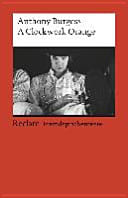
One of Esquire's 50 Best Sci-Fi Books of All Time "A brilliant novel.... [A] savage satire on the distortions of the single and collective minds."— New York Times In Anthony Burgess's influential nightmare vision of the future, where the criminals take over after dark, the story is told by the central character, Alex, a teen who talks in a fantastically inventive slang that evocatively renders his and his friends' intense reaction against their society. Dazzling and transgressive, A Clockwork Orange is a frightening fable about good and evil and the meaning of human freedom. This edition includes the controversial last chapter not published in the first edition, and Burgess's introduction, "A Clockwork Orange Resucked."
4.5/5
Average Rating
Informations
Genre
Fiction
Published25 avril 2025
Recommendations14
About the author
Anthony Burgess
Author
John Anthony Burgess Wilson was an English writer and composer.
A Clockwork Orange
by Anthony Burgess
Fiction
Books Like A Clockwork Orange
If you're looking for books similar to A Clockwork Orange, here are some recommendations based on themes, tone, and narrative style.
Top 1
94%
1984
George Orwell
A dystopian novel exploring totalitarian control and individual freedom. Like 'A Clockwork Orange', it presents a bleak future where personal autonomy is systematically destroyed. The protagonist Winston Smith struggles against a oppressive government that seeks to control thought and behavior. The book examines themes of surveillance, manipulation, and the human spirit's resistance to dehumanization.
Top 2

92%
Brave New World
Aldous Huxley
Another dystopian classic that critiques social control and individual identity. The novel depicts a society where human beings are engineered and conditioned to conform. Similar to Burgess's work, it explores how social systems can strip away human agency and free will. The narrative challenges readers to consider the price of social stability and psychological manipulation.
Top 3
92%
The Road
Cormac McCarthy
A post-apocalyptic novel exploring survival and moral choices in a brutal world. A father and son navigate a devastated landscape, confronting human brutality. Like 'A Clockwork Orange', it examines the thin line between civilization and savagery. The book's stark prose and exploration of human nature under extreme conditions resonate with Burgess's themes.
92%
The Handmaid's Tale
Margaret Atwood
A dystopian novel about totalitarian control and individual resistance. Set in a society that systematically oppresses women, it explores themes of personal freedom. Similar to Burgess's work, it critiques systems that seek to control human behavior. The narrative represents a powerful examination of institutional power and individual agency.
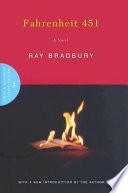
90%
Fahrenheit 451
Ray Bradbury
A dystopian novel about censorship and intellectual suppression. The story follows a fireman who burns books in a society that fears independent thought. Like 'A Clockwork Orange', it critiques systems that seek to control individual expression. The protagonist's journey represents resistance against institutional manipulation of human consciousness.
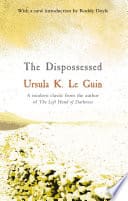
90%
The Dispossessed
Ursula K. Le Guin
A science fiction novel exploring political systems and individual freedom. The protagonist navigates between two contrasting societies, examining social structures. Similar to Burgess's work, it questions the nature of personal autonomy. The book provides a nuanced exploration of social control and individual resistance.
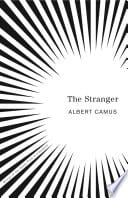
88%
The Stranger
Albert Camus
An existential novel exploring alienation and moral ambiguity. The protagonist Meursault, like Alex, exists outside conventional moral frameworks. The book challenges societal expectations and examines the nature of individual consciousness. Its exploration of detachment and moral relativism mirrors the psychological complexity of Burgess's work.
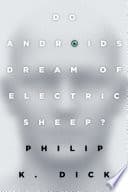
88%
Do Androids Dream of Electric Sheep?
Philip K. Dick
A science fiction novel exploring consciousness and humanity's boundaries. The story questions what defines human identity in a technologically advanced world. Like 'A Clockwork Orange', it examines the potential for dehumanization. The narrative challenges readers to consider the nature of empathy and individual agency.
86%
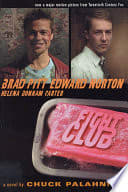
Fight Club
Chuck Palahniuk
A transgressive novel about male alienation and societal rebellion. The protagonist's violent alter ego challenges social norms, echoing Alex's anarchic spirit. The book explores masculinity, consumerism, and the psychological breakdown of individual identity. Its dark humor and provocative narrative style resonate with the raw energy of 'A Clockwork Orange'.

86%
Neuromancer
William Gibson
A groundbreaking cyberpunk novel about technology and social control. The narrative follows a computer hacker in a dystopian future, challenging institutional power. Similar to 'A Clockwork Orange', it presents a world where individual agency is constantly threatened. The book explores themes of technological manipulation and resistance.
84%
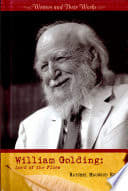
Lord of the Flies
William Golding
A novel about the breakdown of civilized behavior among young people. When a group of boys are stranded on an island, they descend into savagery, revealing humanity's inherent violent potential. Similar to 'A Clockwork Orange', it explores the thin line between civilization and barbarism. The book examines how social structures collapse under primal impulses.
84%
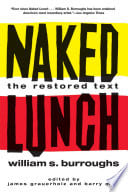
Naked Lunch
William S. Burroughs
An experimental novel challenging narrative conventions and social norms. Its fragmented structure and provocative content mirror 'A Clockwork Orange's' linguistic and thematic innovations. The book explores addiction, control, and societal marginalization. Its radical approach to storytelling represents a profound critique of institutional power.
82%
Trainspotting
Irvine Welsh
A gritty novel about youth, addiction, and urban subculture in Edinburgh. Written in Scottish dialect, it shares 'A Clockwork Orange's' linguistic inventiveness. The book follows a group of heroin addicts, presenting a raw, unfiltered view of marginalized youth. Its dark humor and unflinching portrayal of social dysfunction echo Burgess's narrative style.
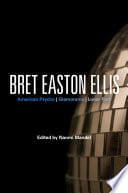
80%
American Psycho
Bret Easton Ellis
A provocative novel about alienation and societal superficiality. The protagonist Patrick Bateman represents a nihilistic critique of consumer culture. Like Alex in 'A Clockwork Orange', he exists outside conventional moral boundaries. The book uses dark satire to expose the emptiness of social structures and individual identity.
No account connected — sign in to comment.