
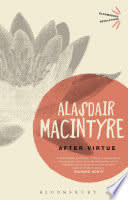
Highly controversial when it was first published in 1981, Alasdair MacIntyre's After Virtue has since established itself as a landmark work in contemporary moral philosophy. In this book, MacIntyre sought to address a crisis in moral language that he traced back to a European Enlightenment that had made the formulation of moral principles increasingly difficult. In the search for a way out of this impasse, MacIntyre returns to an earlier strand of ethical thinking, that of Aristotle, who emphasised the importance of 'virtue' to the ethical life. More than thirty years after its original publication, After Virtue remains a work that is impossible to ignore for anyone interested in our understanding of ethics and morality today.
4.7/5
Average Rating
Informations
Genre
Philosophy
Published21 octobre 2013
Recommendations17
About the author
Alasdair MacIntyre
Author
Alasdair Chalmers MacIntyre was a Scottish-American philosopher who contributed to moral and political philosophy as well as history of philosophy and theology. MacIntyre's After Virtue (1981) is one of the most important works of Anglophone moral and political philosophy in the 20th century. He was a senior research fellow at the Centre for Contemporary Aristotelian Studies in Ethics and Politics (CASEP) at London Metropolitan University, emeritus Professor of Philosophy at the University of Notre Dame, and permanent senior distinguished research fellow at the Notre Dame de Nicola Center for Ethics and Culture. During his lengthy academic career, he also taught at Brandeis University, Duke University, Vanderbilt University, and Boston University.
After Virtue
by Alasdair MacIntyre
Philosophy
Books Like After Virtue
If you're looking for books similar to After Virtue, here are some recommendations based on themes, tone, and narrative style.
Top 1
92%
Nicomachean Ethics
Aristotle
Aristotle's seminal work on virtue and moral character that deeply influenced MacIntyre's thinking. The text explores the concept of eudaimonia (human flourishing) and how virtues contribute to a meaningful life. Aristotle argues that virtue is a practice developed through habit and rational reflection. He provides a systematic approach to understanding moral excellence and human potential. The work is a critical examination of what constitutes a good life.
Top 2
90%
The Republic
Plato
A foundational work of Western philosophy exploring the nature of justice and the ideal society. Plato examines virtue through the lens of philosophical dialogue, presenting complex ethical ideas through systematic reasoning. The text challenges readers to consider the fundamental principles of moral and political life. It provides a deep exploration of human nature and societal organization. Like MacIntyre, Plato seeks to understand the core of ethical behavior and social structures.
Top 3
90%
Whose Justice? Which Rationality?
Alasdair MacIntyre
MacIntyre's follow-up work that further develops the philosophical arguments introduced in After Virtue. The book examines competing traditions of moral reasoning and their historical contexts. MacIntyre explores how different philosophical traditions understand justice and rationality. He challenges universal claims of moral reasoning and emphasizes the importance of cultural and historical context. The text provides deeper insights into MacIntyre's philosophical approach.
90%
Dependent Rational Animals
Alasdair MacIntyre
MacIntyre's exploration of human vulnerability and the importance of community in moral development. The book examines how human dependence shapes our understanding of virtue and ethical behavior. MacIntyre argues for a more relational approach to moral philosophy. He emphasizes the role of community and interdependence in human flourishing. The text provides a profound reflection on human nature and ethical practice.
90%
Groundwork of the Metaphysics of Morals
Immanuel Kant
A foundational text in moral philosophy exploring the nature of ethical duty. Kant develops a systematic approach to moral reasoning based on rational principles. The book introduces the categorical imperative as a fundamental ethical framework. It provides a rigorous examination of moral obligation and human rationality. Kant's work represents a pivotal moment in philosophical ethics.
90%
On the Genealogy of Morals
Friedrich Nietzsche
A radical critique of traditional moral frameworks and their historical origins. Nietzsche explores how moral values emerge from complex historical and psychological processes. The book challenges conventional ethical assumptions and traces the genealogy of moral concepts. It provides a provocative examination of moral psychology and cultural development. Nietzsche offers a profound critique of traditional moral reasoning.
88%
Sources of the Self
Charles Taylor
A comprehensive philosophical exploration of modern identity and moral reasoning. Taylor examines the historical development of modern selfhood and moral frameworks. The book traces how our understanding of morality has evolved through different philosophical and cultural traditions. It critically analyzes the sources of modern moral intuitions and their historical roots. Like MacIntyre, Taylor challenges contemporary moral philosophy's fragmented approach.
88%
Ethics and the Limits of Philosophy
Bernard Williams
A critical examination of moral philosophy's limitations and possibilities. Williams challenges traditional philosophical approaches to ethics and explores the complexities of moral reasoning. The book argues for a more contextual and historically grounded understanding of ethical principles. It critiques abstract philosophical systems that disconnect ethics from human experience. Williams offers a sophisticated critique of moral philosophy similar to MacIntyre's approach.
88%
The Phenomenology of Spirit
G.W.F. Hegel
A complex philosophical work exploring the development of consciousness and ethical understanding. Hegel traces the historical and philosophical evolution of human self-understanding. The book examines how individual consciousness emerges through social and historical processes. It provides a sophisticated analysis of how ethical frameworks develop over time. Hegel's work offers a deep exploration of philosophical and moral development.
88%
The Theory of Communicative Action
Jürgen Habermas
A comprehensive philosophical work exploring rationality and social communication. Habermas examines how rational discourse shapes social and ethical understanding. The book provides a sophisticated analysis of communication and moral reasoning. It explores how social interactions create shared ethical frameworks. Habermas offers a complex understanding of rationality and social interaction.
88%
Spheres of Justice
Michael Walzer
A comprehensive examination of social justice and distributive principles. Walzer explores how different social goods are distributed in complex societies. The book provides a contextual approach to understanding justice and social organization. It challenges universal theories of distribution and emphasizes cultural specificity. Walzer offers a sophisticated analysis of social and ethical complexity.
86%
The Fragmentation of Reason
Stephen Toulmin
An analysis of the decline of rational discourse and moral reasoning in modern philosophy. Toulmin explores how philosophical thinking has become increasingly abstract and disconnected from practical human experience. The book critiques Enlightenment rationalism and its impact on moral understanding. It argues for a more contextual and pragmatic approach to philosophical inquiry. Toulmin's work resonates with MacIntyre's critique of modern moral philosophy.
86%
The Right and the Good
W.D. Ross
A classic work in moral philosophy exploring the nature of ethical obligations. Ross develops a nuanced theory of moral duties that goes beyond utilitarian and deontological approaches. The book examines how moral principles interact with specific contextual considerations. It provides a sophisticated framework for understanding moral reasoning. Ross's work offers deep insights into the complexity of ethical decision-making.
86%
Practical Ethics
Peter Singer
A contemporary approach to applied ethics that examines moral challenges in practical contexts. Singer explores ethical dilemmas in areas like animal rights, global poverty, and bioethics. The book applies philosophical reasoning to real-world moral challenges. It provides a systematic approach to contemporary ethical issues. Singer offers a rigorous and provocative examination of moral principles.
86%
The Ethics of Authenticity
Charles Taylor
An exploration of modern individualism and its ethical implications. Taylor examines the challenges of maintaining authentic moral frameworks in contemporary society. The book critiques both radical individualism and communitarian approaches. It provides a nuanced understanding of personal identity and moral reasoning. Taylor offers insights into the complexities of modern ethical life.
84%
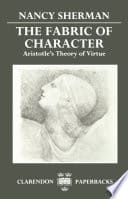
The Virtues
Nancy Sherman
A contemporary exploration of virtue ethics that builds on Aristotelian and MacIntyrean traditions. Sherman examines how virtues are cultivated in personal and professional contexts. The book connects philosophical theory with practical moral development. It explores how character is shaped through practice and reflection. Sherman provides a nuanced understanding of virtue in modern ethical contexts.
84%
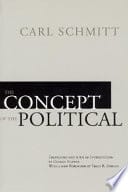
The Concept of the Political
Carl Schmitt
A provocative exploration of political philosophy and ethical distinctions. Schmitt examines the fundamental nature of political relationships and moral boundaries. The book challenges traditional liberal understandings of politics and ethics. It provides a critical analysis of political rationality and social conflict. Schmitt offers a challenging perspective on ethical and political reasoning.
No account connected — sign in to comment.