
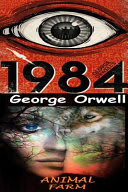
ANIMAL FARMGeorge Orwell's classic satire of the Russian Revolution is an intimate part of our contemporary culture. It is the account of the bold struggle, initiated by the animals, that transforms Mr. Jones's Manor Farm into Animal Farm--a wholly democratic society built on the credo that All Animals Are Created Equal. Out of their cleverness, the pigs Napoleon, Squealer, and Snowball emerge as leaders of the new community in a subtle evolution that proves disastrous. The climax is the brutal betrayal of the faithful horse Boxer, when totalitarian rule is reestablished with the bloodstained postscript to the founding slogan: But some Animals Are More Equal Than Others. . . . 1984In 1984, London is a grim city where Big Brother is always watching you and the Thought Police can practically read your mind. Winston is a man in grave danger for the simple reason that his memory still functions. Drawn into a forbidden love affair, Winston finds the courage to join a secret revolutionary organization called The Brotherhood, dedicated to the destruction of the Party. Together with his beloved Julia, he hazards his life in a deadly match against the powers that be.
Average Rating
Informations
About the author
George Orwell
Author
Eric Arthur Blair was an English novelist, poet, essayist, journalist, and critic who wrote under the pen name of George Orwell. His work is characterised by lucid prose, social criticism, opposition to all totalitarianism, and support of democratic socialism.
Animal Farm and 1984
by George Orwell
Books Like Animal Farm and 1984
If you're looking for books similar to Animal Farm and 1984, here are some recommendations based on themes, tone, and narrative style.
Fahrenheit 451
Ray Bradbury
A dystopian novel about a future society where books are banned and burned by firemen. The protagonist, Guy Montag, begins to question the oppressive system that suppresses independent thought. The story explores themes of censorship, government control, and the importance of intellectual freedom. Like Orwell's works, it presents a stark warning about the dangers of totalitarian suppression of individual expression. The novel critiques media manipulation and societal conformity.
Brave New World
Aldous Huxley
A dystopian novel exploring a totalitarian society controlled through technological manipulation and psychological conditioning. The story depicts a world where individual freedom is sacrificed for societal stability and conformity. Citizens are engineered and conditioned from birth to fit predetermined social roles. The narrative critiques systems of control and the loss of individual identity. Like Orwell's works, it offers a chilling vision of potential societal oppression.
A Clockwork Orange
Anthony Burgess
A dystopian novel about a violent youth who undergoes psychological conditioning to become 'good'. The story explores themes of free will, state control, and the nature of evil. Like Orwell's works, it examines how institutional systems attempt to control individual behavior. The narrative critiques governmental attempts to enforce morality through technological manipulation. It provides a provocative exploration of personal freedom and societal control.

The Handmaid's Tale
Margaret Atwood
A dystopian novel set in a theocratic society where women are stripped of their rights and reduced to reproductive vessels. The story follows Offred, a handmaid forced to bear children for the ruling class. Like Orwell's works, it explores themes of systemic oppression, loss of individual autonomy, and resistance against totalitarian control. The narrative provides a chilling examination of power structures and gender dynamics. It reveals how ideological extremism can transform society.
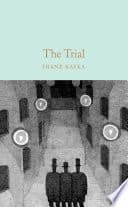
The Trial
Franz Kafka
A surreal novel about a man arrested and prosecuted by a remote, inaccessible authority without understanding the nature of his crime. The story explores themes of bureaucratic absurdity and individual powerlessness. Like 1984, it depicts a system where individual rights are arbitrarily suspended. The narrative reveals the psychological impact of opaque, unaccountable power structures. It offers a haunting critique of institutional control and dehumanization.
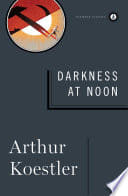
Darkness at Noon
Arthur Koestler
A novel about a Soviet revolutionary imprisoned during Stalin's purges. The story explores the psychological and philosophical dimensions of totalitarian systems. Like Orwell's works, it provides an insider's critique of revolutionary ideologies. The narrative examines how political systems can betray their original ideals. It offers a profound exploration of individual conscience versus collective ideology.
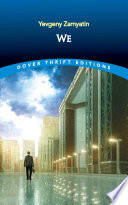
We
Yevgeny Zamyatin
A pioneering dystopian novel that influenced both Orwell and Huxley. Set in a hyper-rational society where individuality is suppressed, the story follows D-503, a mathematician who begins to question the totalitarian system. The narrative explores themes of personal freedom versus collective control. Like Animal Farm, it critiques authoritarian systems and the manipulation of human nature. The novel provides a profound exploration of individual rebellion against systemic oppression.
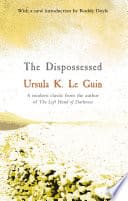
The Dispossessed
Ursula K. Le Guin
A science fiction novel exploring political systems and individual freedom. The protagonist moves between a capitalist and an anarchist society, examining different social structures. Like Animal Farm, it offers a nuanced critique of political ideologies. The narrative explores how utopian ideals can become corrupted in practice. It provides a thoughtful examination of power, revolution, and social organization.
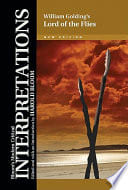
Lord of the Flies
William Golding
A novel exploring the breakdown of civilization and the inherent potential for human brutality. A group of boys stranded on an island gradually descend into savagery, mirroring societal power dynamics. Like Animal Farm, it examines how power corrupts and how social structures can quickly disintegrate. The narrative reveals the thin veneer of civilization and the potential for totalitarian impulses within human nature. It offers a stark allegory of social and political systems.
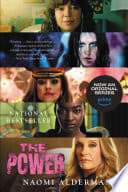
The Power
Naomi Alderman
A speculative fiction novel exploring power dynamics through a world where women develop the ability to generate electrical shocks. Like Orwell's works, it examines how power structures can corrupt. The narrative reveals how systemic oppression can shift when power dynamics change. It provides a provocative exploration of social control, gender, and institutional power. The story offers a complex allegory of political and social transformation.
No account connected — sign in to comment.