
Love... it means too much to me, far more than you can understand. At its simplest, Anna Karenina is a love story. It is a portrait of a beautiful and intelligent woman whose passionate love for a handsome officer sweeps aside all other ties - to her marriage and to the network of relationships and moral values that bind the society around her. The love affair of Anna and Vronsky is played out alongside the developing romance of Kitty and Levin, and in the character of Levin, closely based on Tolstoy himself, the search for happiness takes on a deeper philosophical significance. One of the greatest novels ever written, Anna Karenina combines penetrating psychological insight with an encyclopedic depiction of Russian life in the 1870s. The novel takes us from high society St Petersburg to the threshing fields on Levin's estate, with unforgettable scenes at a Moscow ballroom, the skating rink, a race course, a railway station. It creates an intricate labyrinth of connections that is profoundly satisfying, and deeply moving. Rosamund Bartlett's translation conveys Tolstoy's precision of meaning and emotional accuracy in an English version that is highly readable and stylistically faithful. Like her acclaimed biography of Tolstoy, it is vivid, nuanced, and compelling.

Average Rating
Informations
About the author
Leo Tolstoy
Author
Count Lev Nikolayevich Tolstoy, usually referred to in English as Leo Tolstoy, was a Russian writer. He is regarded as one of the greatest and most influential authors of all time.
Anna Karenina
by Leo Tolstoy
Books Like Anna Karenina
If you're looking for books similar to Anna Karenina, here are some recommendations based on themes, tone, and narrative style.

War and Peace
Leo Tolstoy
Another masterpiece by Tolstoy that explores complex human relationships against a sweeping historical backdrop. The novel interweaves personal stories with philosophical reflections on history, love, and human nature. Like Anna Karenina, it offers profound psychological insights into Russian society and individual human experiences. The epic narrative combines intimate character studies with broader social commentary.

Crime and Punishment
Fyodor Dostoevsky
A psychological novel exploring moral dilemmas and inner turmoil in 19th-century Russia. The protagonist grapples with profound philosophical and ethical questions, similar to the deep psychological exploration in Anna Karenina. The novel offers intense character study and examines the human psyche under extreme moral pressure. Dostoevsky's work shares Tolstoy's commitment to understanding complex human motivations.
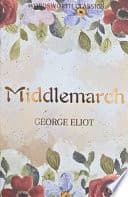
Middlemarch
George Eliot
A complex novel examining social dynamics, personal aspirations, and moral choices in a provincial English community. The narrative explores multiple characters' interconnected lives with psychological depth and nuanced social critique. Similar to Anna Karenina, the novel offers a rich, intricate portrayal of societal expectations and individual desires. Characters struggle with personal fulfillment within restrictive social structures.
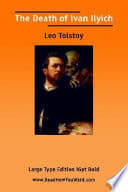
The Death of Ivan Ilyich
Leo Tolstoy
A novella exploring mortality, personal meaning, and social conventions. Like Anna Karenina, the work offers deep psychological insights into human experience. The narrative critically examines societal expectations and individual authenticity. Tolstoy provides a profound meditation on life, death, and personal transformation.
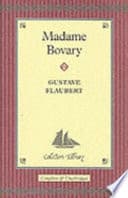
Madame Bovary
Gustave Flaubert
A groundbreaking novel exploring a woman's passionate and tragic love affair that defies societal expectations. Emma Bovary seeks escape from her mundane provincial life through romantic fantasies and extramarital affairs. Like Anna Karenina, the novel critically examines the constraints of 19th-century marriage and social conventions. The protagonist's internal struggles and ultimate tragic fate mirror the psychological depth of Tolstoy's work.

Fathers and Sons
Ivan Turgenev
A seminal Russian novel exploring generational conflicts and social change. Like Anna Karenina, the novel offers profound insights into Russian society and individual psychology. Characters grapple with philosophical and social transformations, presenting a nuanced view of human relationships. Turgenev's work shares Tolstoy's commitment to understanding complex social dynamics.
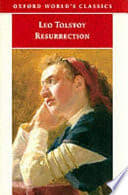
Resurrection
Leo Tolstoy
Another Tolstoy novel exploring moral redemption and social critique. The narrative follows a character's spiritual and social transformation, similar to themes in Anna Karenina. The work offers profound psychological insights and critiques of social institutions. Tolstoy examines personal growth within a complex social context.

The Age of Innocence
Edith Wharton
A profound exploration of forbidden love and social constraints in 19th-century New York high society. The novel examines the tension between personal desire and societal expectations, much like Anna Karenina. Characters navigate complex emotional landscapes while struggling against rigid social norms. The narrative offers a nuanced critique of social conventions and their impact on individual happiness.

The House of Mirth
Edith Wharton
A powerful novel exploring a woman's struggle within a restrictive social system. The protagonist navigates complex social expectations and personal desires, similar to Anna Karenina's journey. The narrative offers a critical examination of social hierarchies and their impact on individual lives. Wharton provides deep psychological insights into societal pressures and personal choices.

A Hero of Our Time
Mikhail Lermontov
A pioneering Russian novel exploring psychological complexity and social alienation. The protagonist's inner turmoil reflects the psychological depth of Anna Karenina. The narrative offers a nuanced examination of individual psychology within social constraints. Lermontov provides profound insights into human nature and social dynamics.

The Portrait of a Lady
Henry James
A sophisticated novel exploring a young woman's journey of self-discovery and personal autonomy. The protagonist navigates complex social expectations and personal desires, reminiscent of Anna Karenina's struggles. The narrative offers deep psychological insights into individual choice and societal constraints. James explores the tension between personal freedom and social expectations with remarkable nuance.
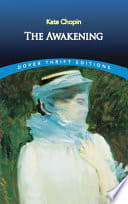
The Awakening
Kate Chopin
A groundbreaking novel about a woman's journey of self-discovery and rebellion against societal norms. The protagonist challenges restrictive social expectations, similar to Anna Karenina's struggle. The narrative explores themes of personal freedom, passion, and social constraints. Chopin offers a powerful critique of 19th-century gender roles and individual autonomy.

Effi Briest
Theodor Fontane
A German novel about a young woman trapped in an unhappy marriage and societal expectations. Like Anna Karenina, the protagonist experiences a passionate affair that leads to social ostracism and personal tragedy. The novel critically examines 19th-century marriage dynamics and women's limited social roles. Effi's story mirrors Anna's struggle against restrictive social conventions.
Oblomov
Ivan Goncharov
A classic Russian novel exploring human inertia and societal expectations. The protagonist's psychological complexity mirrors the depth found in Anna Karenina. The narrative offers a nuanced examination of Russian social life and individual psychology. Goncharov provides profound insights into human nature and social dynamics.
No account connected — sign in to comment.