
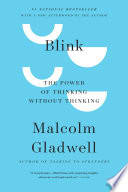
From the #1 bestselling author of The Bomber Mafia, the landmark book that has revolutionized the way we understand leadership and decision making. In his breakthrough bestseller The Tipping Point, Malcolm Gladwell redefined how we understand the world around us. Now, in Blink, he revolutionizes the way we understand the world within. Blink is a book about how we think without thinking, about choices that seem to be made in an instant--in the blink of an eye--that actually aren't as simple as they seem. Why are some people brilliant decision makers, while others are consistently inept? Why do some people follow their instincts and win, while others end up stumbling into error? How do our brains really work--in the office, in the classroom, in the kitchen, and in the bedroom? And why are the best decisions often those that are impossible to explain to others? In Blink we meet the psychologist who has learned to predict whether a marriage will last, based on a few minutes of observing a couple; the tennis coach who knows when a player will double-fault before the racket even makes contact with the ball; the antiquities experts who recognize a fake at a glance. Here, too, are great failures of "blink": the election of Warren Harding; "New Coke"; and the shooting of Amadou Diallo by police. Blink reveals that great decision makers aren't those who process the most information or spend the most time deliberating, but those who have perfected the art of "thin-slicing"--filtering the very few factors that matter from an overwhelming number of variables.
Average Rating
Informations
About the author
Malcolm Gladwell
Author
Malcolm Timothy Gladwell is a Canadian journalist, author, and public speaker. He has been a staff writer for The New Yorker since 1996. He has published eight books. He is also the host of the podcast Revisionist History and co-founder of the podcast company Pushkin Industries.
Blink
by Malcolm Gladwell
Books Like Blink
If you're looking for books similar to Blink, here are some recommendations based on themes, tone, and narrative style.
The Tipping Point
Malcolm Gladwell
Another groundbreaking book by Gladwell that explores how small changes can create big effects. The book examines how ideas, behaviors, and trends spread like viruses through social networks. It reveals the unexpected ways that information and behavior propagate, similar to Blink's exploration of decision-making. Gladwell introduces key concepts like 'connectors', 'mavens', and 'salesmen' who drive social change. The book provides insights into how subtle factors can dramatically influence human behavior and societal trends.
Thinking, Fast and Slow
Daniel Kahneman
A deep dive into the two systems of thinking that drive human decision-making. Kahneman explores how our intuitive, quick judgments often differ from our slower, more analytical thinking processes. The book provides scientific insights into cognitive biases and mental shortcuts, closely aligning with Blink's exploration of rapid cognition. It offers a comprehensive look at how our minds make decisions, revealing the complex mechanisms behind seemingly instant judgments. Kahneman's work provides a rigorous psychological framework for understanding intuitive thinking.
Outliers
Malcolm Gladwell
Another Gladwell classic that explores the hidden factors behind success. The book challenges traditional notions of individual achievement by revealing the complex social and cultural conditions that enable extraordinary performance. Like Blink, it offers a counterintuitive approach to understanding human potential and achievement. Gladwell examines how timing, opportunity, and cultural background play crucial roles in determining success. The book provides a nuanced perspective on how exceptional performance emerges from unexpected circumstances.
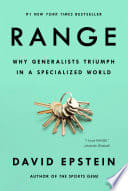
Range
David Epstein
A compelling argument for the value of broad thinking and diverse experiences in decision-making. Epstein challenges the notion that specialization is always best, showing how generalists often excel in complex environments. The book shares Blink's interest in understanding the nuances of human judgment. Through engaging stories and research, Epstein demonstrates how breadth of experience can lead to more innovative and effective problem-solving. The book provides insights into developing adaptive thinking skills.
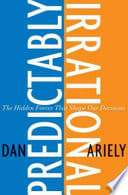
Predictably Irrational
Dan Ariely
An engaging exploration of the hidden forces that shape our decisions. Ariely reveals how human behavior is often driven by irrational and unexpected motivations. The book examines the psychological mechanisms behind decision-making, similar to Blink's investigation of intuitive choices. Through clever experiments and real-world examples, Ariely demonstrates how our decisions are influenced by hidden biases and contextual factors. The book provides fascinating insights into the quirks of human reasoning and decision-making processes.
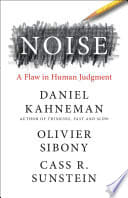
Noise
Daniel Kahneman, Olivier Sibony, and Cass Sunstein
An in-depth analysis of the hidden variability in human judgment and decision-making. The book explores how seemingly objective decisions are often influenced by random and unpredictable factors. Like Blink, it reveals the complex mechanisms behind human judgment and the challenges of consistent decision-making. The authors provide strategies for reducing noise and improving judgment across various professional and personal contexts. The book offers a sophisticated understanding of the subtle factors that influence our choices.
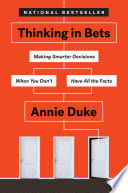
Thinking in Bets
Annie Duke
A poker champion's insights into decision-making under uncertainty. Duke applies lessons from poker to understanding how we make decisions in complex and uncertain environments. The book shares Blink's interest in exploring the psychology of decision-making. She provides strategies for making better choices by embracing uncertainty and learning from outcomes. Duke offers a unique perspective on how to improve decision-making skills in both personal and professional contexts.
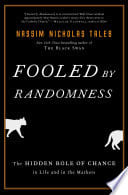
Fooled by Randomness
Nassim Nicholas Taleb
An exploration of how we misunderstand the role of chance in our lives and decisions. Taleb reveals the ways our brains are wired to create narratives that overlook randomness and uncertainty. Like Blink, the book challenges our understanding of decision-making and perception. Through provocative examples, Taleb demonstrates how our intuition can lead us astray when interpreting complex events. The book provides a critical perspective on human judgment and cognitive biases.
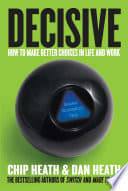
Decisive
Chip Heath and Dan Heath
A practical guide to improving decision-making processes in personal and professional contexts. The Heath brothers provide a systematic approach to overcoming common decision-making traps. Like Blink, the book offers insights into how we can make better choices. They introduce a four-step process for more effective decision-making, helping readers avoid common pitfalls and biases. The book provides actionable strategies for improving judgment and choice.
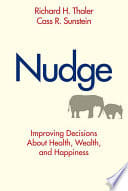
Nudge
Richard Thaler and Cass Sunstein
A groundbreaking book about how subtle interventions can influence human behavior and decision-making. Thaler and Sunstein explore how small changes in how choices are presented can dramatically alter people's decisions. The book shares Blink's interest in understanding the subtle mechanisms of human choice and judgment. It introduces the concept of 'choice architecture' and how seemingly minor contextual factors can guide behavior. The authors provide insights into how understanding human psychology can lead to better decision-making.
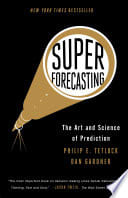
Superforecasting
Philip Tetlock and Dan Gardner
An exploration of how some individuals consistently make remarkably accurate predictions. The book examines the cognitive skills and strategies that enable exceptional forecasting abilities. Similar to Blink, it delves into the mental processes behind rapid and accurate decision-making. Tetlock and Gardner reveal the techniques used by top forecasters to overcome cognitive biases and make better predictions. The book provides insights into improving judgment and decision-making skills.
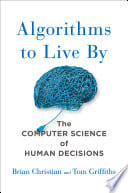
Algorithms to Live By
Brian Christian and Tom Griffiths
An innovative exploration of how computer algorithms can inform human decision-making. The book applies computational thinking to everyday choices, revealing surprising insights into optimization and problem-solving. Like Blink, it offers a fresh perspective on how we make decisions. Christian and Griffiths demonstrate how mathematical and computational principles can help us make more effective choices. The book provides a unique lens for understanding decision-making processes.
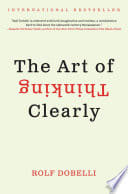
The Art of Thinking Clearly
Rolf Dobelli
A comprehensive guide to recognizing and overcoming cognitive biases that distort our thinking. Dobelli explores numerous mental shortcuts and fallacies that influence our decision-making. The book shares Blink's interest in understanding the hidden mechanisms of human judgment. Through concise and engaging explanations, Dobelli provides strategies for more rational and clear thinking. The book offers practical insights into improving decision-making skills by recognizing and mitigating cognitive biases.
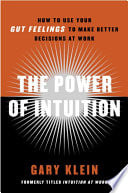
The Power of Intuition
Gary Klein
A comprehensive exploration of intuitive decision-making in professional contexts. Klein examines how experts make rapid, effective decisions based on years of experience. The book directly complements Blink's investigation of intuitive thinking and rapid cognition. Through extensive research and case studies, Klein demonstrates how intuition can be a powerful and reliable decision-making tool. The book provides practical insights into developing and trusting intuitive skills across various professional domains.
No account connected — sign in to comment.