
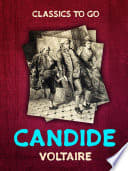
One of the world's great satires since its first publication in 1759. Witty, caustic skewering of romance, science, philosophy, religion, government — nearly all human ideals and institutions.
4.5/5
Average Rating
Informations
Genre
Fiction
Published07 mars 2012
Recommendations14
About the author
Voltaire
Author
François-Marie Arouet, known by his nom de plume Voltaire, was a French Enlightenment writer, philosopher (philosophe), satirist, and historian. Famous for his wit and his criticism of Christianity and of slavery, Voltaire was an advocate of freedom of speech, freedom of religion, and separation of church and state.
Candide
by Voltaire
Fiction
Books Like Candide
If you're looking for books similar to Candide, here are some recommendations based on themes, tone, and narrative style.
Top 1
94%
One Hundred Years of Solitude
Gabriel García Márquez
A magical realist novel that, similar to Candide, explores human experience through extraordinary narrative techniques. Márquez creates a multi-generational story that critiques historical and social patterns. The book's blend of fantasy and social commentary provides a rich philosophical exploration. Its approach to challenging grand narratives resonates with Voltaire's satirical style.
Top 2
92%
Don Quixote
Miguel de Cervantes
A pioneering novel that, like Candide, uses humor to explore human delusion and societal critique. The story follows an idealistic knight whose romantic notions clash hilariously with reality. Cervantes creates a profound commentary on human nature through comedic adventures and philosophical reflections. The protagonist's journey challenges grand narratives and idealistic thinking in a manner reminiscent of Voltaire's approach.
Top 3
92%
The Trial
Franz Kafka
A novel that shares Candide's approach to exposing institutional absurdity and human powerlessness. Kafka's protagonist navigates a nightmarish bureaucratic system without understanding the charges against him. The book critiques legal and social systems through surreal, darkly humorous narrative techniques. Its exploration of individual versus institutional power echoes Voltaire's satirical method.
90%
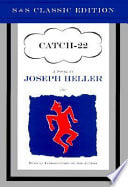
Catch-22
Joseph Heller
A darkly comedic novel that shares Candide's absurdist approach to critiquing institutional logic. Set during World War II, the book exposes the fundamental madness of military bureaucracy through circular reasoning and satirical situations. Heller's protagonist navigates an increasingly nonsensical world, much like Candide's journey through philosophical challenges. The novel's blend of humor and profound social criticism closely echoes Voltaire's style.
90%
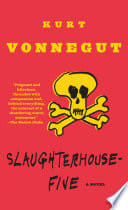
Slaughterhouse-Five
Kurt Vonnegut
A satirical novel that shares Candide's approach to exploring human suffering through dark humor. Vonnegut uses science fiction elements to critique war, free will, and human experience. The protagonist's fragmented journey reflects a similar philosophical questioning of grand narratives. The book's blend of absurdism and profound social commentary mirrors Voltaire's satirical approach.

90%
Pale Fire
Vladimir Nabokov
A metafictional novel that, like Candide, challenges narrative expectations through complex storytelling. Nabokov creates a multilayered work that deconstructs literary and philosophical conventions. The book's playful approach to narrative structure provides a sophisticated critique of interpretation. Its intellectual complexity and satirical approach align with Voltaire's literary techniques.
88%
Animal Farm
George Orwell
A powerful allegorical novella that, like Candide, uses satirical storytelling to critique political and social systems. The story of farm animals overthrowing their human masters becomes a scathing commentary on totalitarianism and human nature. Orwell's concise narrative exposes the corruption of idealistic principles through dark humor and pointed allegory. The book's philosophical critique mirrors Voltaire's approach to dismantling grand illusions.

88%
Brave New World
Aldous Huxley
A dystopian novel that, similar to Candide, critiques societal systems and human conditioning. Huxley explores a future where technological control and social engineering replace individual freedom. The book's satirical approach exposes the dangers of utopian thinking and institutional manipulation. Its philosophical depth and critical perspective align closely with Voltaire's method of challenging prevailing assumptions.

88%
Waiting for Godot
Samuel Beckett
A play that, like Candide, deconstructs philosophical expectations through absurdist humor. Beckett explores human existence through characters waiting endlessly for a meaning that never arrives. The work challenges grand narratives and human expectations through minimalist, comedic interactions. Its philosophical depth mirrors Voltaire's approach to questioning established beliefs.
86%
Gulliver's Travels
Jonathan Swift
A satirical masterpiece that, like Candide, uses humor to critique human nature and societal institutions. The story follows Lemuel Gulliver's bizarre voyages to strange lands, exposing human folly through absurd encounters. Swift's sharp wit and social commentary parallel Voltaire's approach to dismantling philosophical optimism. The novel skewers political systems, human pride, and intellectual pretensions with biting irony.
86%
The Master and Margarita
Mikhail Bulgakov
A surreal novel that, like Candide, uses satirical storytelling to critique social and political institutions. The book blends supernatural elements with biting social commentary, exploring themes of artistic freedom and human nature. Bulgakov's work challenges Soviet bureaucracy through fantastical and darkly humorous narrative techniques. Its philosophical complexity and satirical approach echo Voltaire's literary style.
86%
The Hitchhiker's Guide to the Galaxy
Douglas Adams
A comedic science fiction novel that shares Candide's approach to exploring philosophical questions through humor. Adams uses absurdist comedy to critique human understanding of existence and the universe. The protagonist's random journey mirrors Candide's philosophical adventures. The book's blend of comedy and profound questioning closely echoes Voltaire's satirical style.
84%
The Importance of Being Earnest
Oscar Wilde
A witty play that, similar to Candide, uses humor to expose social hypocrisy and ridiculous societal conventions. Wilde's characters navigate absurd social situations with clever dialogue and satirical observations. The work brilliantly deconstructs Victorian social norms through comedic exaggeration. Its razor-sharp wit and social critique echo Voltaire's approach to exposing human absurdities.
84%
The Good Soldier Švejk
Jaroslav Hašek
A satirical novel that, like Candide, uses humor to expose institutional absurdities. The story follows a bumbling soldier navigating the bureaucratic madness of World War I. Hašek's protagonist uses comedy as a form of resistance against military stupidity. The novel's critique of institutional logic closely parallels Voltaire's satirical method.
No account connected — sign in to comment.