
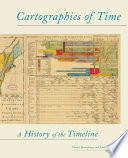
Our critically acclaimed smash hit Cartographies of Time is now available in paperback. In this first comprehensive history of graphic representations of time, authors Daniel Rosenberg and Anthony Grafton have crafted a lively history featuring fanciful characters and unexpected twists and turns. From medieval manuscripts to websites, Cartographies of Time features a wide variety of timelines that in their own unique ways, curving, crossing, branching, defy conventional thinking about the form. A fifty-four-foot-long timeline from 1753 is mounted on a scroll and encased in a protective box. Another timeline uses the different parts of the human body to show the genealogies of Jesus Christ and the rulers of Saxony. Ladders created by missionaries in eighteenth-century Oregon illustrate Bible stories in a vertical format to convert Native Americans. Also included is the April 1912 Marconi North Atlantic Communication chart, which tracked ships, including the Titanic, at points in time rather than by their geographic location, alongside little-known works by famous figures, including a historical chronology by the mapmaker Gerardus Mercator and a chronological board game patented by Mark Twain. Presented in a lavishly illustrated edition, Cartographies of Time is a revelation to anyone interested in the role visual forms have played in our evolving conception of history
Average Rating
Informations
About the author
Daniel Rosenberg, Anthony Grafton
Author
Cartographies of Time
by Daniel Rosenberg, Anthony Grafton
Books Like Cartographies of Time
If you're looking for books similar to Cartographies of Time, here are some recommendations based on themes, tone, and narrative style.
The Visual Display of Quantitative Information
Edward Tufte
A groundbreaking work on the design and presentation of graphical information. Tufte explores how complex data can be represented visually with clarity and precision. The book examines the art and science of data visualization across various disciplines. It provides insights into how visual representations can communicate complex ideas effectively.
Longitude
Dava Sobel
A fascinating account of the quest to solve the problem of determining longitude at sea. The book tells the story of John Harrison, who developed a precise marine chronometer that revolutionized navigation. Sobel explores how visual and technological innovations can transform our understanding of time and space. It demonstrates the critical importance of precise timekeeping in human exploration.
Thinking in Systems
Donella H. Meadows
A comprehensive guide to understanding complex systems through visual representation. Meadows explores how we can use diagrams and visual models to comprehend intricate interactions. The book provides tools for thinking about complex problems in new ways. It demonstrates the power of visual thinking in understanding interconnected systems.
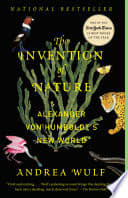
The Invention of Nature
Andrea Wulf
A biography of Alexander von Humboldt, who revolutionized how we understand the natural world. Wulf explores Humboldt's innovative approach to visualizing scientific information. The book demonstrates how visual representations can transform scientific understanding. It shows the power of interdisciplinary thinking in mapping knowledge.
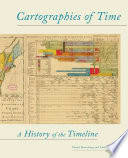
The History of the Timeline
Daniel Rosenberg
A focused exploration of how timelines have evolved as a method of visual representation. Rosenberg examines the historical development of chronological visualization from ancient to modern times. The book delves into the cultural and intellectual significance of how we represent time graphically. It provides a deep analysis of the visual language of historical representation.
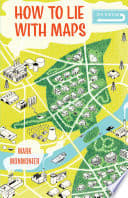
How to Lie with Maps
Mark Monmonier
A revealing look at the ways maps can be manipulated to convey specific perspectives. Monmonier explores the inherent biases in cartographic representations. The book demonstrates how visual representations can be used to mislead or persuade. It provides a critical approach to understanding visual information.
Visual Complexity
Manuel Lima
An exploration of how complex networks and systems can be visualized. Lima examines various approaches to representing intricate information graphically. The book showcases the art and science of visualizing complex relationships. It provides insights into how visual representations can help us understand complicated systems.
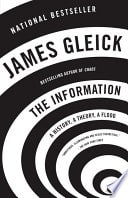
The Information: A History, a Theory, a Flood
James Gleick
A comprehensive exploration of how information has been understood and transmitted throughout human history. Gleick examines the evolution of communication technologies and how humans have conceptualized and visualized complex systems of knowledge. The book traces the development of information theory from early communication methods to modern digital technologies. It offers a deep dive into how humans organize and represent complex ideas visually and conceptually.
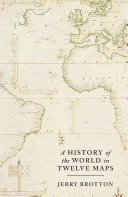
A History of the World in 12 Maps
Jerry Brotton
An exploration of how maps have shaped our understanding of the world throughout history. Brotton examines twelve significant maps that reveal cultural, political, and scientific perspectives. The book shows how cartography is more than just geographical representation. It demonstrates how visual representations reflect human knowledge and worldviews.
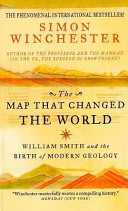
The Map That Changed the World
Simon Winchester
The story of William Smith and the first geological map of England. Winchester explores how this groundbreaking map revolutionized our understanding of the Earth's history. The book demonstrates the power of visual representation in scientific discovery. It shows how a single map can transform human knowledge.
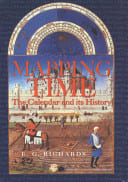
Mapping Time: The Calendar and its History
E.G. Richards
An in-depth examination of how humans have tracked and represented time through calendars across different cultures. The book explores the mathematical and astronomical foundations of timekeeping. Richards provides a comprehensive look at how different civilizations have understood and mapped temporal progression. It offers insights into the cultural and scientific methods of visualizing time.
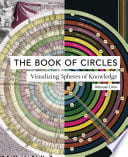
The Book of Circles
Manuel Lima
A visual exploration of circular diagrams and their significance in representing complex information. Lima examines how circular visualizations have been used across different cultures and disciplines. The book showcases the aesthetic and informational power of circular representations. It provides a unique perspective on visual communication and data representation.
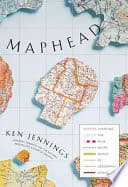
Maphead
Ken Jennings
A playful and informative exploration of maps and human fascination with geographical representation. Jennings delves into the cultural and personal significance of cartography. The book combines personal anecdotes with historical insights about map-making. It offers a lighthearted yet informative look at how humans understand and represent space.
The Tyranny of Metrics
Jerry Z. Muller
A critical examination of how we measure and represent performance and progress. Muller explores the limitations of quantitative measurements in various fields. The book provides insights into how numerical representations can both illuminate and distort understanding. It challenges readers to think critically about how we visualize and interpret data.
No account connected — sign in to comment.