
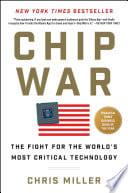
"An epic account of the decades-long battle to control what has emerged as the world's most critical resource--microchip technology--with the United States and China increasingly in conflict. You may be surprised to learn that microchips are the new oil--the scarce resource on which the modern world depends. Today, military, economic, and geopolitical power are built on a foundation of computer chips. Virtually everything--from missiles to microwaves, smartphones to the stock market--runs on chips. Until recently, America designed and built the fastest chips and maintained its lead as the #1 superpower. Now, America's edge is slipping, undermined by competitors in Taiwan, Korea, Europe, and, above all, China. Today, as Chip War reveals, China, which spends more money each year importing chips than it spends importing oil, is pouring billions into a chip-building initiative to catch up to the US. At stake is America's military superiority and economic prosperity. Economic historian Chris Miller explains how the semiconductor came to play a critical role in modern life and how the U.S. become dominant in chip design and manufacturing and applied this technology to military systems. America's victory in the Cold War and its global military dominance stems from its ability to harness computing power more effectively than any other power. But here, too, China is catching up, with its chip-building ambitions and military modernization going hand in hand. America has let key components of the chip-building process slip out of its grasp, contributing not only to a worldwide chip shortage but also a new Cold War with a superpower adversary that is desperate to bridge the gap. Illuminating, timely, and fascinating, Chip War shows that, to make sense of the current state of politics, economics, and technology, we must first understand the vital role played by chips"--Amazon.
Average Rating
Informations
About the author
Chris Miller
Author
Chris or Christopher Miller may refer to:
Chip War
by Chris Miller
Books Like Chip War
If you're looking for books similar to Chip War, here are some recommendations based on themes, tone, and narrative style.
Zero to One
Peter Thiel
A groundbreaking exploration of innovation and technological entrepreneurship. Thiel discusses how breakthrough technologies can create entirely new markets and transform industries. The book provides insights into technological innovation strategies and competitive advantage. It offers a unique perspective on creating transformative technological solutions.
The Innovators
Walter Isaacson
A detailed history of the digital revolution and the pioneers who created modern computing technology. The book traces the collaborative efforts that led to breakthrough innovations in microchips and computer systems. Isaacson explores how individual inventors and teams transformed technological landscapes. It provides context for understanding the semiconductor industry's evolution and global technological competition.
Bad Blood
John Carreyrou
An investigative account of technological fraud and Silicon Valley's dark side. The book explores the Theranos scandal and the dangers of unchecked technological ambition. Carreyrou reveals the complex dynamics of technological innovation and corporate deception. It provides a cautionary tale about technological entrepreneurship and ethical challenges.
The Master Switch
Tim Wu
An exploration of technological innovation and industry transformation. The book examines how communication technologies evolve and shape societal structures. Wu provides insights into technological cycles and competitive dynamics. It offers a nuanced perspective on technological innovation and market competition.
The Age of AI
Henry Kissinger
A comprehensive exploration of artificial intelligence's transformative potential and geopolitical implications. The book examines how AI is reshaping global power dynamics and technological competition. It provides deep insights into the strategic challenges posed by emerging technologies. Kissinger analyzes the philosophical and practical dimensions of AI's impact on international relations and human society.
The Semiconductor
Michael Riordan
A comprehensive history of semiconductor technology and its global impact. The book traces the technological evolution of microchips and their transformative role in modern society. Riordan explores the scientific and economic dimensions of semiconductor innovation. It provides deep technical and historical context for understanding the semiconductor industry.
Superintelligence
Nick Bostrom
A philosophical and technical exploration of artificial intelligence's potential future impacts. The book examines the strategic and existential challenges posed by advanced technologies. Bostrom provides deep insights into technological evolution and potential risks. It offers a thought-provoking analysis of technological innovation's broader implications.
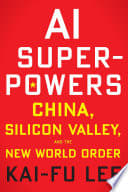
AI Superpowers
Kai-Fu Lee
An insider's perspective on the technological competition between the United States and China in artificial intelligence. The book explores how national strategies and technological innovation drive geopolitical power. Lee provides deep insights into the economic and strategic implications of AI development. It offers a nuanced view of technological competition similar to the semiconductor industry dynamics.
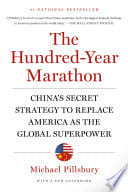
The Hundred-Year Marathon
Michael Pillsbury
An analysis of China's long-term strategic goals and technological ambitions. The book explores China's systematic approach to becoming a global technological and economic superpower. Pillsbury provides deep insights into China's strategic planning and technological competition. It offers a comprehensive view of geopolitical technological rivalry.
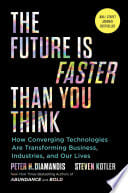
The Future Is Faster Than You Think
Peter Diamandis
An optimistic exploration of technological convergence and exponential innovation. The book examines how emerging technologies are transforming global industries. Diamandis provides insights into technological trends and potential future scenarios. It offers a forward-looking perspective on technological innovation and global transformation.
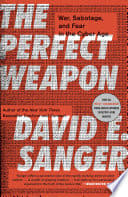
The Perfect Weapon
David E. Sanger
An investigation into cyber warfare and technological competition between global powers. The book reveals how digital technologies have become critical strategic assets in modern geopolitical conflicts. Sanger explores the complex landscape of technological espionage and national security. It provides a comprehensive look at how technology shapes international power dynamics.
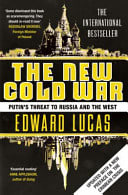
The New Cold War
Edward Lucas
An analysis of technological and geopolitical tensions between global powers. The book explores how technological competition shapes modern international relations. Lucas provides insights into the strategic challenges of technological rivalry. It offers a comprehensive view of global technological and political dynamics.
No account connected — sign in to comment.