
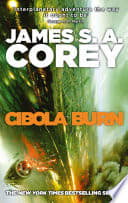
Cibola Burn marks a turning point in The Expanse series, shifting the focus from the familiar battlegrounds of Earth, Mars, and the Belt to the vast and perilous frontier beyond the ring gates. When the protomolecule’s network unlocks access to more than a thousand new worlds, humanity is faced with both opportunity and crisis. Colonization, long a dream for many, suddenly becomes possible—but with it comes chaos, lawlessness, and conflict. The story centers on the newly discovered planet Ilus (also called New Terra), a lush but dangerous world rich in lithium and other valuable resources. Belter settlers, desperate to claim a future for themselves, have already established a colony there. But their efforts are challenged when a corporate-backed expedition from Earth arrives, determined to seize control in the name of legality and profit. Tensions explode almost immediately, escalating from disputes over land and resources into acts of sabotage and violence. Into this volatile situation steps James Holden and the crew of the Rocinante, dispatched by the United Nations and the fledgling Transport Union to mediate. Holden is tasked with keeping the peace between colonists and corporate representatives while also serving as the voice of reason in a powder keg that threatens to ignite. His role as reluctant negotiator forces him to balance idealism with pragmatism, knowing that any wrong move could spiral into bloodshed. But Ilus holds dangers far greater than human rivalry. The planet’s alien ecosystem is alive with mysterious threats: swarms of toxic organisms, seismic activity, and inexplicable environmental phenomena that endanger both sides of the conflict. Beneath the surface lies a deeper mystery—the remnants of the protomolecule’s creators, whose abandoned technologies pulse with dormant power. Holden becomes the unwilling messenger for Miller, the detective resurrected as a protomolecule construct, whose cryptic guidance suggests that Ilus may be more than just another habitable world. Meanwhile, Naomi, Amos, and Alex each grapple with the immediate dangers of living in a war zone, fighting to keep the Rocinante intact while surrounded by enemies on all sides. The settlers’ desperation and the corporation’s arrogance leave little room for compromise, and violence erupts despite Holden’s best efforts. As the conflict escalates, the planet itself seems to turn against them, forcing former enemies to consider cooperation—or face annihilation together. The novel builds to a series of escalating crises: political stalemate, environmental collapse, and the haunting sense that humanity’s first steps into the stars may awaken forces far beyond its control. Through it all, the Rocinante’s crew embody resilience, loyalty, and the struggle to maintain humanity in the face of greed, fear, and alien mystery. Cibola Burn is at once a frontier adventure, a political thriller, and a meditation on colonization. It explores the moral complexities of who gets to claim new worlds, the dangers of unchecked ambition, and the fragile hope of building something new without repeating the mistakes of the past. By moving the story beyond the solar system, Corey expands the canvas of The Expanse, showing that humanity’s greatest challenges are not just survival, but learning to grow without destroying itself.
Average Rating
Informations
About the author
James S. A. Corey
Author
James S. A. Corey is the pen name used by collaborators Daniel Abraham and Ty Franck, authors of the science fiction series The Expanse. The first and last name are taken from Abraham's and Franck's middle names, respectively, and S. A. are the initials of Abraham's daughter. The name is also meant to emulate many of the space opera writers of the 1970s. In Germany, their books are published under the name James Corey with the middle initials omitted.
Cibola Burn
by James S. A. Corey
Books Like Cibola Burn
If you're looking for books similar to Cibola Burn, here are some recommendations based on themes, tone, and narrative style.
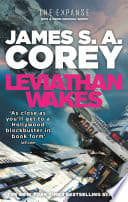
Leviathan Wakes
James S. A. Corey
The first book in The Expanse series introduces humanity's colonized solar system, where tensions between Earth, Mars, and the Belt threaten to erupt into war. Captain James Holden and detective Miller become entangled in a conspiracy that could destroy human civilization. The novel blends hard science fiction with political intrigue and space opera elements. It sets the stage for the epic narrative of human expansion and conflict that continues in subsequent books.
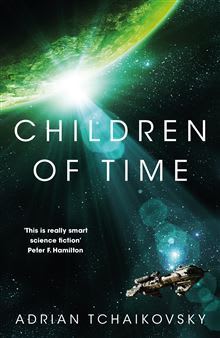
Children of Time
Adrian Tchaikovsky
A sweeping science fiction novel about the evolution of intelligence and human survival. The story follows the last remnants of humanity seeking a new home and an unexpected civilization of evolved spiders. It explores themes of colonization, technological advancement, and species adaptation. The book's grand scope and scientific imagination resonate with the expansive narrative of Cibola Burn.
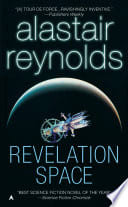
Revelation Space
Alastair Reynolds
A complex space opera exploring humanity's technological evolution and mysterious alien civilizations. The novel follows multiple characters investigating an ancient archaeological mystery that could threaten human existence. Reynolds creates a dark, scientifically rigorous universe where advanced technology and cosmic secrets intertwine. The book shares similar themes of space exploration, technological complexity, and potential alien threats.
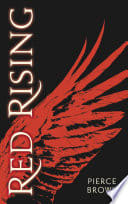
Red Rising
Pierce Brown
A science fiction novel set in a stratified solar system where a low-born hero challenges a oppressive social hierarchy. The protagonist infiltrates the ruling class to spark a revolution, combining intense action with complex social commentary. The book explores themes of colonization, rebellion, and systemic inequality. It offers a similar blend of political tension and space-based conflict found in Cibola Burn.
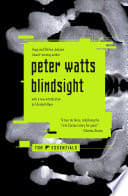
Blindsight
Peter Watts
A hard science fiction novel about a first contact mission with a truly alien intelligence. The book explores consciousness, perception, and the potential nature of extraterrestrial life through a scientifically rigorous lens. Its dark, complex approach to space exploration and alien encounters mirrors the sophisticated narrative of Cibola Burn. The novel challenges traditional assumptions about intelligence and communication.
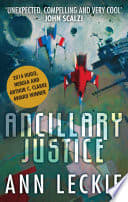
Ancillary Justice
Ann Leckie
A groundbreaking space opera about an AI that once controlled a massive starship and now exists in a single human body. The novel explores themes of identity, colonization, and political complexity in a far-future galactic civilization. Its intricate world-building and exploration of power dynamics resonate with the themes in Cibola Burn. The book challenges traditional narratives of space exploration and human interaction.
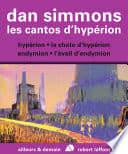
Hyperion
Dan Simmons
A complex, multi-narrative science fiction epic set in a future where humanity has colonized numerous worlds. Pilgrims travel to a mysterious planet, each telling a story that reveals layers of cosmic intrigue. The novel blends multiple genres and explores themes of technological advancement, human adaptation, and cosmic mysteries. Its rich world-building and narrative complexity echo the depth of Cibola Burn.
Aurora
Kim Stanley Robinson
A realistic exploration of interstellar colonization and its inherent challenges. The novel follows a generation ship's attempt to colonize a distant planet, revealing the complex biological and social obstacles of space migration. It offers a scientifically grounded perspective on human expansion similar to Cibola Burn. The book critically examines the practical and ethical dimensions of space colonization.
Rendezvous with Rama
Arthur C. Clarke
A classic science fiction novel about humanity's first encounter with an enormous cylindrical alien spacecraft. Scientists explore the mysterious vessel, uncovering its complex internal environment and technological marvels. The book captures the sense of wonder and exploration present in Cibola Burn. It emphasizes scientific discovery and the potential mysteries of extraterrestrial technology.
The Long Way to a Small, Angry Planet
Becky Chambers
A character-driven space opera focusing on the diverse crew of a spaceship undertaking a long-distance mission. The novel emphasizes interpersonal relationships and cultural diversity in a expansive universe. While lighter in tone than Cibola Burn, it shares themes of space exploration and human adaptation. The book offers a compassionate look at life among the stars.
No account connected — sign in to comment.