
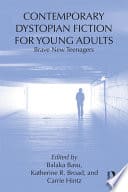
Winner of the Children’s Literature Association Edited Book Award From the jaded, wired teenagers of M.T. Anderson's Feed to the spirited young rebels of Suzanne Collins’ The Hunger Games trilogy, the protagonists of Young Adult dystopias are introducing a new generation of readers to the pleasures and challenges of dystopian imaginings. As the dark universes of YA dystopias continue to flood the market,Contemporary Dystopian Fiction for Young Adults: Brave New Teenagers offers a critical evaluation of the literary and political potentials of this widespread publishing phenomenon. With its capacity to frighten and warn, dystopian writing powerfully engages with our pressing global concerns: liberty and self-determination, environmental destruction and looming catastrophe, questions of identity and justice, and the increasingly fragile boundaries between technology and the self. When directed at young readers, these dystopian warnings are distilled into exciting adventures with gripping plots and accessible messages that may have the potential to motivate a generation on the cusp of adulthood. This collection enacts a lively debate about the goals and efficacy of YA dystopias, with three major areas of contention: do these texts reinscribe an old didacticism or offer an exciting new frontier in children's literature? Do their political critiques represent conservative or radical ideologies? And finally, are these novels high-minded attempts to educate the young or simply bids to cash in on a formula for commercial success? This collection represents a prismatic and evolving understanding of the genre, illuminating its relevance to children's literature and our wider culture.
Average Rating
Informations
About the author
Balaka Basu, Katherine R. Broad, Carrie Hintz
Author
Contemporary Dystopian Fiction for Young Adults
by Balaka Basu, Katherine R. Broad, Carrie Hintz
Books Like Contemporary Dystopian Fiction for Young Adults
If you're looking for books similar to Contemporary Dystopian Fiction for Young Adults, here are some recommendations based on themes, tone, and narrative style.
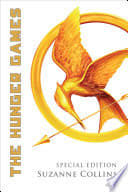
The Hunger Games
Suzanne Collins
A seminal young adult dystopian novel about Katniss Everdeen, who volunteers for a brutal televised competition where teenagers fight to the death. The book explores themes of social inequality, media manipulation, and resistance against oppressive systems. Collins creates a compelling narrative that challenges political power structures and youth agency. The story resonates with readers through its intense action and profound social commentary.
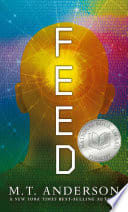
Feed
M.T. Anderson
A groundbreaking dystopian novel exploring technology's invasive impact on human consciousness. The story follows Titus, a teenager living in a world where the internet is directly implanted in people's brains. Anderson critiques consumer culture, media saturation, and the erosion of individual thought. The narrative powerfully examines how technology can manipulate and control young minds.
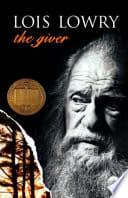
The Giver
Lois Lowry
A pioneering young adult dystopian novel about a seemingly perfect society that suppresses individual emotion and memory. Jonas, the protagonist, discovers the dark truth behind his community's apparent harmony. Lowry masterfully explores themes of individuality, memory, and the cost of eliminating human complexity. The book challenges readers to consider the value of personal experience and emotional depth.
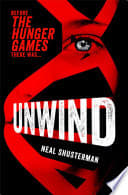
Unwind
Neal Shusterman
A provocative dystopian novel about a society where unwanted teenagers can be retroactively 'unwound' and their body parts harvested. The story follows three teenagers fighting against this brutal system. Shusterman explores complex ethical questions about bodily autonomy, social value, and human rights. The narrative provides a challenging examination of youth, survival, and systemic violence.
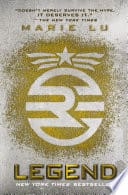
Legend
Marie Lu
A dystopian novel set in a divided society where two teenagers from opposite sides of the social spectrum become unlikely allies. Day, a criminal, and June, a prodigy, uncover systemic corruption and challenge their society's rigid structures. Lu creates a compelling narrative about social inequality, individual agency, and resistance. The story explores power dynamics and personal rebellion.
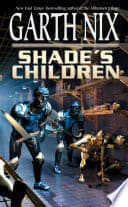
Shade's Children
Garth Nix
A dystopian novel set in a world where children are harvested for parts by mysterious overlords. A group of young survivors fights to understand and resist their oppressors. Nix creates a dark, compelling narrative about resistance, identity, and survival. The book explores themes of technological control and human resilience in an oppressive system.
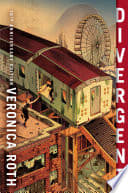
Divergent
Veronica Roth
Set in a future Chicago where society is divided into strict personality-based factions, the novel follows Beatrice Prior's journey of self-discovery. Roth examines identity, conformity, and individual choice in a rigidly structured world. The protagonist challenges societal norms and fights against systemic oppression. The narrative provides a complex exploration of personal freedom and social categorization.
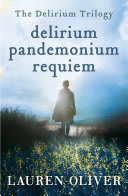
Delirium
Lauren Oliver
A dystopian novel where love is considered a disease and mandatory surgery eliminates romantic feelings. Lena discovers the power of forbidden emotion and challenges her society's oppressive rules. Oliver creates a poignant narrative about individual passion and resistance against emotional suppression. The book explores themes of personal freedom and the human capacity for connection.
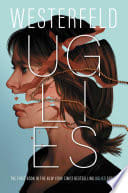
Uglies
Scott Westerfeld
A dystopian novel examining beauty standards and social conformity in a world where everyone is surgically transformed at age sixteen. Tally Youngblood navigates a society that values physical perfection above individual identity. Westerfeld critiques societal pressures, technological manipulation, and the concept of beauty. The narrative offers a sharp commentary on youth, transformation, and resistance.
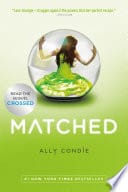
Matched
Ally Condie
A dystopian romance exploring a society that algorithmically matches individuals for marriage and life choices. Cassia begins to question her predetermined path and challenges the system's control. Condie examines themes of individual choice, love, and resistance against technological determinism. The narrative provides a nuanced exploration of personal freedom and societal constraints.
No account connected — sign in to comment.