
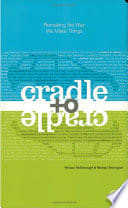
A manifesto for a radically different philosophy and practice of manufacture and environmentalism "Reduce, reuse, recycle" urge environmentalists; in other words, do more with less in order to minimize damage. But as this provocative, visionary book argues, this approach perpetuates a one-way, "cradle to grave" manufacturing model that dates to the Industrial Revolution and casts off as much as 90 percent of the materials it uses as waste, much of it toxic. Why not challenge the notion that human industry must inevitably damage the natural world? In fact, why not take nature itself as our model? A tree produces thousands of blossoms in order to create another tree, yet we do not consider its abundance wasteful but safe, beautiful, and highly effective; hence, "waste equals food" is the first principle the book sets forth. Products might be designed so that, after their useful life, they provide nourishment for something new-either as "biological nutrients" that safely re-enter the environment or as "technical nutrients" that circulate within closed-loop industrial cycles, without being "downcycled" into low-grade uses (as most "recyclables" now are). Elaborating their principles from experience (re)designing everything from carpeting to corporate campuses, William McDonough and Michael Braungart make an exciting and viable case for change.
Average Rating
Informations
About the author
William McDonough, Michael Braungart
Author
Cradle to Cradle
by William McDonough, Michael Braungart
Books Like Cradle to Cradle
If you're looking for books similar to Cradle to Cradle, here are some recommendations based on themes, tone, and narrative style.
The Upcycle
William McDonough, Michael Braungart
A follow-up to Cradle to Cradle that further develops the authors' revolutionary design philosophy. The book expands on the concept of creating products and systems that are not just less harmful, but actively beneficial to the environment. McDonough and Braungart provide concrete examples of how design can generate positive ecological impact. It continues the transformative thinking introduced in their previous work.
Natural Capitalism
Paul Hawken, Amory Lovins, L. Hunter Lovins
This book presents a revolutionary approach to integrating ecological thinking with business strategy. It demonstrates how companies can become more efficient and profitable by mimicking natural systems and valuing natural resources. The authors propose radical redesigns of industrial processes to create more sustainable and regenerative economic models. It complements McDonough's ideas about redesigning production to work in harmony with nature.
Drawdown
Paul Hawken
A comprehensive plan for reversing global warming through practical, scalable solutions. The book presents 100 substantive solutions to reduce carbon emissions across various sectors. Hawken provides a hopeful and actionable approach to addressing climate change through innovative technologies and practices. It aligns with the book's philosophy of proactive, systemic environmental solutions.
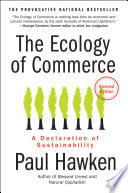
The Ecology of Commerce
Paul Hawken
A groundbreaking exploration of sustainable business practices that challenges traditional economic models. Hawken argues that businesses can be a force for environmental restoration and social good. The book provides a comprehensive critique of industrial capitalism and offers innovative solutions for creating regenerative economic systems. It shares a similar vision of transforming industrial practices to work in harmony with natural systems.
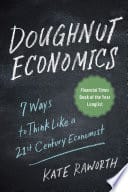
Doughnut Economics
Kate Raworth
A radical rethinking of economic models that challenges traditional approaches to growth and sustainability. Raworth proposes a new economic framework that balances human needs with planetary boundaries. The book argues for a regenerative and distributive economic system that works within ecological limits. It shares a similar vision of reimagining human systems to work in harmony with natural processes.
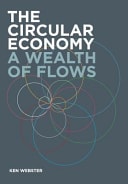
The Circular Economy
Ken Webster
An in-depth exploration of economic models that eliminate waste and continuously reuse resources. Webster presents a comprehensive framework for redesigning industrial systems to mimic natural cycles. The book provides practical strategies for implementing circular economy principles across different sectors. It directly builds on the core ideas introduced in Cradle to Cradle.
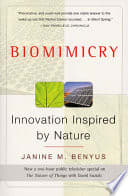
Biomimicry
Janine Benyus
An inspiring exploration of how human innovation can learn from nature's time-tested patterns and strategies. Benyus introduces the concept of looking to natural systems for sustainable design solutions across various fields including architecture, engineering, and manufacturing. The book showcases how biological systems can provide innovative models for solving human challenges. It shares the core philosophy of understanding and emulating natural processes.
Regenerative Design
Pamela Mang, Bill Reed
A comprehensive guide to designing human systems that restore and regenerate ecological and social environments. The book presents a holistic approach to sustainable design that goes beyond minimizing harm to actively creating positive impact. It provides frameworks for understanding and implementing regenerative principles across various domains. The work resonates deeply with Cradle to Cradle's transformative design philosophy.
Sustainable Materials Management
Walter Stahel
A pioneering work on resource efficiency and circular economy strategies. Stahel explores innovative approaches to managing materials that minimize waste and maximize value. The book provides practical insights into transforming industrial processes to create more sustainable systems. It complements the design philosophy presented in Cradle to Cradle.
Green to Gold
Daniel Esty, Andrew Winston
An exploration of how smart companies can turn environmental challenges into business opportunities. The authors demonstrate how sustainability can drive innovation, efficiency, and competitive advantage. The book provides strategic insights for businesses looking to integrate environmental thinking into their core strategies. It complements Cradle to Cradle's approach to reimagining industrial processes.
No account connected — sign in to comment.