
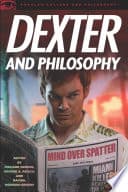
What explains the huge popular following for Dexter, currently the most-watched show on cable, which sympathetically depicts a serial killer driven by a cruel compulsion to brutally slay one victim after another? Although Dexter Morgan kills only killers, he is not a vigilante animated by a sense of justice but a charming psychopath animated by a lust to kill, ritualistically and bloodily. However his gory appetite is controlled by “Harry’s Code,” which limits his victims to those who have gotten away with murder, and his job as a blood spatter expert for the Miami police department gives him the inside track on just who those legitimate targets may be. In Dexter and Philosophy, an elite team of philosophers don their rubber gloves and put Dexter’s deeds under the microscope. Since Dexter is driven to ritual murder by his “Dark Passenger,” can he be blamed for killing, especially as he only murders other murderers? Does Dexter fit the profile of the familiar fictional type of the superhero? What part does luck play in making Dexter who he is? How and why are horror and disgust turned into aesthetic pleasure for the TV viewer? How essential is Dexter’s emotional coldness to his lust for slicing people up? Are Dexter’s lies and deceptions any worse than the lies and deceptions of the non-criminals around him? Why does Dexter long to be a normal human being and why can’t he accomplish this apparently simple goal?
Average Rating
Informations
About the author
Richard Greene, George A. Reisch, Rachel Robison
Author
Dexter and Philosophy
by Richard Greene, George A. Reisch, Rachel Robison
Books Like Dexter and Philosophy
If you're looking for books similar to Dexter and Philosophy, here are some recommendations based on themes, tone, and narrative style.
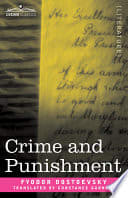
Crime and Punishment
Fyodor Dostoevsky
A classic novel exploring the psychological and moral consequences of murder through the protagonist Raskolnikov. The book delves deep into the philosophical questions of guilt, redemption, and moral justification for violent actions. Like Dexter, the main character struggles with internal moral conflicts and the psychological aftermath of killing. Dostoevsky's work provides a profound examination of human nature and ethical boundaries.
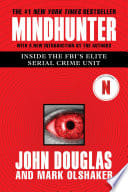
Mindhunter
John E. Douglas, Mark Olshaker
A groundbreaking non-fiction work by an FBI profiler that explores the psychology of serial killers and criminal behavior. The book provides deep insights into the motivations and mental processes of murderers, similar to the philosophical examination of Dexter's compulsions. Douglas's work offers a real-world perspective on the psychological mechanisms that drive violent behavior. It provides a compelling backdrop for understanding characters like Dexter who operate with a complex moral code.
The Anatomy of Human Destructiveness
Erich Fromm
A comprehensive psychological analysis of human aggression and violent tendencies. Fromm explores the psychological and social mechanisms that drive destructive behavior. Similar to the philosophical examination in Dexter and Philosophy, it provides deep insights into human nature. The book challenges readers to understand the complex motivations behind violent impulses.
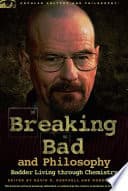
Breaking Bad and Philosophy
David R. Koepsell, Robert Arp
An analytical exploration of the moral complexities surrounding Walter White's transformation from a mild-mannered chemistry teacher to a dangerous drug kingpin. The book examines ethical dilemmas, personal identity, and the philosophical implications of moral choices under extreme circumstances. Like Dexter, it delves into the psychological motivations behind a protagonist who operates outside traditional moral boundaries. The analysis challenges readers to consider the nuanced nature of good and evil in contemporary storytelling.
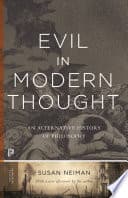
Evil in Modern Thought
Susan Neiman
A philosophical examination of the concept of evil across different historical and cultural contexts. The book provides a comprehensive analysis of moral philosophy and the nature of human wickedness. Similar to Dexter and Philosophy, it challenges readers to reconsider traditional moral frameworks. Neiman's work offers a profound exploration of ethical complexity and human nature.
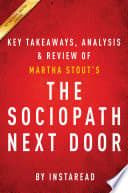
The Sociopath Next Door
Martha Stout
A psychological study exploring the prevalence of sociopathy and its manifestations in everyday life. The book provides insights into the psychological mechanisms of individuals who lack empathy and operate outside traditional moral boundaries. Like Dexter, it examines how seemingly functional individuals can harbor complex psychological conditions. Stout's work offers a compelling exploration of human psychology and moral complexity.
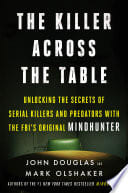
The Killer Across the Table
John E. Douglas
Another work by the renowned FBI profiler exploring the psychological profiles of multiple murderers. The book provides intimate insights into the minds of serial killers, offering a real-world counterpart to fictional explorations like Dexter. Douglas's analysis reveals the complex psychological mechanisms that drive violent behavior. It complements the philosophical examination of murderous impulses.
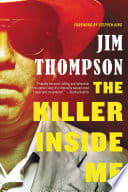
The Killer Inside Me
Jim Thompson
A noir novel that explores the psychological landscape of a seemingly normal small-town deputy sheriff who harbors a deeply violent inner nature. The protagonist's internal struggle and methodical approach to murder echo Dexter's own psychological complexity. Thompson's novel provides a chilling examination of a killer's mind, revealing the thin line between social conformity and murderous impulse. The book offers a raw, unflinching look at the darkness that can exist beneath a controlled exterior.
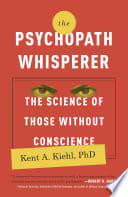
The Psychopath Whisperer
Kent Kiehl
A scientific exploration of psychopathy based on extensive neurological research. The book examines the brain science behind antisocial behavior and violent tendencies. Like the philosophical analysis of Dexter, it provides a nuanced understanding of psychological conditions that drive extreme behavior. Kiehl's work offers a scientific perspective on the psychological mechanisms explored in the Dexter narrative.
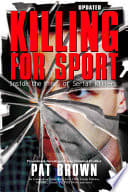
Killing for Sport
Pat Brown
A forensic criminologist's exploration of serial killer psychology and motivation. The book provides a detailed analysis of the mental processes that drive individuals to commit multiple murders. Similar to the philosophical examination in Dexter and Philosophy, it offers deep insights into the psychological mechanisms of violent behavior. Brown's work challenges readers to understand the complex motivations behind serial killing.
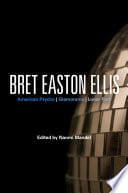
American Psycho
Bret Easton Ellis
A provocative novel that explores the psychological landscape of a Wall Street executive with violent fantasies and murderous impulses. The book critically examines the thin veneer of social respectability and the potential for violence beneath a carefully constructed persona. Like Dexter, the protagonist navigates between a seemingly normal professional life and a dark, murderous inner world. Ellis's novel provides a satirical and disturbing exploration of identity, morality, and social performance.
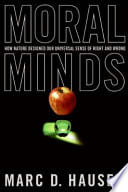
Moral Minds
Marc Hauser
A scientific exploration of the evolutionary origins of moral reasoning and ethical behavior. The book examines how humans develop moral frameworks and make ethical decisions. Like Dexter and Philosophy, it challenges traditional understandings of morality and human nature. Hauser's work provides a scientific perspective on the philosophical questions of right and wrong.

Philosophy of Murder
Hugh LaFollette
An academic exploration of the ethical dimensions of killing and moral justifications for violence. The book systematically examines philosophical arguments surrounding murder, self-defense, and moral culpability. It provides a theoretical framework for understanding complex moral scenarios similar to Dexter's ethical code. The analysis challenges readers to consider the nuanced philosophical questions surrounding justified and unjustified killing.
No account connected — sign in to comment.