
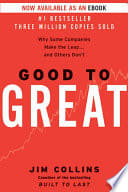
The Challenge Built to Last, the defining management study of the nineties, showed how great companies triumph over time and how long-term sustained performance can be engineered into the DNA of an enterprise from the verybeginning. But what about the company that is not born with great DNA? How can good companies, mediocre companies, even bad companies achieve enduring greatness? The Study For years, this question preyed on the mind of Jim Collins. Are there companies that defy gravity and convert long-term mediocrity or worse into long-term superiority? And if so, what are the universal distinguishing characteristics that cause a company to go from good to great? The Standards Using tough benchmarks, Collins and his research team identified a set of elite companies that made the leap to great results and sustained those results for at least fifteen years. How great? After the leap, the good-to-great companies generated cumulative stock returns that beat the general stock market by an average of seven times in fifteen years, better than twice the results delivered by a composite index of the world's greatest companies, including Coca-Cola, Intel, General Electric, and Merck. The Comparisons The research team contrasted the good-to-great companies with a carefully selected set of comparison companies that failed to make the leap from good to great. What was different? Why did one set of companies become truly great performers while the other set remained only good? Over five years, the team analyzed the histories of all twenty-eight companies in the study. After sifting through mountains of data and thousands of pages of interviews, Collins and his crew discovered the key determinants of greatness -- why some companies make the leap and others don't. The Findings The findings of the Good to Great study will surprise many readers and shed light on virtually every area of management strategy and practice. The findings include: Level 5 Leaders: The research team was shocked to discover the type of leadership required to achieve greatness. The Hedgehog Concept (Simplicity within the Three Circles): To go from good to great requires transcending the curse of competence. A Culture of Discipline: When you combine a culture of discipline with an ethic of entrepreneurship, you get the magical alchemy of great results. Technology Accelerators: Good-to-great companies think differently about the role of technology. The Flywheel and the Doom Loop: Those who launch radical change programs and wrenching restructurings will almost certainly fail to make the leap. “Some of the key concepts discerned in the study,” comments Jim Collins, "fly in the face of our modern business culture and will, quite frankly, upset some people.” Perhaps, but who can afford to ignore these findings?
Average Rating
Informations
About the author
Jim Collins
Author
James, Jim, Jimmy, or Jamie Collins may refer to:
Good to Great
by Jim Collins
Books Like Good to Great
If you're looking for books similar to Good to Great, here are some recommendations based on themes, tone, and narrative style.
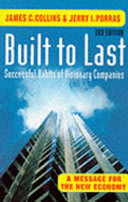
Built to Last
Jim Collins
A groundbreaking study of successful companies that have sustained excellence over decades. Collins explores what makes visionary companies different from their competitors. The book examines how top organizations create a lasting legacy through core values and strategic vision. It provides insights into building an enduring, great organization that goes beyond mere financial success.
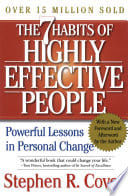
The 7 Habits of Highly Effective People
Stephen Covey
A transformative guide to personal and professional development that aligns with leadership principles. Covey presents a holistic approach to effectiveness through principles of character and personal growth. The book offers a framework for personal leadership and organizational success. It emphasizes proactive behavior, goal setting, and continuous improvement.
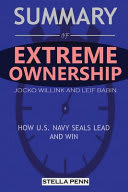
Extreme Ownership
Jocko Willink
A leadership philosophy derived from Navy SEAL training that emphasizes total accountability. Willink and Babin share principles of leadership that apply to both military and business environments. The book demonstrates how taking complete ownership leads to exceptional performance. It provides actionable strategies for personal and organizational leadership.
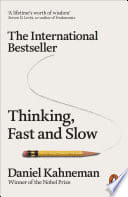
Thinking, Fast and Slow
Daniel Kahneman
An exploration of human decision-making processes and cognitive biases that impact business and leadership. Kahneman reveals how our thinking is divided into two systems: intuitive and analytical. The book provides deep insights into how leaders can make more rational and effective decisions. It challenges readers to understand their own cognitive limitations.
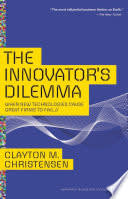
The Innovator's Dilemma
Clayton Christensen
A seminal work exploring why great companies fail despite doing everything right. Christensen introduces the concept of disruptive innovation and how established companies can become vulnerable. The book provides insights into technological change and strategic adaptation. It offers a framework for understanding innovation in competitive markets.
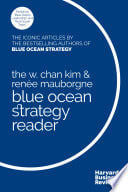
Blue Ocean Strategy
W. Chan Kim
A groundbreaking approach to creating uncontested market space and making competition irrelevant. The authors present strategies for finding new market opportunities beyond traditional competitive landscapes. The book provides a framework for innovative strategic thinking. It demonstrates how companies can create unique value propositions.
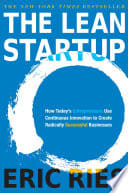
The Lean Startup
Eric Ries
A revolutionary approach to building and managing successful startups through continuous innovation. Ries introduces methods for creating sustainable businesses through validated learning and rapid experimentation. The book provides a systematic approach to developing and managing innovative organizations. It emphasizes adaptability and customer-focused product development.
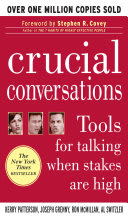
Crucial Conversations
Kerry Patterson
A guide to handling high-stakes communication and difficult conversations in professional settings. The book provides strategies for navigating challenging dialogues with confidence and skill. It offers techniques for maintaining dialogue when stakes are high and emotions are strong. Readers learn how to create safe environments for honest, productive communication.
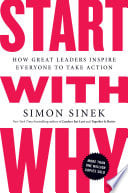
Start with Why
Simon Sinek
An exploration of inspirational leadership that begins with understanding fundamental purpose. Sinek argues that the most successful leaders and organizations start by defining their core 'why'. The book provides a framework for creating meaningful, purpose-driven organizations. It challenges leaders to think beyond tactics and focus on fundamental motivation.
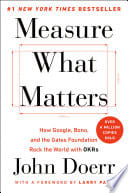
Measure What Matters
John Doerr
A comprehensive guide to goal-setting and organizational alignment using OKRs (Objectives and Key Results). Doerr shares insights from top companies about creating focus and driving breakthrough performance. The book demonstrates how clear, measurable goals can transform organizational effectiveness. It provides practical strategies for implementing goal-setting frameworks.
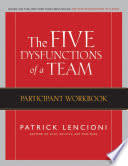
The Five Dysfunctions of a Team
Patrick Lencioni
A leadership fable that reveals common team dynamics that prevent organizational success. Lencioni identifies five key dysfunctions that undermine team performance. The book provides a model for building cohesive, high-performing teams. It offers practical strategies for overcoming interpersonal challenges in organizational settings.
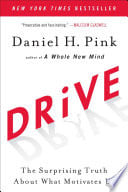
Drive
Daniel Pink
An exploration of human motivation and what truly drives performance in modern organizations. Pink challenges traditional notions of motivation, emphasizing autonomy, mastery, and purpose. The book provides insights into creating environments that inspire exceptional performance. It offers a fresh perspective on leadership and employee engagement.
No account connected — sign in to comment.