
THE MIND-BENDING CULT CLASSIC ABOUT A HOUSE THAT’S LARGER ON THE INSIDE THAN ON THE OUTSIDE • A masterpiece of horror and an astonishingly immersive, maze-like reading experience that redefines the boundaries of a novel. ''Simultaneously reads like a thriller and like a strange, dreamlike excursion into the subconscious." —Michiko Kakutani, The New York Times "Thrillingly alive, sublimely creepy, distressingly scary, breathtakingly intelligent—it renders most other fiction meaningless." —Bret Easton Ellis, bestselling author of American Psycho “This demonically brilliant book is impossible to ignore.” —Jonathan Lethem, award-winning author of Motherless Brooklyn One of The Atlantic’s Great American Novels of the Past 100 Years Years ago, when House of Leaves was first being passed around, it was nothing more than a badly bundled heap of paper, parts of which would occasionally surface on the Internet. No one could have anticipated the small but devoted following this terrifying story would soon command. Starting with an odd assortment of marginalized youth—musicians, tattoo artists, programmers, strippers, environmentalists, and adrenaline junkies—the book eventually made its way into the hands of older generations, who not only found themselves in those strangely arranged pages but also discovered a way back into the lives of their estranged children. Now made available in book form, complete with the original colored words, vertical footnotes, and second and third appendices, the story remains unchanged. Similarly, the cultural fascination with House of Leaves remains as fervent and as imaginative as ever. The novel has gone on to inspire doctorate-level courses and masters theses, cultural phenomena like the online urban legend of “the backrooms,” and incredible works of art in entirely unrealted mediums from music to video games. Neither Pulitzer Prize-winning photojournalist Will Navidson nor his companion Karen Green was prepared to face the consequences of the impossibility of their new home, until the day their two little children wandered off and their voices eerily began to return another story—of creature darkness, of an ever-growing abyss behind a closet door, and of that unholy growl which soon enough would tear through their walls and consume all their dreams.
Average Rating
Informations
About the author
Vladimir Nabokov
Author
Vladimir Vladimirovich Nabokov, also known by the pen name Vladimir Sirin, was a Russian and American novelist, poet, translator, and entomologist. Born in Imperial Russia in 1899, Nabokov wrote his first nine novels in Russian (1926–1938) while living in Berlin, where he met his wife, Véra Nabokov. He achieved international acclaim and prominence after moving to the United States, where he began writing in English. Trilingual in Russian, English, and French, Nabokov became a U.S. citizen in 1945 and lived mostly on the East Coast before returning to Europe in 1961, where he settled in Montreux, Switzerland.
House of Leaves
by Vladimir Nabokov
Books Like House of Leaves
If you're looking for books similar to House of Leaves, here are some recommendations based on themes, tone, and narrative style.

Pale Fire
Vladimir Nabokov
A postmodern novel that plays with narrative structure and perception, similar to House of Leaves. The book is presented as a 999-line poem with an accompanying commentary that gradually reveals a complex and unreliable narrative. It challenges traditional storytelling and blurs the lines between reality and fiction. The experimental format and metafictional approach make it a compelling recommendation for fans of Danielewski's work.
S.
J.J. Abrams and Doug Dorst
A metafictional novel that tells multiple interconnected stories through marginal notes, inserts, and complex narrative layers. The book is designed to look like a library book with extensive handwritten annotations. It explores themes of mystery, interpretation, and the nature of storytelling. Its innovative design and multilayered narrative echo the experimental approach of House of Leaves.
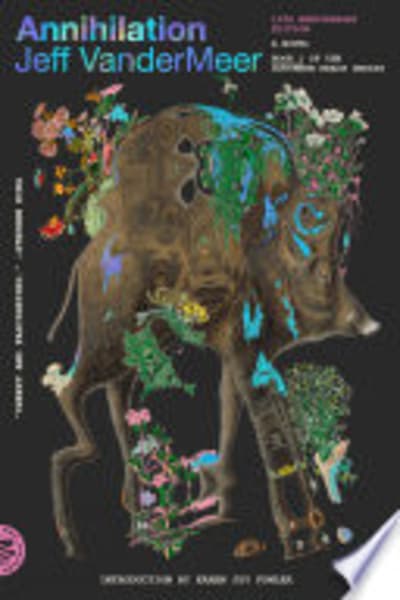
Annihilation
Jeff VanderMeer
A surreal science fiction novel about a mysterious expedition into an inexplicable environmental anomaly. The book creates a sense of psychological unease and explores the breakdown of perception and reality. Its dreamlike narrative and exploration of unknown spaces echo the disorienting qualities of House of Leaves. The novel challenges readers' understanding of narrative and perception.
Infinite Jest
David Foster Wallace
A complex, experimental novel that defies traditional narrative structure. The book explores themes of entertainment, addiction, and human connection through multiple interconnected storylines. Its unconventional formatting and footnotes echo the innovative style of House of Leaves. The novel's intricate design and psychological depth make it a challenging but rewarding read for those who appreciate experimental fiction.
Ghostwritten
David Mitchell
A novel that interconnects multiple narratives across different times and places, creating a complex, layered storytelling experience. The book explores themes of connection, chance, and the ripple effects of individual actions. Its experimental structure and genre-blending approach make it similar to House of Leaves. The novel challenges traditional narrative boundaries and reader expectations.
Night Film
Marisha Pessl
A dark, atmospheric thriller that blends reality with psychological horror. The novel follows an investigative journalist exploring the mysterious death of a cult filmmaker's daughter. It incorporates multimedia elements and creates an immersive, unsettling reading experience. The book's exploration of psychological darkness and unconventional narrative style make it comparable to House of Leaves.
Illuminae
Amie Kaufman and Jay Kristoff
A science fiction novel told through a dossier of hacked documents, emails, military files, and AI communications. The book's innovative visual storytelling and unconventional narrative structure create a unique reading experience. It explores themes of artificial intelligence, survival, and human connection. The experimental format and genre-bending approach make it an intriguing recommendation.
Bats of the Republic
Zachary Thomas Dodson
An illustrated novel that interweaves two narratives across different time periods, using unique visual storytelling techniques. The book combines historical fiction with speculative elements, exploring interconnected stories through innovative design. Its experimental approach to narrative and visual presentation makes it similar to House of Leaves. The novel challenges traditional storytelling methods and reader expectations.
The Fifty Year Sword
Mark Z. Danielewski
Another experimental work by the author of House of Leaves, this novel uses unique typography and visual storytelling. The book tells a haunting story through fragmented narratives and visual elements. Its exploration of horror and unconventional narrative structure makes it a natural companion to House of Leaves. The novel creates an immersive and unsettling reading experience.
The Raw Shark Texts
Steven Hall
A surreal novel that plays with narrative structure and conceptual storytelling. The protagonist experiences a strange memory loss and encounters a conceptual shark that threatens to consume his identity. The book uses innovative typography and visual elements to tell its story. Its experimental approach and exploration of perception mirror the unique style of House of Leaves.
No account connected — sign in to comment.