
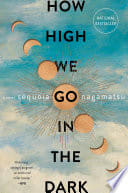
NATIONAL BESTSELLER • NEW YORK TIMES BOOK REVIEW EDITORS' CHOICE • ROXANE GAY'S AUDACIOUS BOOK CLUB PICK • FINALIST FOR THE URSULA K. LE GUIN PRIZE "Moving and thought-provoking . . . offering psychological insights in lyrical prose while seriously exploring speculative conceits." — New York Times Book Review "Haunting and luminous . . . Beautiful and lucid science fiction. An astonishing debut." — Alan Moore, creator of Watchmen and V for Vendetta Recommended by New York Times Book Review • Los Angeles Times • NPR • Washington Post • Wall Street Journal • Entertainment Weekly • Esquire • Good Housekeeping • NBC News • Buzzfeed • Goodreads • The Millions • The Philadelphia Inquirer • Minneapolis Star-Tribune • San Francisco Chronicle • The Guardian • and many more! For fans of Cloud Atlas and Station Eleven, a spellbinding and profoundly prescient debut that follows a cast of intricately linked characters over hundreds of years as humanity struggles to rebuild itself in the aftermath of a climate plague—a daring and deeply heartfelt work of mind-bending imagination from a singular new voice. In 2030, a grieving archeologist arrives in the Arctic Circle to continue the work of his recently deceased daughter at the Batagaika Crater, where researchers are studying long-buried secrets now revealed in melting permafrost, including the perfectly preserved remains of a girl who appears to have died of an ancient virus. Once unleashed, the Arctic plague will reshape life on Earth for generations to come, quickly traversing the globe, forcing humanity to devise a myriad of moving and inventive ways to embrace possibility in the face of tragedy. In a theme park designed for terminally ill children, a cynical employee falls in love with a mother desperate to hold on to her infected son. A heartbroken scientist searching for a cure finds a second chance at fatherhood when one of his test subjects—a pig—develops the capacity for human speech. A widowed painter and her teenaged granddaughter embark on a cosmic quest to locate a new home planet. From funerary skyscrapers to hotels for the dead to interstellar starships, Sequoia Nagamatsu takes readers on a wildly original and compassionate journey, spanning continents, centuries, and even celestial bodies to tell a story about the resilience of the human spirit, our infinite capacity to dream, and the connective threads that tie us all together in the universe. "Wondrous, and not just in the feats of imagination, which are so numerous it makes me dizzy to recall them, but also in the humanity and tenderness with which Sequoia Nagamatsu helps us navigate this landscape. . . . This is a truly amazing book, one to keep close as we imagine the uncertain future." — Kevin Wilson, New York Times bestselling author of Nothing to See Here
Average Rating
Informations
About the author
Sequoia Nagamatsu
Author
Sequoia Nagamatsu is an American novelist, short story writer, and professor, and the author of the novel How High We Go in the Dark.
How High We Go in the Dark
by Sequoia Nagamatsu
Books Like How High We Go in the Dark
If you're looking for books similar to How High We Go in the Dark, here are some recommendations based on themes, tone, and narrative style.
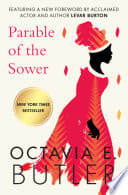
Parable of the Sower
Octavia Butler
A dystopian novel set in a climate-ravaged California, following a young woman navigating societal collapse. Butler explores themes of adaptation, community, and human potential in the face of environmental and social breakdown. The book shares Nagamatsu's interest in how humanity might reimagine itself during global crisis. It offers a powerful narrative of hope and transformation.
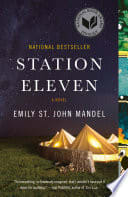
Station Eleven
Emily St. John Mandel
A post-apocalyptic novel exploring human resilience after a devastating pandemic. The story follows a traveling theater troupe navigating a world transformed by a global flu outbreak. Like Nagamatsu's work, it examines how humanity adapts and finds meaning in the aftermath of catastrophic loss. The narrative weaves together multiple characters and timelines, revealing the interconnectedness of human experience.
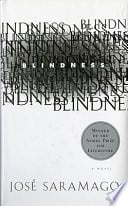
Blindness
José Saramago
A novel about societal collapse following a mysterious epidemic of blindness. The story explores human behavior and social structures under extreme conditions. Saramago's narrative shares Nagamatsu's interest in human response to catastrophic events. The book offers a profound exploration of human nature and social dynamics.
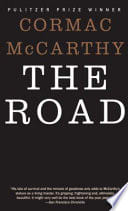
The Road
Cormac McCarthy
A post-apocalyptic novel about a father and son surviving in a devastated world. The book explores themes of survival, human connection, and hope in the face of extreme adversity. McCarthy's stark prose and emotional depth resonate with Nagamatsu's exploration of human resilience. The narrative focuses on personal relationships and emotional survival in a transformed landscape.
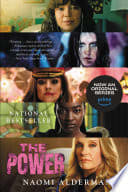
The Power
Naomi Alderman
A speculative fiction novel exploring global societal transformation through a supernatural premise. The story tracks how a biological change dramatically alters human social structures. Alderman's narrative shares Nagamatsu's interest in systemic change and human adaptation. The book offers a provocative exploration of potential human transformation.
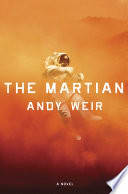
The Martian
Andy Weir
A science fiction novel about human survival and problem-solving in an extreme environment. The story follows an astronaut's ingenious efforts to survive on Mars. Weir's narrative shares Nagamatsu's focus on human resilience and adaptability. The book offers a compelling exploration of human potential in challenging circumstances.
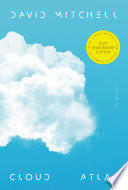
Cloud Atlas
David Mitchell
An ambitious novel spanning multiple time periods and genres, exploring interconnected human stories across centuries. The book demonstrates how individual lives are linked through time and space. Mitchell's narrative style mirrors Nagamatsu's approach of creating a sweeping, imaginative exploration of human resilience. The novel challenges traditional storytelling by presenting a complex, interwoven narrative.

Oryx and Crake
Margaret Atwood
A speculative fiction novel exploring genetic engineering and global catastrophe. The story follows a protagonist navigating a world transformed by scientific experimentation. Atwood's narrative shares Nagamatsu's interest in human potential and adaptation. The book offers a complex exploration of scientific innovation and its potential consequences.
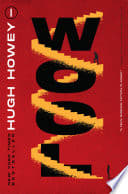
Wool
Hugh Howey
A post-apocalyptic novel about survival in an underground silo after environmental collapse. The story explores human adaptation and social structures in extreme conditions. Howey's narrative shares Nagamatsu's interest in how communities might reorganize after global catastrophe. The book offers a compelling exploration of human survival and social dynamics.
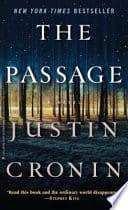
The Passage
Justin Cronin
An epic novel about a pandemic that transforms human civilization, exploring viral outbreak and its long-term consequences. The story spans decades, following survivors in a dramatically altered world. Cronin's narrative shares Nagamatsu's approach of tracking human adaptation through multiple perspectives. The book combines scientific speculation with deeply human storytelling.
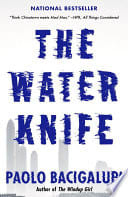
The Water Knife
Paolo Bacigalupi
A near-future novel about water scarcity and societal collapse in the American Southwest. The story explores environmental crisis and human adaptation. Bacigalupi's narrative shares Nagamatsu's interest in how humanity might respond to global environmental challenges. The book offers a gritty, realistic exploration of potential future scenarios.
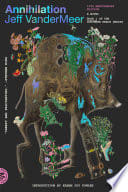
Annihilation
Jeff VanderMeer
A science fiction novel about environmental transformation and human perception. The story follows a scientific expedition into a mysterious, rapidly changing ecological zone. VanderMeer explores themes of adaptation and the unknown, similar to Nagamatsu's approach. The narrative challenges traditional understanding of human experience and environmental interaction.
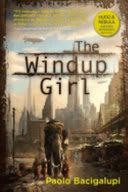
The Windup Girl
Paolo Bacigalupi
A biopunk novel set in a future Thailand dealing with environmental and technological challenges. The story explores genetic engineering and human adaptation in a resource-scarce world. Bacigalupi's narrative shares Nagamatsu's interest in scientific speculation and human resilience. The book offers a complex view of potential future scenarios.
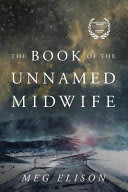
The Book of the Unnamed Midwife
Meg Elison
A post-apocalyptic novel exploring survival after a pandemic that decimates the human population. The story follows a female survivor documenting her experiences in a transformed world. Elison's narrative shares Nagamatsu's interest in human resilience and adaptation. The book offers a unique perspective on survival and community in a drastically altered landscape.
No account connected — sign in to comment.