
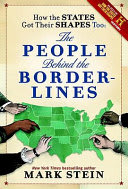
Was Roger Williams too pure for the Puritans, and what does that have to do with Rhode Island? Why did Augustine Herman take ten years to complete the map that established Delaware? How did Rocky Mountain rogues help create the state of Colorado? All this and more is explained in Mark Stein's new book. How the States Got Their Shapes Too follows How the States Got Their Shapes looks at American history through the lens of its borders, but, while How The States Got Their Shapes told us why, this book tells us who. This personal element in the boundary stories reveals how we today are like those who came before us, and how we differ, and most significantly: how their collective stories reveal not only an historical arc but, as importantly, the often overlooked human dimension in that arc that leads to the nation we are today. The people featured in How the States Got Their Shapes Too lived from the colonial era right up to the present. They include African Americans, Native Americans, Hispanics, women, and of course, white men. Some are famous, such as Thomas Jefferson, John Quincy Adams, and Daniel Webster. Some are not, such as Bernard Berry, Clarina Nichols, and Robert Steele. And some are names many of us know but don't really know exactly what they did, such as Ethan Allen (who never made furniture, though he burned a good deal of it). In addition, How the States Got Their Shapes Too tells of individuals involved in the Almost States of America, places we sought to include but ultimately did not: Canada, the rest of Mexico (we did get half), Cuba, and, still an issue, Puerto Rico. Each chapter is largely driven by voices from the time, in the form of excerpts from congressional debates, newspapers, magazines, personal letters, and diaries. Told in Mark Stein's humorous voice, How the States Got Their Shapes Too is a historical journey unlike any other you've taken. The strangers you meet here had more on their minds than simple state lines, and this book makes for a great new way of seeing and understanding the United States.
Average Rating
Informations
About the author
Mark Stein
Author
Mark or Marc Stein may refer to:Sir Aurel Stein, Hungarian-British archaeologist Mark Stein (musician), American musician Mark Stein (author), American screenwriter, playwright, and non-fiction writer Mark Stein (footballer), South African-born English footballer Mark Stein, American football coach Marc Stein (footballer), German footballer Marc Stein (reporter), American sports reporter
How the States Got Their Shapes Too
by Mark Stein
Books Like How the States Got Their Shapes Too
If you're looking for books similar to How the States Got Their Shapes Too, here are some recommendations based on themes, tone, and narrative style.

The Autobiography of Malcolm X
Malcolm X and Alex Haley
A powerful personal narrative that provides insights into the African American experience and the civil rights movement. Malcolm X's story reveals the complex social and political dynamics that have shaped American society. The book offers a deeply personal perspective on race, identity, and social transformation.

Team of Rivals
Doris Kearns Goodwin
A detailed account of Abraham Lincoln's political genius in managing competing personalities during a critical period of American history. Goodwin provides an intimate look at the personal and political dynamics that shaped the United States during the Civil War. The book reveals how individual relationships and personalities influence historical outcomes.

The Warmth of Other Suns
Isabel Wilkerson
An epic story of America's Great Migration, exploring how African Americans reshaped the nation's demographic and cultural landscape. Wilkerson uses personal narratives to illuminate broader historical trends, much like Stein's approach to state boundary stories. The book reveals how individual experiences contribute to larger historical transformations.
Guns, Germs, and Steel
Jared Diamond
A comprehensive exploration of how geographical and environmental factors have influenced human societal development. Diamond examines how environmental conditions shape historical trajectories, providing a broad perspective on human cultural evolution. The book offers insights into the complex interactions between geography, technology, and social development.
How the States Got Their Shapes
Mark Stein
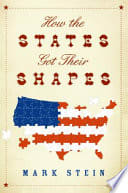
The original book that explores the fascinating geographical and historical origins of state boundaries in the United States. Stein provides an engaging narrative that reveals the complex political, cultural, and geographical factors that shaped each state's unique borders. This book offers a comprehensive look at the often-overlooked stories behind state formation, providing insights into American territorial development.

A People's History of the United States
Howard Zinn
A groundbreaking work that presents American history from the perspective of marginalized groups, including Native Americans, African Americans, and women. Zinn, like Stein, focuses on the stories of individuals often overlooked in traditional historical narratives. The book provides a comprehensive and critical examination of American historical development.
1491
Charles C. Mann
A groundbreaking exploration of the Americas before Columbus, challenging traditional narratives about Native American civilizations. Mann provides a comprehensive and nuanced view of indigenous societies, their complexity, and their interactions with European settlers. The book offers a fresh perspective on the pre-colonial history of the Americas.
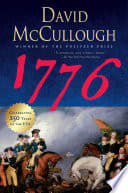
1776
David McCullough
A detailed account of the pivotal year in the American Revolution, focusing on the personal stories and struggles of key historical figures. McCullough brings the era to life through vivid storytelling and meticulous research, similar to Stein's approach to historical narrative. The book provides deep insights into the human dimension of American historical formation.

The Federalist Papers
Alexander Hamilton, James Madison, John Jay
A collection of essays that provide insights into the political philosophy and debates surrounding the formation of the United States Constitution. These writings offer a deep understanding of the political thinking that shaped early American governance and territorial organization. The text reveals the intellectual foundations of American political development.
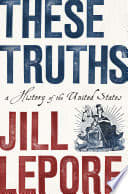
These Truths
Jill Lepore
A comprehensive single-volume history of the United States that examines the nation's ongoing struggle with its founding ideals. Lepore provides a nuanced and critical examination of American historical development, focusing on issues of equality, democracy, and social justice. The book offers a sophisticated and engaging narrative of American history.
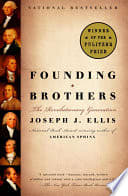
Founding Brothers
Joseph J. Ellis
A Pulitzer Prize-winning exploration of the personal and political relationships among the Founding Fathers. Ellis delves into the complex interactions between key figures like Jefferson, Adams, and Hamilton, revealing the human drama behind the creation of the United States. The book offers intimate insights into the personal dynamics that shaped early American history and political development.
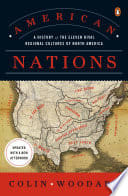
American Nations
Colin Woodard
An exploration of how different cultural regions have shaped American political and social development. Woodard examines the distinct cultural identities that have influenced state formations and regional characteristics. The book offers a comprehensive look at the complex cultural landscape that has defined the United States.
Lies My Teacher Told Me
James W. Loewen
A critical examination of American history textbooks that challenges traditional narratives and reveals hidden historical complexities. Loewen, like Stein, seeks to uncover the nuanced stories behind accepted historical accounts. The book provides a fresh perspective on American history by highlighting overlooked perspectives and challenging simplistic interpretations.
Salt: A World History
Mark Kurlansky
A captivating narrative that explores how a simple mineral shaped human civilization and territorial boundaries. Kurlansky provides a detailed and engaging account of salt's historical significance, much like Stein's approach to state boundaries. The book reveals how seemingly mundane elements can have profound impacts on human society and development.
No account connected — sign in to comment.