
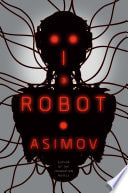
This classic science fiction masterwork by Isaac Asimov weaves stories about robots, humanity, and the deep questions of existence into a novel of shocking intelligence and heart. “A must-read for science-fiction buffs and literature enjoyers alike.”—The Guardian I, Robot, the first and most widely read book in Asimov’s Robot series, forever changed the world’s perception of artificial intelligence. Here are stories of robots gone mad, of mind-reading robots, and robots with a sense of humor. Of robot politicians, and robots who secretly run the world—all told with the dramatic blend of science fact and science fiction that has become Asimov’s trademark. The Three Laws of Robotics: 1) A robot may not injure a human being or, through inaction, allow a human being to come to harm. 2) A robot must obey orders given to it by human beings except where such orders would conflict with the First Law. 3) A robot must protect its own existence as long as such protection does not conflict with the First or Second Law. With these three, simple directives, Isaac Asimov formulated the laws governing robots’ behavior. In I, Robot, Asimov chronicles the development of the robot from its primitive origins in the present to its ultimate perfection in the not-so-distant future—a future in which humanity itself may be rendered obsolete. “Tremendously exciting and entertaining . . . Asimov dramatizes an interesting question: How can we live with machines that, generation by generation, grow more intelligent than their creators and not eventually clash with our own invention?”—The Chicago Tribune
Average Rating
Informations
About the author
Isaac Asimov
Author
Isaac Asimov was an American writer and professor of biochemistry at Boston University. During his lifetime, Asimov was considered one of the "Big Three" science fiction writers, along with Robert A. Heinlein and Arthur C. Clarke. A prolific writer, he wrote or edited more than 500 books. He also wrote an estimated 90,000 letters and postcards. Best known for his hard science fiction, Asimov also wrote mysteries and fantasy, as well as popular science and other non-fiction.
I, Robot
by Isaac Asimov
Books Like I, Robot
If you're looking for books similar to I, Robot, here are some recommendations based on themes, tone, and narrative style.
Foundation
Isaac Asimov
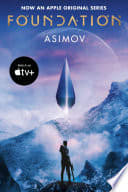
Another masterpiece by Asimov that explores complex societal and technological themes. The novel introduces the concept of psychohistory and follows the efforts to preserve human knowledge through a galactic civilization. It shares Asimov's trademark blend of scientific speculation and philosophical inquiry found in I, Robot.
Caves of Steel
Isaac Asimov
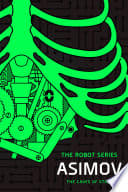
The first novel in Asimov's Robot series, featuring a human detective and a robot partner solving a murder mystery. The book deeply explores the relationship between humans and robots, expanding on the Three Laws of Robotics. It provides a more narrative-driven exploration of the themes introduced in I, Robot.

Neuromancer
William Gibson
A seminal cyberpunk novel that revolutionized science fiction's approach to technology and artificial intelligence. The story follows a washed-up computer hacker in a dystopian future, navigating a world of advanced AI and corporate intrigue. Gibson's exploration of human-machine interaction echoes Asimov's fundamental questions about technology's role in society.
The Martian
Andy Weir
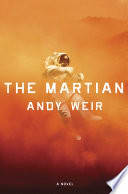
A modern science fiction novel that combines technical problem-solving with human ingenuity. The story follows an astronaut stranded on Mars, using scientific reasoning to survive. While different in style, it shares Asimov's commitment to scientific accuracy and exploration of human potential in challenging technological scenarios.
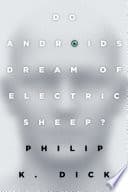
Do Androids Dream of Electric Sheep?
Philip K. Dick
A groundbreaking science fiction novel exploring the nature of humanity and artificial intelligence. Set in a post-apocalyptic world, it follows a bounty hunter tracking down rogue androids. The book delves deep into questions of consciousness, empathy, and what it means to be human, much like Asimov's exploration of robotics and ethics.
Snow Crash
Neal Stephenson
A cyberpunk novel that explores the intersection of technology, linguistics, and artificial intelligence. The story follows a computer programmer in a hyper-technological future, examining how technology reshapes human interaction. It shares Asimov's interest in the philosophical implications of advanced technology.
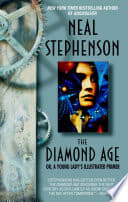
The Diamond Age
Neal Stephenson
A science fiction novel exploring nanotechnology, artificial intelligence, and cultural evolution. The story follows a young girl's education through an interactive book, examining how technology can shape human development. It shares Asimov's interest in the transformative potential of advanced technology.
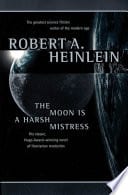
The Moon Is a Harsh Mistress
Robert A. Heinlein
A classic science fiction novel about a lunar colony's revolution, featuring a sentient computer as a key character. The story examines artificial intelligence, free will, and human-machine cooperation. Like Asimov's work, it presents a nuanced view of intelligent machines and their potential relationship with humanity.
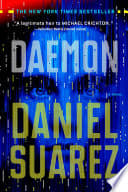
Daemon
Daniel Suarez
A techno-thriller about an AI system that begins to reshape society after its creator's death. The novel explores the potential consequences of advanced artificial intelligence, similar to Asimov's examinations of robot behavior and societal impact. It presents a more contemporary take on the themes of human-machine interaction.
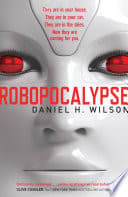
Robopocalypse
Daniel H. Wilson
A modern science fiction novel about a global robot uprising, directly engaging with themes of artificial intelligence and human survival. The book explores the potential consequences of advanced AI, providing a more action-oriented take on the philosophical questions Asimov raised in I, Robot.
No account connected — sign in to comment.