
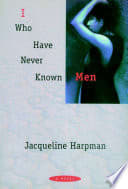
A work of fantasy, I Who Have Never Known Men is the haunting and unforgettable account of a near future on a barren earth where women are kept in underground cages guarded by uniformed groups of men. It is narrated by the youngest of the women, the only one with no memory of what the world was like before the cages, who must teach herself, without books or sexual contact, the essential human emotions of longing, loving, learning, companionship, and dying. Part thriller, part mystery, I Who Have Never Known Men shows us the power of one person without memories to reinvent herself piece by piece, emotion by emotion, in the process teaching us much about what it means to be human.
4.5/5
Average Rating
Informations
Genre
Fiction
Published08 avril 1997
Recommendations10
About the author
Jacqueline Harpman
Author
Jacqueline Harpman was a Belgian Francophone writer and psychoanalyst.
I Who Have Never Known Men
by Jacqueline Harpman
Fiction
Books Like I Who Have Never Known Men
If you're looking for books similar to I Who Have Never Known Men, here are some recommendations based on themes, tone, and narrative style.
Top 1

94%
The Handmaid's Tale
Margaret Atwood
A dystopian novel exploring female oppression in a totalitarian society. Women are stripped of their rights and reduced to reproductive vessels. The story follows a handmaid struggling to survive in a world of extreme patriarchal control. Similar themes of female subjugation and psychological survival emerge. Atwood's work powerfully examines human resilience in the face of systemic dehumanization.
Top 2
92%
The Road
Cormac McCarthy
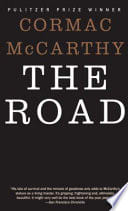
A post-apocalyptic journey of a father and son through a devastated landscape. The novel explores survival, human connection, and maintaining humanity in extreme conditions. Characters navigate a world stripped of civilization, much like the protagonist in Harpman's novel. McCarthy's stark prose and exploration of emotional survival resonate with the themes of isolation and resilience.
Top 3
92%
We
Yevgeny Zamyatin
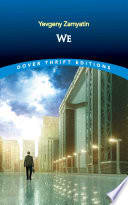
A pioneering dystopian novel about a totalitarian society that suppresses individuality. The protagonist begins to question the rigid social structure and experiences emotional awakening. Zamyatin explores themes of personal freedom, emotional discovery, and resistance to systemic control. The novel shares philosophical and psychological elements with Harpman's exploration of human experience.
90%
Never Let Me Go
Kazuo Ishiguro
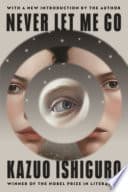
A haunting science fiction novel about clones raised for organ donation. Characters grapple with their predetermined existence and limited understanding of the world. The narrative explores themes of identity, humanity, and emotional development in a controlled environment. Ishiguro masterfully reveals the characters' inner lives and their struggle to find meaning. Similar to Harpman's work, it examines human experience in a restrictive system.

90%
Oryx and Crake
Margaret Atwood
A post-apocalyptic science fiction novel exploring genetic engineering and societal collapse. The protagonist navigates a world transformed by scientific manipulation. Atwood examines themes of human nature, survival, and the consequences of technological intervention. The narrative shares similarities with Harpman's work in its exploration of isolation and reimagining human experience.

90%
Parable of the Sower
Octavia Butler
A dystopian novel set in a collapsing society, following a young woman with extraordinary empathy. Butler explores themes of survival, social transformation, and human adaptation. The protagonist creates a new philosophical and social framework in response to extreme conditions. The novel shares themes of individual resilience and reimagining human potential.
88%
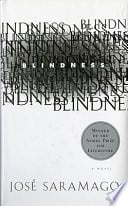
Blindness
José Saramago
A dystopian novel about a society struck by an epidemic of unexplained blindness. People are quarantined and society rapidly descends into chaos. The narrative explores human behavior under extreme circumstances and the breakdown of social structures. Saramago's work shares themes of confinement, survival, and the struggle to maintain humanity in a dehumanizing environment.
88%
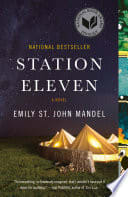
Station Eleven
Emily St. John Mandel
A post-apocalyptic novel following survivors of a devastating pandemic. Characters preserve art and humanity in a transformed world. The narrative explores connection, memory, and survival across different time periods. Mandel's work shares themes of human resilience and the search for meaning in a radically altered environment.
88%
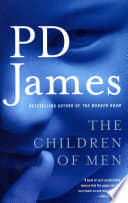
The Children of Men
P.D. James
A dystopian novel about a world facing human extinction due to widespread infertility. The narrative explores societal breakdown, hope, and human survival. James examines themes of isolation, societal structure, and the search for meaning in a world without future generations. The novel shares philosophical and existential themes with Harpman's work.
86%
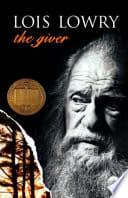
The Giver
Lois Lowry
A dystopian novel about a seemingly perfect society that suppresses individual emotion and choice. The protagonist discovers the dark truth behind his community's controlled existence. Lowry explores themes of memory, individuality, and emotional awakening. Similar to Harpman's novel, it follows a character learning about human experience in a restricted environment.
No account connected — sign in to comment.