
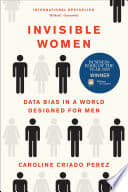
The landmark, prize-winning, international bestselling examination of how a gender gap in data perpetuates bias and disadvantages women. #1 International Bestseller * Winner of the Financial Times and McKinsey Business Book of the Year Award * Winner of the Royal Society Science Book Prize Data is fundamental to the modern world. From economic development to health care to education and public policy, we rely on numbers to allocate resources and make crucial decisions. But because so much data fails to take into account gender, because it treats men as the default and women as atypical, bias and discrimination are baked into our systems. And women pay tremendous costs for this insidious bias: in time, in money, and often with their lives. Celebrated feminist advocate Caroline Criado Perez investigates this shocking root cause of gender inequality in Invisible Women. Examining the home, the workplace, the public square, the doctor’s office, and more, Criado Perez unearths a dangerous pattern in data and its consequences on women’s lives. Product designers use a “one-size-fits-all” approach to everything from pianos to cell phones to voice recognition software, when in fact this approach is designed to fit men. Cities prioritize men’s needs when designing public transportation, roads, and even snow removal, neglecting to consider women’s safety or unique responsibilities and travel patterns. And in medical research, women have largely been excluded from studies and textbooks, leaving them chronically misunderstood, mistreated, and misdiagnosed. Built on hundreds of studies in the United States, in the United Kingdom, and around the world, and written with energy, wit, and sparkling intelligence, this is a groundbreaking, highly readable exposé that will change the way you look at the world.
Average Rating
Informations
About the author
Caroline Criado Perez
Author
Caroline Emma Criado Perez is a British feminist author, journalist and activist. Her first national campaign, the Women's Room project, aimed to increase the presence of female experts in the media. She opposed the removal of the only woman from British banknotes, leading to the Bank of England's swift announcement that the image of Jane Austen would appear on the £10 note by 2017. That campaign led to sustained harassment on the social networking website Twitter of Criado Perez and other women; as a result, Twitter announced plans to improve its complaint procedures. Her most recent campaign was for a sculpture of a woman in Parliament Square; the statue of Millicent Fawcett was unveiled in April 2018, as part of the centenary celebrations of the winning of women's suffrage in the United Kingdom. Her 2019 book Invisible Women: Exposing Data Bias in a World Designed for Men was a Sunday Times bestseller.
Invisible Women
by Caroline Criado Perez
Books Like Invisible Women
If you're looking for books similar to Invisible Women, here are some recommendations based on themes, tone, and narrative style.
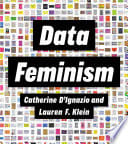
Data Feminism
Catherine D'Ignazio and Lauren Klein
This groundbreaking book applies feminist thinking to data science and technology. The authors examine how data collection and analysis can perpetuate social inequalities. They provide a framework for more inclusive and ethical data practices. The book directly addresses the gender data gap highlighted in Invisible Women, offering strategies for more equitable data representation.

Inferior: How Science Got Women Wrong
Angela Saini
Saini investigates the historical scientific biases against women, revealing how gender stereotypes have shaped research and understanding. The book challenges long-standing misconceptions about female biology and capabilities. It explores how scientific institutions have systematically overlooked or misrepresented women's experiences. Like Invisible Women, it exposes the deep-rooted gender prejudices in academic and research environments.

The Moment of Lift
Melinda Gates
Gates examines global gender inequality and the importance of empowering women. The book shares personal stories and research about women's challenges worldwide. It explores how addressing gender disparities can create positive social change. Like Invisible Women, it provides a comprehensive look at systemic barriers facing women in various contexts.

The Patriarchs
Angela Saini
Saini investigates the historical roots of gender inequality across different cultures. The book provides a deep analysis of how patriarchal systems have been constructed and maintained. It explores the systemic nature of gender oppression globally. Like Invisible Women, it offers a comprehensive examination of gender disparities.

Invisible Women in History
Mary Beard
Beard explores the historical erasure of women's contributions and experiences. The book reveals how traditional historical narratives have marginalized women's roles. It provides a critical examination of gender representation in historical accounts. Like Criado Perez's work, it challenges the default male perspective in historical understanding.

Weapons of Math Destruction
Cathy O'Neil
This book explores how algorithms and big data can perpetuate systemic bias and inequality. O'Neil reveals how mathematical models can create unfair systems in areas like education, criminal justice, and employment. It complements Criado Perez's work by examining how data-driven decision-making can disadvantage marginalized groups. The book provides a critical analysis of how seemingly objective technologies can embed deep-rooted societal prejudices.
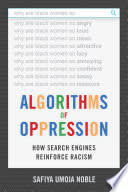
Algorithms of Oppression
Safiya Umoja Noble
Noble explores how digital technologies and search algorithms perpetuate racist and sexist biases. The book reveals how seemingly neutral technologies can reinforce systemic discrimination. It examines the ways digital platforms marginalize women and people of color. The research complements Invisible Women by exposing hidden biases in technological systems.

Testosterone Rex
Cordelia Fine
Fine challenges biological determinism and gender stereotypes in scientific research. The book deconstructs myths about gender differences and biological essentialism. It provides a critical examination of how scientific narratives perpetuate gender inequality. Like Invisible Women, it exposes the problematic assumptions underlying gender research.

Superior: The Return of Race Science
Angela Saini
Saini critically examines the resurgence of pseudoscientific racial theories. The book exposes how scientific racism continues to shape research and social understanding. It challenges deeply ingrained biases in scientific thinking. Like Invisible Women, it reveals how supposedly objective research can perpetuate harmful stereotypes.

Programmed Inequality
Marie Hicks
Hicks examines the historical exclusion of women from computing and technological fields. The book reveals how gender discrimination shaped the development of computing technologies. It provides a detailed analysis of systemic barriers facing women in technology. The work complements Invisible Women by exploring gender disparities in technological innovation.
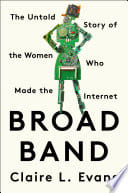
Broad Band
Claire L. Evans
Evans chronicles the often-overlooked contributions of women in computing and technology. The book reveals the critical roles women have played in developing digital technologies. It uncovers hidden narratives of female innovation in a male-dominated field. Like Criado Perez's work, it challenges the default male narrative in technological history.

Invisible Women of Science
Rachel Ignotofsky
This book celebrates the groundbreaking achievements of women in scientific fields. Ignotofsky highlights remarkable women whose contributions have been historically overlooked. It provides inspiring stories of female scientists who overcame significant barriers. The book complements Criado Perez's work by bringing hidden female scientific achievements to light.

Invisible Women in Tech
Karen Catlin
Catlin examines gender disparities in the technology industry. The book reveals the challenges women face in tech careers and offers strategies for creating more inclusive workplaces. It provides practical insights into addressing gender bias in technological fields. The work directly connects to Criado Perez's exploration of systemic gender inequalities.

Uncharted
Margaret Heffernan
Heffernan explores how complex systems and human behavior challenge traditional data-driven approaches. The book argues for more nuanced, adaptive thinking in decision-making. It reveals the limitations of relying solely on quantitative data. The work complements Criado Perez's critique of data bias and incomplete information.
No account connected — sign in to comment.