
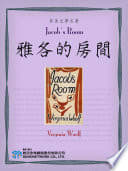
Jacob's Room Virginia Woolf - Jacob's Room is Virginia Woolf's first truly experimental novel. It is a portrait of a young man, who is both representative and victim of the social values which led Edwardian society into war. Jacob's life is traced from the time he is a small boy playing on the beach, through his years inCambridge, then in artistic London, and finally making a trip to Greece, but this is no orthodox Bildungsroman. Jacob is presented in glimpses, in fragments, as Woolf breaks down traditional ways of representing character and experience.
4.5/5
Average Rating
Informations
Genre
Fiction
Published14 octobre 2021
Recommendations10
About the author
Virginia Woolf
Author
Adeline Virginia Woolf was an English writer and one of the most influential 20th-century modernist authors. She helped to pioneer the use of stream of consciousness narration as a literary device.
Jacob's Room
by Virginia Woolf
Fiction
Books Like Jacob's Room
If you're looking for books similar to Jacob's Room, here are some recommendations based on themes, tone, and narrative style.
Top 1
100%
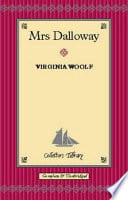
Mrs. Dalloway
Virginia Woolf
Another groundbreaking modernist novel by Woolf that explores inner consciousness and fragmented narrative. The story follows Clarissa Dalloway as she prepares for an evening party, weaving through her memories and inner thoughts. Like Jacob's Room, it challenges traditional narrative structures and delves deep into psychological portraiture. The novel examines themes of time, memory, and social constraints in early 20th-century England.
Top 2
100%
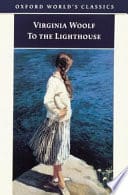
To the Lighthouse
Virginia Woolf
A seminal modernist work that continues Woolf's experimental narrative style. The novel explores the Ramsay family's experiences at their summer home, focusing on inner lives and perception. It uses stream of consciousness and fragmented perspectives to reveal complex emotional landscapes. The book examines family dynamics, gender roles, and the passage of time with remarkable psychological depth.
Top 3
100%
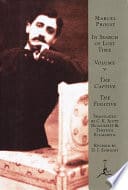
In Search of Lost Time
Marcel Proust
A monumental work exploring memory, time, and consciousness. The novel follows the narrator's introspective journey through memories and social experiences. Like Jacob's Room, it uses innovative narrative techniques to explore psychological depth. Proust's work revolutionizes the understanding of memory and subjective experience.
90%
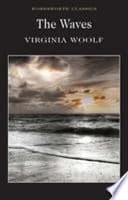
The Waves
Virginia Woolf
An avant-garde novel that pushes narrative boundaries even further than Jacob's Room. The book follows six characters through their entire lives using a poetic, stream-of-consciousness approach. Each character's inner monologue blends and intertwines, creating a complex meditation on identity and human experience. Woolf's experimental technique challenges traditional novel structures.
90%
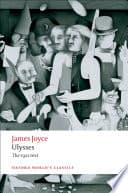
Ulysses
James Joyce
A landmark modernist novel that revolutionizes narrative technique. The book follows Leopold Bloom's single day in Dublin, using stream of consciousness and experimental prose. Like Jacob's Room, it breaks traditional narrative conventions and explores inner psychological landscapes. The novel is renowned for its complex linguistic experiments and deep psychological insights.

90%
The Sound and the Fury
William Faulkner
A modernist novel that employs fragmented narrative and multiple perspectives. The story of the Compson family is told through different characters' consciousness, challenging linear storytelling. Like Woolf's work, it explores memory, time, and psychological complexity. The novel's innovative structure reveals the inner lives of its characters in profound and unconventional ways.
80%
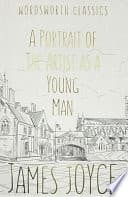
Portrait of the Artist as a Young Man
James Joyce
A semi-autobiographical novel tracing a young man's intellectual and artistic development. The book uses stream of consciousness to explore Stephen Dedalus's psychological growth. Similar to Jacob's Room, it focuses on a young man's inner life and social experiences. The novel challenges traditional narrative by presenting consciousness as fluid and complex.
80%
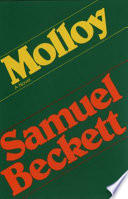
Molloy
Samuel Beckett
An experimental novel that deconstructs traditional narrative structures. The book follows two characters' fragmented journeys, exploring existential themes and linguistic complexity. Like Jacob's Room, it challenges conventional storytelling and focuses on inner psychological states. Beckett's work represents a radical approach to character and narrative representation.
80%
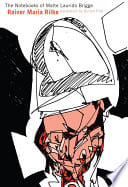
The Notebooks of Malte Laurids Brigge
Rainer Maria Rilke
A modernist novel exploring a young man's inner experiences in Paris. The book uses a fragmented, diary-like structure to reveal psychological introspection. Similar to Jacob's Room, it focuses on a young protagonist's perceptions and inner life. The narrative challenges traditional storytelling through its intimate, reflective approach.
80%
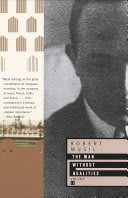
The Man Without Qualities
Robert Musil
A modernist novel examining individual consciousness in early 20th-century Austria. The book uses complex philosophical and psychological explorations to challenge narrative conventions. Similar to Jacob's Room, it deconstructs traditional character representation. Musil's work provides a profound meditation on identity and social structures.
No account connected — sign in to comment.