
Une analyse concise pour comprendre rapidement tout l’intérêt du livre Le point de bascule de Malcolm Gladwell Le point de bascule, ouvrage rédigé par le journaliste britannique Malcolm Gladwell, spécialiste en psychologie et sociologie, a rencontré un franc succès dès sa parution en 2012. L’écrivain y propose une analyse originale du déclenchement et de la propagation des phénomènes sociaux, basée sur sa théorie personnelle du « point de bascule » qu’il a développée en partant d’exemples concrets. Retrouvez tout ce que vous devez savoir sur cette lecture indispensable dans une analyse complète et détaillée. Vous trouverez notamment dans ce livret : • Une mise en contexte • Une synthèse mettant l’accent sur les notions clés développées par l’auteur • Les répercussions de l’ouvrage • Ses critiques • Et bien plus encore ! Le mot de l'éditeur : « Avec l'auteur, Anastasia Samygin, nous avons cherché à présenter aux lecteurs un résumé de l'ouvrage à succès Le point de bascule du journaliste et écrivain Malcolm Gladwell. S'arrêtant sur le parcours de Gladwell puis sur le principe d'adhérence et sur les concepts d'épidémie sociale et d'oiseaux rares, l'analyse s'attache en outre à présenter les polémiques survenues autour de ce best-seller mondial, ainsi que ses répercussions. » Laure Delacroix À PROPOS DE LA SÉRIE 50MINUTES | Book Review La série « Book Review » de la collection 50MINUTES propose des documents qui invitent tous les curieux à réfléchir sur les grands textes fondateurs de l'économie ainsi que sur les sommes récemment parues qui participent à la réflexion globale des réalités économiques actuelles. Nous avons conçu la collection Business & Economics en pensant aux nombreux professionnels obligés de se former en permanence en économie, en management, en stratégie ou en marketing. Nos auteurs combinent des éléments de théorie, des pistes de réflexion, et, pour certains sujets, des études de cas et de nombreux exemples pratiques pour permettre aux lecteurs de développer leurs compétences et leur expertise.

Average Rating
Informations
About the author
Anastasia Samygin-Cherkaoui, 50minutes,
Author
Le point de bascule de Malcolm Gladwell
by Anastasia Samygin-Cherkaoui, 50minutes,
Books Like Le point de bascule de Malcolm Gladwell
If you're looking for books similar to Le point de bascule de Malcolm Gladwell, here are some recommendations based on themes, tone, and narrative style.
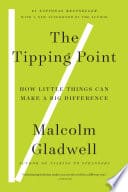
The Tipping Point
Malcolm Gladwell
The original book that inspired this analysis, exploring how small changes can create massive social transformations. Gladwell introduces the concept of the 'tipping point' where ideas and trends suddenly spread like epidemics. He examines social phenomena through the lens of connectors, mavens, and salesmen who drive cultural shifts. The book provides a revolutionary understanding of how social change occurs and why some ideas take hold while others fade away.
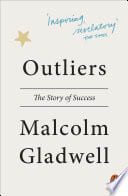
Outliers
Malcolm Gladwell
Gladwell explores the factors that contribute to extraordinary success, examining how timing, opportunity, and cultural background shape individual achievements. He challenges traditional notions of talent and merit by revealing how seemingly random circumstances can profoundly impact success. The book provides deep insights into how exceptional performers emerge from their unique environments. Gladwell uses compelling case studies to demonstrate how success is not just about individual talent, but complex systemic advantages.
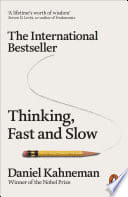
Thinking, Fast and Slow
Daniel Kahneman
A groundbreaking exploration of the two systems that drive human thinking: the fast, intuitive system and the slower, more deliberative system. Kahneman reveals the cognitive biases that influence our decision-making processes. The book provides deep insights into how we think and make choices, challenging our assumptions about rationality. It shares Gladwell's approach of using psychological research to understand human behavior.
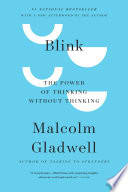
Blink
Malcolm Gladwell
An investigation into the power of intuitive thinking and rapid decision-making. Gladwell explores how our subconscious mind processes information instantaneously, often more effectively than deliberate analysis. The book examines the science behind first impressions and split-second judgments. It provides fascinating insights into how experts make quick, accurate decisions and how unconscious biases influence our perceptions.
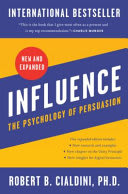
Influence
Robert B. Cialdini
A seminal work on the psychology of persuasion and how people are influenced to make decisions. Cialdini identifies six key principles that drive human behavior in social and commercial contexts. The book provides insights into how marketers, politicians, and others use psychological triggers to shape choices. It shares Gladwell's interest in understanding the hidden mechanisms of social influence.

Freakonomics
Steven D. Levitt and Stephen J. Dubner
An innovative exploration of economics through unexpected and counterintuitive perspectives. The authors apply economic analysis to diverse social phenomena, revealing hidden patterns and unexpected connections. They challenge conventional wisdom by using data and statistical analysis to explain complex social behaviors. The book shares Gladwell's approach of using rigorous research to uncover surprising insights about human behavior and social systems.
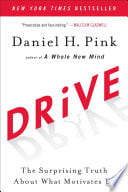
Drive
Daniel H. Pink
An examination of human motivation and what truly drives people to excel. Pink challenges traditional assumptions about motivation, arguing that autonomy, mastery, and purpose are more powerful than external rewards. The book provides insights into how intrinsic motivation works and how it can be cultivated. Like Gladwell, Pink uses research and compelling narratives to explain complex human behaviors.
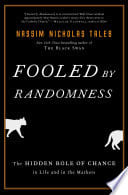
Fooled by Randomness
Nassim Nicholas Taleb
A critical examination of the role of chance and randomness in success and failure. Taleb challenges our tendency to create narratives that explain random events as intentional or predictable. The book provides insights into how we misunderstand probability and attribute too much meaning to random occurrences. It shares Gladwell's approach of challenging conventional wisdom.
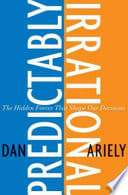
Predictably Irrational
Dan Ariely
A deep dive into behavioral economics and the systematic irrationality of human decision-making. Ariely reveals how people make predictable, yet fundamentally irrational choices in various contexts. The book uses engaging experiments to demonstrate how emotions, social norms, and cognitive biases shape our economic and personal decisions. Like Gladwell, Ariely challenges conventional thinking about human behavior.
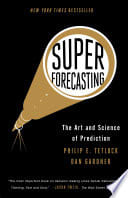
Superforecasting
Philip E. Tetlock and Dan Gardner
An investigation into how some people consistently make more accurate predictions than others. The authors explore the cognitive skills and strategies that enable exceptional forecasting. The book reveals the methods used by top predictors to improve decision-making and reduce bias. Like Gladwell, it uses rigorous research to uncover surprising insights about human cognitive capabilities.
Predictably Irrational
Dan Ariely
A deep dive into behavioral economics and the systematic irrationality of human decision-making. Ariely reveals how people make predictable, yet fundamentally irrational choices in various contexts. The book uses engaging experiments to demonstrate how emotions, social norms, and cognitive biases shape our economic and personal decisions. Like Gladwell, Ariely challenges conventional thinking about human behavior.
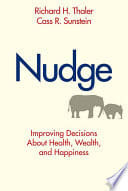
Nudge
Richard H. Thaler and Cass R. Sunstein
An exploration of how small interventions can significantly influence human behavior and decision-making. The authors introduce the concept of 'choice architecture' and how subtle changes can guide people towards better choices. The book examines how governments and organizations can design environments that encourage positive behaviors. It shares Gladwell's interest in understanding complex social dynamics.
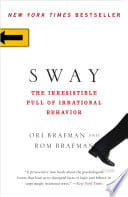
Sway
Ori Brafman and Rom Brafman
An exploration of the psychological forces that drive irrational behavior. The authors examine how hidden psychological forces can lead people to make counterintuitive and self-destructive decisions. The book reveals the subtle influences that can derail rational thinking. Like Gladwell, it uses engaging stories and research to explain complex psychological phenomena.
Nudge
Richard H. Thaler and Cass R. Sunstein
An exploration of how small interventions can significantly influence human behavior and decision-making. The authors introduce the concept of 'choice architecture' and how subtle changes can guide people towards better choices. The book examines how governments and organizations can design environments that encourage positive behaviors. It shares Gladwell's interest in understanding complex social dynamics.
No account connected — sign in to comment.