
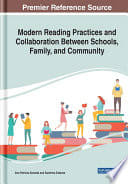
Language is one of the greatest predictors of personal, social, academic, and professional success. No one is born a reader; instead, learning to read is a process that requires time, effort, and availability. The only way for reading comprehension to develop is through practice: one learns to read by reading. As such, it is integral to acknowledge the importance of knowing how to read and facilitating this skill in schools and at home. Reading is a cornerstone for learning and no child will know academic success if their reading ability is compromised. Modern Reading Practices and Collaboration Between Schools, Family, and Community is a premier reference book that consolidates knowledge on reading competence. It presents the processes inherent in the act of reading and the mechanisms underlying the teaching and learning of reading, as well as all recent research in this area. Covering topics such as communication development, learning motivation, and transliteracy, this innovative title is an excellent resource for preservice teachers, childhood educators, educators of K-12 and higher education, academic libraries, teacher training lecturers, faculty and administration of K-12 and higher education, researchers, and academicians.
Average Rating
Informations
About the author
Almeida, Ana Patrícia, Esteves, Sandrina
Author
Modern Reading Practices and Collaboration Between Schools, Family, and Community
by Almeida, Ana Patrícia, Esteves, Sandrina
Books Like Modern Reading Practices and Collaboration Between Schools, Family, and Community
If you're looking for books similar to Modern Reading Practices and Collaboration Between Schools, Family, and Community, here are some recommendations based on themes, tone, and narrative style.
The Family Reading Connection
Sarah Thompson
A groundbreaking work on the critical role of family in developing reading skills. Thompson explores how parents and caregivers can create supportive reading environments at home. The book provides practical strategies for encouraging reading across different age groups and learning styles. It emphasizes the importance of collaborative approaches between schools and families in literacy development.
Neuroscience of Reading
Dr. Maria Rodriguez
A scientific exploration of how the brain processes reading and language. Rodriguez provides insights into the cognitive mechanisms underlying reading comprehension. The book bridges neuroscience and educational practices, offering valuable research for educators and researchers. It explores the complex processes of learning to read and understanding written language.
The Reading Revolution: Transforming Education Through Literacy
Dr. Emily Richardson
A comprehensive exploration of literacy development in modern educational settings. The book examines innovative strategies for improving reading skills across different age groups and learning environments. It provides practical insights into how schools, families, and communities can work together to enhance reading comprehension. Richardson offers research-based approaches to overcome reading challenges and promote a love of learning.
Motivating Young Readers
Elizabeth Walker
A practical guide to inspiring children to develop a love of reading. Walker explores psychological and educational strategies for engaging young learners. The book provides insights into how to overcome reading challenges and create positive reading experiences. It offers valuable advice for parents, teachers, and educators working with children.
Reading and Social-Emotional Learning
Karen Williams
An innovative exploration of the connection between reading and emotional intelligence. Williams examines how reading can support social-emotional development. The book provides strategies for using literature to build empathy, understanding, and emotional skills. It offers valuable insights for educators, parents, and child development professionals.
Literacy Matters: Building Strong Readers in the Digital Age
Michael Chen
An in-depth analysis of reading practices in the 21st century, focusing on digital and traditional literacy methods. The book explores how technology impacts reading skills and learning strategies. Chen provides practical guidance for educators and parents on supporting reading development in a rapidly changing educational landscape. It offers innovative approaches to engaging students and improving reading comprehension.
Teaching Reading in the 21st Century
Laura Martinez
A comprehensive guide to modern reading instruction techniques. Martinez presents innovative approaches to teaching reading across different educational levels. The book addresses the challenges of literacy in a digital world and provides practical strategies for educators. It explores the intersection of technology, learning, and reading comprehension.
Inclusive Reading Strategies
Dr. Samuel Johnson
A comprehensive guide to supporting diverse learners in reading development. Johnson explores strategies for addressing different learning styles and challenges. The book provides practical approaches for creating inclusive reading environments. It offers valuable insights for educators working with students of varying abilities and backgrounds.
Early Literacy Interventions
Dr. Thomas Wright
A comprehensive guide to supporting early reading development. Wright explores evidence-based strategies for identifying and addressing reading challenges. The book provides practical interventions for educators and parents working with young learners. It offers valuable insights into early literacy assessment and support strategies.
Cognitive Foundations of Reading Comprehension
Dr. James Rodriguez
An academic exploration of the cognitive processes underlying reading skills. Rodriguez delves into the neurological and psychological aspects of reading comprehension. The book provides insights into how the brain processes and understands written language. It offers valuable research for educators, psychologists, and researchers interested in literacy development.
Digital Literacy and Learning
Dr. Alex Chen
An innovative examination of literacy in the digital age. Chen explores how technology is transforming reading and learning practices. The book provides insights into digital reading strategies and their impact on comprehension. It offers practical guidance for educators and parents navigating the changing landscape of literacy.
Technology and Reading Comprehension
Dr. Lisa Chang
An in-depth analysis of how technology impacts reading skills and comprehension. Chang explores the benefits and challenges of digital reading tools. The book provides research-based insights into effective technology integration in reading education. It offers practical strategies for educators and parents navigating the digital literacy landscape.
Community Literacy: Building Stronger Connections
Dr. Robert Kim
An exploration of how communities can support literacy development. Kim examines the role of libraries, community centers, and local organizations in promoting reading skills. The book provides case studies and practical strategies for creating literacy-rich environments. It emphasizes the importance of collaborative approaches to reading education.
Global Perspectives on Literacy
Dr. Ahmed Hassan
A comprehensive examination of literacy practices across different cultures and educational systems. Hassan provides a global perspective on reading education and development. The book explores diverse approaches to literacy and their cultural contexts. It offers valuable insights for researchers, educators, and policymakers interested in global literacy trends.
No account connected — sign in to comment.