
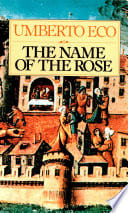
In 1327, Franciscans in a wealthy Italian abbey are suspected of heresy, and Brother William of Bakersville arrives to investigate. His delicate mission is overshadowed by seven bizarre deaths that take place in the same number of days, and Brother William must turn detective to sort things out.
4.5/5
Average Rating
Informations
Genre
Fiction
Published01 novembre 1995
Recommendations14
About the author
Umberto Eco
Author
Umberto Eco was an Italian medievalist, philosopher, semiotician, novelist, cultural critic, and political and social commentator. In English, he is best known for his popular 1980 novel The Name of the Rose, a historical mystery combining semiotics in fiction with biblical analysis, medieval studies and literary theory, as well as Foucault's Pendulum, his 1988 novel which touches on similar themes.
Name of the Rose
by Umberto Eco
Fiction
Books Like Name of the Rose
If you're looking for books similar to Name of the Rose, here are some recommendations based on themes, tone, and narrative style.
Top 1
88%
Wolf Hall
Hilary Mantel
A historical novel set in Tudor England, focusing on Thomas Cromwell's political and intellectual journey. The book offers a deep dive into medieval institutional politics and intellectual complexity. Similar to 'Name of the Rose', it provides a nuanced exploration of power, knowledge, and human motivation within a meticulously researched historical setting.
Top 2

86%
The Pillars of the Earth
Ken Follett
Set in 12th-century England, this historical novel explores medieval life through the construction of a cathedral. Like 'Name of the Rose', it delves deep into ecclesiastical politics, medieval intrigue, and intellectual conflicts. The narrative weaves complex characters against a rich historical backdrop, offering a similar immersive experience of medieval European life and institutional power struggles.
Top 3
86%
My Name is Red
Orhan Pamuk
A philosophical murder mystery set in 16th-century Ottoman Istanbul, exploring art, religion, and cultural conflict. Like Eco's novel, it combines intellectual discourse, murder investigation, and deep cultural exploration. The narrative weaves multiple perspectives to create a complex, layered storytelling approach.
86%
The Thousand Autumns of Jacob de Zoet
David Mitchell
A historical novel set in late 18th-century Japan, exploring cultural encounters and intellectual challenges. Like 'Name of the Rose', it offers a meticulously researched historical setting, complex characters, and a narrative that explores cultural and intellectual boundaries. The book combines historical detail with philosophical depth.
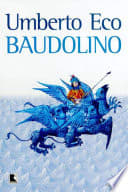
84%
Baudolino
Umberto Eco
Another Eco novel exploring medieval intellectual and cultural landscapes. Set during the Crusades, it follows a protagonist navigating complex historical and philosophical terrain. The book shares Eco's signature style of blending historical detail, philosophical inquiry, and narrative complexity found in 'Name of the Rose'.
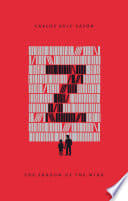
84%
The Shadow of the Wind
Carlos Ruiz Zafón
A gothic mystery set in Barcelona, centered around books, secrets, and intellectual pursuit. The novel shares 'Name of the Rose's' love for literature, complex narrative structure, and mysterious atmosphere. It follows a young protagonist unraveling a literary mystery, combining historical detail with intellectual intrigue.
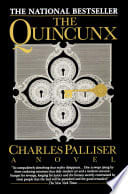
84%
The Quincunx
Charles Palliser
A complex historical novel set in 19th-century England, featuring intricate plot layers and detailed historical reconstruction. Like 'Name of the Rose', it offers a dense, intellectually challenging narrative that requires careful reading. The book combines historical detail, mystery, and philosophical exploration.
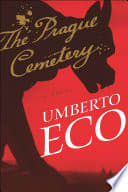
84%
The Prague Cemetery
Umberto Eco
Another Eco novel exploring historical conspiracy and intellectual complexity. Set in 19th-century Europe, it delves into historical manipulation, conspiracy theories, and cultural tensions. The book shares Eco's characteristic style of blending historical detail, philosophical inquiry, and complex narrative structure.
82%
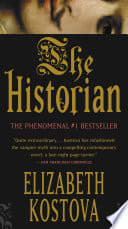
The Historian
Elizabeth Kostova
A scholarly quest that blends historical research with mystery, tracking the legacy of Dracula through academic investigation. The protagonist follows a complex historical trail, similar to William's detective work. The novel combines intellectual pursuit, historical detail, and suspenseful narrative in a way that echoes Eco's meticulous storytelling approach.
82%
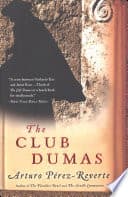
The Club Dumas
Arturo Pérez-Reverte
A novel about book collecting, rare manuscripts, and literary mysteries. The protagonist investigates a rare book's origins, encountering complex historical and literary puzzles. Similar to 'Name of the Rose', it combines intellectual investigation, historical detail, and a love for books and knowledge.
82%
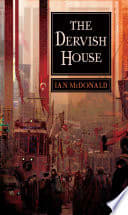
The Dervish House
Ian McDonald
A complex narrative set in near-future Istanbul, exploring interconnected stories and intellectual mysteries. While more contemporary, it shares 'Name of the Rose's' love for intricate storytelling, cultural complexity, and intellectual exploration. The novel weaves multiple narratives into a rich, thought-provoking tapestry.

80%
The Alienist
Caleb Carr
A historical detective novel set in 19th-century New York, featuring an early forensic psychologist solving a complex murder case. Like 'Name of the Rose', it combines intellectual investigation, historical atmosphere, and a methodical approach to solving a mysterious series of crimes. The narrative emphasizes analytical reasoning and historical context.
80%
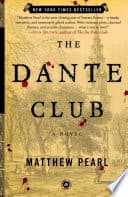
The Dante Club
Matthew Pearl
A historical mystery set in 19th-century Boston, involving literary scholars and a series of murders. The novel combines scholarly investigation, historical context, and murder mystery, echoing the intellectual and detective elements of 'Name of the Rose'. It explores the intersection of literature, scholarship, and crime.
80%
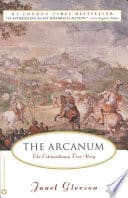
The Arcanum
Janet Gleeson
A historical novel about the discovery of porcelain in 18th-century Europe, combining historical research with intellectual mystery. Similar to 'Name of the Rose', it explores the pursuit of knowledge, cultural complexity, and historical intrigue. The narrative reveals the intellectual and cultural challenges of scientific discovery.
No account connected — sign in to comment.