
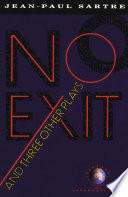
NOBEL PRIZE WINNER • Four seminal plays by one of the greatest philosophers of the twentieth century. An existential portrayal of Hell in Sartre's best-known play, as well as three other brilliant, thought-provoking works: the reworking of the Electra-Orestes story, the conflict of a young intellectual torn between theory and conflict, and an arresting attack on American racism.
4.5/5
Average Rating
Informations
Genre
Drama
Published15 juillet 2015
Recommendations10
About the author
Jean-Paul Sartre, Albert Camus
Author
No Exit and Three Other Plays
by Jean-Paul Sartre, Albert Camus
Drama
Books Like No Exit and Three Other Plays
If you're looking for books similar to No Exit and Three Other Plays, here are some recommendations based on themes, tone, and narrative style.
Top 1
94%
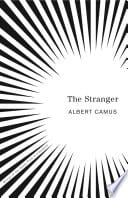
The Stranger
Albert Camus
A philosophical novel exploring existentialism and absurdism through the story of Meursault, a detached French Algerian who commits a seemingly senseless murder. The book delves into themes of alienation, meaninglessness, and individual perception of reality. Camus examines the human condition and societal expectations through a stark, minimalist narrative. It resonates with Sartre's existential themes of personal responsibility and the individual's struggle against societal norms.
Top 2
92%
Waiting for Godot
Samuel Beckett
A groundbreaking absurdist play that explores existential themes of meaninglessness and human waiting. Two characters endlessly wait for a mysterious figure named Godot, who never arrives. The play deconstructs traditional narrative structures and highlights the futility of human existence. Its philosophical depth and minimalist approach mirror the existential explorations in Sartre's plays.
Top 3
92%
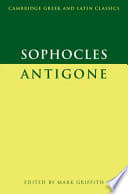
Antigone
Sophocles
A classical Greek tragedy exploring individual moral conviction versus state authority. Antigone defies the king's decree by giving her brother a proper burial, challenging the conflict between personal ethics and political law. The play delves into themes of individual responsibility, moral choice, and the consequences of principled resistance. Its philosophical depth mirrors the existential concerns in Sartre's works.
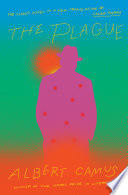
90%
The Plague
Albert Camus
A powerful allegorical novel set in a town quarantined during a devastating plague outbreak. The narrative explores human responses to suffering, collective responsibility, and individual moral choices. Characters confront existential challenges and the absurdity of human existence. Camus examines how people maintain humanity and dignity in the face of seemingly meaningless catastrophe.

90%
The Myth of Sisyphus
Albert Camus
A philosophical essay exploring the concept of absurdism and human meaning. Camus uses the Greek myth of Sisyphus, condemned to repeatedly roll a boulder up a hill, as a metaphor for human existence. The work examines how individuals can find purpose in a seemingly meaningless universe. It provides a profound philosophical meditation on existential challenges.
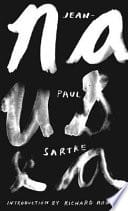
88%
Nausea
Jean-Paul Sartre
A seminal existentialist novel exploring the protagonist's growing sense of existential despair and alienation. The main character experiences profound philosophical revelations about the nature of existence and individual freedom. Sartre delves deep into themes of consciousness, meaning, and the human struggle to define oneself. The novel provides a raw, introspective examination of existential philosophy.
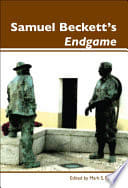
88%
Endgame
Samuel Beckett
An absurdist play featuring characters trapped in a seemingly meaningless existence, exploring themes of dependency, decay, and human limitation. The characters struggle with their confined environment, reflecting broader existential concerns about purpose and meaning. Beckett's minimalist approach and philosophical depth parallel Sartre's dramatic explorations of human condition.
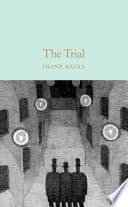
86%
The Trial
Franz Kafka
A surreal novel about a man arrested and prosecuted by a remote, inaccessible authority without ever learning the nature of his crime. The narrative explores themes of bureaucratic absurdity, individual powerlessness, and existential anxiety. Kafka's protagonist struggles against an incomprehensible system that defies logical understanding. The book resonates with existential explorations of human alienation and meaninglessness.
86%
The Wall
Jean-Paul Sartre
A short story collection exploring existential themes of choice, responsibility, and human survival under extreme circumstances. Set during the Spanish Civil War, the stories examine moral dilemmas and individual responses to oppression. Sartre delves into the psychological complexities of human decision-making and personal freedom. The narratives provide intense philosophical insights into human nature.
84%
Rhinoceros
Eugene Ionesco
An absurdist play depicting a town where people gradually transform into rhinoceroses, representing conformity and loss of individual identity. The protagonist resists this transformation, symbolizing the struggle to maintain individuality against societal pressure. Ionesco explores themes of mass psychology, totalitarianism, and personal integrity. The play's existential undertones align with Sartre's philosophical explorations.
No account connected — sign in to comment.