
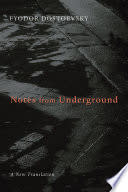
Award-winning translators Richard Pevear and Larissa Volokhonsky give us a brilliantly faithful rendition of this classic novel, in all its tragedy and tormented comedy. In this second edition, they have updated their translation in honor of the 200th anniversary of Dostoevsky’s birth. One of the most remarkable characters in literature, the unnamed narrator of Dostoevsky's most revolutionary novel is a former official who has defiantly withdrawn into an underground existence. In full retreat from society, he scrawls a passionate, obsessive, self-contradictory narrative that serves as a devastating attack on social utopianism and an assertion of man’s essentially irrational nature.
4.5/5
Average Rating
Informations
Genre
Fiction
Published30 août 1994
Recommendations12
About the author
Fyodor Dostoevsky
Author
Fyodor Mikhailovich Dostoevsky was a Russian novelist, short story writer, essayist and journalist. He is regarded as one of the greatest novelists in both Russian and world literature, and many of his works are considered highly influential masterpieces. Dostoevsky's literary works explore the human condition in the troubled political, social and spiritual atmospheres of 19th-century Russia, and engage with a variety of philosophical and religious themes. His most acclaimed novels include Crime and Punishment (1866), The Idiot (1869), Demons (1872), The Adolescent (1875) and The Brothers Karamazov (1880). His Notes from Underground, a novella published in 1864, is considered one of the first works of existentialist literature.
Notes from Underground
by Fyodor Dostoevsky
Fiction
Books Like Notes from Underground
If you're looking for books similar to Notes from Underground, here are some recommendations based on themes, tone, and narrative style.
Top 1

94%
Crime and Punishment
Fyodor Dostoevsky
A psychological novel exploring the moral dilemmas of a troubled protagonist who commits murder. The book delves deep into the protagonist's inner turmoil and existential crisis. Like 'Notes from Underground', it examines the complex nature of human psychology and rationality. The narrative provides a profound exploration of guilt, redemption, and the human condition.
Top 2
92%
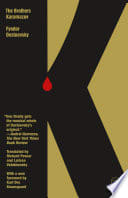
The Brothers Karamazov
Fyodor Dostoevsky
A complex philosophical novel examining moral and spiritual struggles within a family. The book explores deep psychological motivations and the conflict between reason and emotion. Like 'Notes from Underground', it offers a penetrating analysis of human nature and philosophical contradictions. The narrative reveals the intricate psychological landscapes of its characters.
Top 3
90%
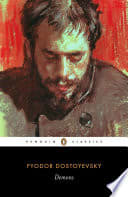
Demons
Fyodor Dostoevsky
A novel exploring political and philosophical tensions in 19th-century Russia. The book examines psychological complexity and ideological conflicts. Like 'Notes from Underground', it offers a critical perspective on social utopian thinking. The narrative reveals the destructive potential of radical ideologies and human psychological contradictions.

90%
The Trial
Franz Kafka
A surreal novel about a man inexplicably arrested and prosecuted by a remote, inaccessible authority. The protagonist experiences profound alienation and bureaucratic absurdity. Similar to the underground narrator, he struggles against incomprehensible social systems. The narrative explores themes of individual powerlessness and psychological disorientation.
88%
The Metamorphosis
Franz Kafka
A surreal novella about a man who transforms into an insect, exploring themes of alienation and social rejection. The protagonist's isolation mirrors the underground narrator's psychological state. Kafka presents a profound examination of human identity and societal expectations. The narrative reveals the absurdity of human existence and social conventions.

88%
Heart of Darkness
Joseph Conrad
A novella exploring psychological darkness and moral ambiguity in colonial Africa. The narrative follows a protagonist's journey into psychological and moral complexity. Like 'Notes from Underground', it examines the irrational aspects of human nature. The book reveals the thin veneer of civilization and human psychological depths.

88%
Fathers and Sons
Ivan Turgenev
A novel examining generational conflicts and philosophical tensions in 19th-century Russia. The book explores ideological differences and psychological complexities. Like 'Notes from Underground', it offers a nuanced view of human motivations. The narrative reveals the intricate dynamics of social and philosophical change.

86%
The Stranger
Albert Camus
A philosophical novel about an alienated man who struggles with societal expectations and emotional detachment. The protagonist's existential perspective mirrors the underground narrator's sense of isolation. The book challenges traditional moral frameworks and explores the absurdity of human existence. Camus presents a protagonist who is disconnected from conventional social norms.
86%
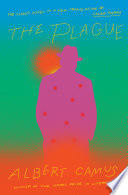
The Plague
Albert Camus
A philosophical novel about a community confronting an epidemic, exploring human responses to collective suffering. The narrative examines individual and collective psychology in extreme circumstances. Similar to Dostoevsky's work, it probes human nature and moral choices. The book reveals the complexity of human behavior during crisis.
86%
The Overcoat
Nikolai Gogol
A satirical short story about a low-ranking bureaucrat's tragic experience. The narrative explores themes of social marginalization and individual insignificance. Similar to Dostoevsky's work, it reveals the psychological complexity of a seemingly mundane character. The story offers a critical perspective on social hierarchies.

84%
No Exit
Jean-Paul Sartre
A philosophical play exploring psychological interactions and existential confinement. Characters are trapped in a room, revealing complex interpersonal dynamics. Like 'Notes from Underground', it examines human psychological mechanisms. The narrative probes the nature of perception, relationships, and existential limitations.
84%
Nausea
Jean-Paul Sartre
An existentialist novel about a historian experiencing profound alienation and philosophical despair. The protagonist's internal monologue reflects a deep questioning of existence and meaning. Similar to the underground narrator, the main character struggles with rationality and emotional disconnection. The book explores themes of individual consciousness and existential angst.
No account connected — sign in to comment.