
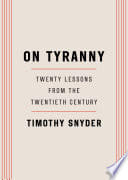
#1 NEW YORK TIMES BESTSELLER • A “bracing” (Vox) guide for surviving and resisting America’s turn towards authoritarianism, from “a rising public intellectual unafraid to make bold connections between past and present” (The New York Times) “Timothy Snyder reasons with unparalleled clarity, throwing the past and future into sharp relief. He has written the rare kind of book that can be read in one sitting but will keep you coming back to help regain your bearings.”—Masha Gessen The Founding Fathers tried to protect us from the threat they knew, the tyranny that overcame ancient democracy. Today, our political order faces new threats, not unlike the totalitarianism of the twentieth century. We are no wiser than the Europeans who saw democracy yield to fascism, Nazism, or communism. Our one advantage is that we might learn from their experience. On Tyranny is a call to arms and a guide to resistance, with invaluable ideas for how we can preserve our freedoms in the uncertain years to come.
Average Rating
Informations
About the author
Timothy Snyder
Author
Timothy David Snyder is an American historian specializing in the history of Central and Eastern Europe, the Soviet Union, and the Holocaust. He holds the inaugural Chair in Modern European History, supported by the Temerty Endowment for Ukrainian Studies, at the Munk School of Global Affairs and Public Policy at the University of Toronto. From 2017 to 2025 he was also the Richard C. Levin Professor of History at Yale University.
On Tyranny
by Timothy Snyder
Books Like On Tyranny
If you're looking for books similar to On Tyranny, here are some recommendations based on themes, tone, and narrative style.
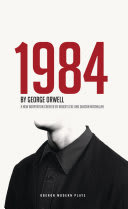
1984
George Orwell
A groundbreaking dystopian novel exploring totalitarian control and government surveillance. The story follows Winston Smith's rebellion against an oppressive regime that manipulates truth and suppresses individual thought. Orwell's work provides a chilling examination of how authoritarian systems maintain power through propaganda and psychological manipulation. It serves as a stark warning about the dangers of unchecked political power and the erosion of personal freedoms.
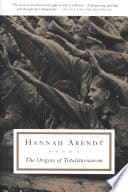
The Origins of Totalitarianism
Hannah Arendt
A seminal work analyzing the roots of Nazi and Stalinist totalitarian systems. Arendt explores how democratic societies can descend into oppressive regimes through systematic dehumanization and ideological manipulation. The book provides deep insights into the psychological and social mechanisms that enable authoritarian movements to gain power. It offers a scholarly and profound examination of political systems that suppress individual rights and freedoms.
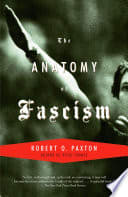
The Anatomy of Fascism
Robert O. Paxton
A comprehensive study of fascism's historical development and political characteristics. Paxton explores the social and political conditions that enable fascist movements to emerge and gain power. The book provides a nuanced understanding of how extreme political ideologies can take root in seemingly stable societies. It offers critical insights into recognizing and resisting authoritarian political movements.
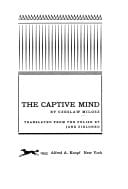
The Captive Mind
Czesław Miłosz
A profound exploration of intellectual compliance under totalitarian systems. Miłosz examines how artists and intellectuals adapt to and rationalize oppressive political environments. The book provides deep psychological insights into the mechanisms of political conformity and intellectual surrender. It offers a unique perspective on maintaining individual integrity under systemic political pressure.
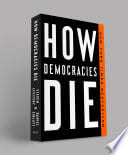
How Democracies Die
Steven Levitsky
A contemporary analysis of democratic backsliding and the mechanisms by which democratic systems can be undermined. The authors examine historical and current examples of how elected leaders can gradually erode democratic institutions. The book provides a critical examination of political polarization and the warning signs of potential democratic collapse. It offers insights into protecting democratic norms and resisting authoritarian tendencies.
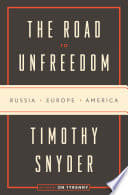
The Road to Unfreedom
Timothy Snyder
Another work by the author of On Tyranny, exploring the political dynamics between Russia and the West. Snyder analyzes the spread of authoritarian ideas and the manipulation of historical narratives. The book provides insights into how political systems can be deliberately destabilized through disinformation and strategic manipulation. It offers a critical examination of contemporary political challenges.
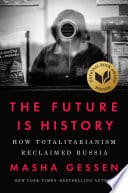
The Future Is History
Masha Gessen
An in-depth exploration of post-Soviet Russia and the rise of authoritarianism. Gessen examines the psychological and social mechanisms that enable totalitarian systems to emerge and persist. The book provides personal narratives that illuminate the human experience under oppressive political systems. It offers a compelling analysis of how political freedoms can be systematically eroded.
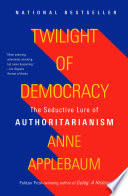
Twilight of Democracy
Anne Applebaum
An exploration of the recent global rise of authoritarian and populist movements. Applebaum examines how intellectual and political elites can become complicit in undermining democratic systems. The book provides personal and historical perspectives on political polarization and democratic fragility. It offers a compelling analysis of the current challenges facing democratic societies worldwide.

Surviving Autocracy
Masha Gessen
A contemporary analysis of authoritarian political systems and their impact on democratic societies. Gessen provides a personal and political examination of how democratic norms can be systematically undermined. The book offers strategies for recognizing and resisting authoritarian tendencies in modern political systems. It provides critical insights into maintaining democratic resilience.
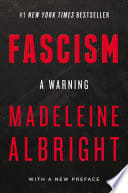
Fascism: A Warning
Madeleine Albright
A powerful examination of fascism's historical and contemporary manifestations. Albright draws on personal and historical experiences to analyze the warning signs of authoritarian movements. The book provides a compelling narrative about the dangers of political extremism and the importance of defending democratic values. It offers practical insights into recognizing and resisting totalitarian tendencies.
No account connected — sign in to comment.