
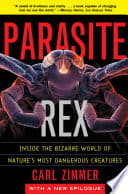
Combining the literary sensibility of David Quammen with the scientific rigor of Stephen Jay Gould, Carl Zimmer reveals the power, danger, and beauty of the surprising creatures who dominate the earth: parasites. For centuries, parasites have lived in nightmares, horror stories, and the darkest shadows of science. In Parasite Rex, Carl Zimmer takes readers on a fantastic voyage into the secret universe of these extraordinary life-forms—which are not only among the most highly evolved on Earth, but make up the majority of life’s diversity. Traveling from the steamy jungles of Costa Rica to the parasite-riddled war zone of southern Sudan, Zimmer introduces an array of amazing creatures that invade their hosts, prey on them from within, and control their behavior. He also vividly describes parasites that can change DNA, rewire the brain, make men more distrustful and women more outgoing, and turn hosts into the living dead. This comprehensive, gracefully written book brings parasites out into the open and uncovers what they can teach us all about the most fundamental survival tactics in the universe—the laws of Parasite Rex.
Average Rating
Informations
About the author
Carl Zimmer
Author
Carl Zimmer is an American popular science writer, blogger, columnist, and journalist who specializes in the topics of evolution, parasites, and heredity. The author of many books, he contributes science essays to publications such as The New York Times, Discover, and National Geographic. He is a fellow at Yale University's Morse College and adjunct professor of molecular biophysics and biochemistry at Yale University. Zimmer also gives frequent lectures and has appeared on many radio shows, including National Public Radio's Radiolab, Fresh Air, and This American Life.
Parasite Rex
by Carl Zimmer
Books Like Parasite Rex
If you're looking for books similar to Parasite Rex, here are some recommendations based on themes, tone, and narrative style.
The Immortal Life of Henrietta Lacks
Rebecca Skloot
A powerful narrative about cellular life, medical ethics, and biological complexity. Skloot uncovers the story of a woman whose cells revolutionized medical research, exploring the intricate world of human biology. The book reveals how microscopic life can have profound implications for science and humanity. It combines scientific detail with compelling human storytelling.
Guns, Germs, and Steel
Jared Diamond
A comprehensive examination of how biological systems shape human history. Diamond explores how microscopic organisms and ecological interactions have influenced human development. The book provides a broad scientific perspective on how living systems interact and evolve. It shares Zimmer's approach of revealing complex biological relationships through engaging storytelling.
The Sixth Extinction
Elizabeth Kolbert
An exploration of how human activities are causing massive ecological transformations. Kolbert examines the complex interactions between species and environmental changes. The book reveals the delicate balance of biological systems, similar to Zimmer's approach in Parasite Rex. It provides a compelling narrative about ecological interconnectedness.
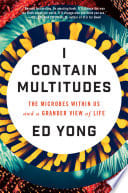
I Contain Multitudes
Ed Yong
An illuminating exploration of the microbiome and the complex relationships between organisms. Yong, like Zimmer, reveals the hidden world of microscopic life and its profound impact on biology. The book examines how microbes shape life on Earth, from individual organisms to entire ecosystems. It provides a fascinating look at the intricate connections between different life forms.
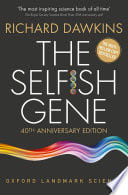
The Selfish Gene
Richard Dawkins
A groundbreaking work examining life from the perspective of genes as fundamental units of biological interaction. Dawkins reveals how genetic mechanisms drive evolutionary processes, much like Zimmer's exploration of parasitic life. The book provides deep insights into biological complexity and survival strategies. It challenges traditional views of organism-level interactions.
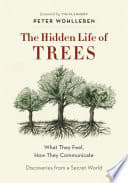
The Hidden Life of Trees
Peter Wohlleben
An exploration of forest ecosystems and the complex interactions between plants. Wohlleben reveals the sophisticated communication and survival strategies of trees, similar to Zimmer's approach to parasitic life. The book demonstrates how seemingly passive organisms have complex, dynamic relationships. It provides a new perspective on biological interconnectedness.
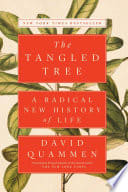
The Tangled Tree
David Quammen
An exploration of evolutionary biology and the complex relationships between different forms of life. Quammen reveals how genetic transfer and symbiotic relationships shape biological evolution. The book provides insights into the interconnected nature of life, similar to Zimmer's approach in Parasite Rex. It challenges traditional views of biological classification.
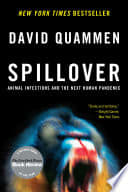
Spillover
David Quammen
A groundbreaking exploration of zoonotic diseases and how they jump from animals to humans. Quammen investigates the origins of emerging infectious diseases, tracing their paths through ecosystems and human interactions. Like Zimmer's work, this book reveals the complex relationships between organisms and their environments. It offers a scientific detective story that illuminates the hidden world of disease transmission and ecological interconnectedness.
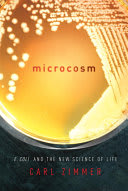
Microcosm
Carl Zimmer
Another work by Zimmer exploring the hidden world of microscopic life. This book focuses on E. coli bacteria, revealing the complex world of microorganisms. Zimmer demonstrates how tiny organisms can provide profound insights into biological processes. It continues his approach of making scientific complexity accessible and fascinating.
Spillover
David Quammen
A comprehensive investigation of zoonotic diseases and their transmission between species. Quammen explores how infectious agents move through ecosystems, revealing complex biological interactions. The book shares Zimmer's approach of making scientific complexity accessible and engaging. It provides deep insights into the hidden world of disease transmission.
The Demon in the Freezer
Richard Preston
A riveting scientific narrative about deadly viruses and biological threats. Preston explores the world of infectious agents with the same compelling storytelling approach as Zimmer. The book delves into the intricate world of microbial life, examining how microscopic organisms can pose massive threats to human civilization. It combines scientific detail with gripping narrative, revealing the hidden power of tiny biological entities.
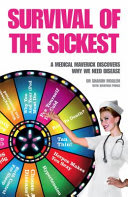
Survival of the Sickest
Sharon Moalem
A fascinating examination of how disease and genetic variations contribute to human survival. Moalem explores the complex relationships between genetics, disease, and evolutionary adaptation. The book reveals surprising connections in biological systems, much like Zimmer's work. It provides insights into how seemingly harmful biological processes can have unexpected benefits.
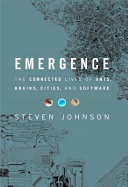
Emergence
Steven Johnson
An exploration of complex systems and how simple interactions create sophisticated outcomes. Johnson examines how seemingly small entities can create complex behaviors, similar to Zimmer's approach to parasitology. The book reveals the hidden patterns of biological and social systems. It provides insights into how microscopic interactions shape larger phenomena.
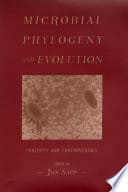
Microbes and Evolution
Ricardo Guerrero
A comprehensive examination of microbial life and its role in evolutionary processes. The book explores how microscopic organisms shape biological systems and drive evolutionary change. It provides deep scientific insights into the complex world of microbial interactions. The work shares Zimmer's approach of revealing the hidden complexity of biological life.
No account connected — sign in to comment.