
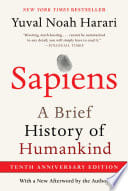
#1 New York Times Bestseller • New York Times Readers’ Pick: Top 100 Books of the 21st Century • The Summer Reading Pick for President Barack Obama and Bill Gates Official U.S. edition with full color illustrations throughout. From renowned historian Yuval Noah Harari comes a groundbreaking narrative of humanity’s creation and evolution—a #1 international bestseller—that explores the ways in which biology and history have defined us and enhanced our understanding of what it means to be “human.” One hundred thousand years ago, at least six different species of humans inhabited Earth. Yet today there is only one—homo sapiens. What happened to the others? And what may happen to us? Most books about the history of humanity pursue either a historical or a biological approach, but Dr. Yuval Noah Harari breaks the mold with this highly original book that begins about 70,000 years ago with the appearance of modern cognition. From examining the role evolving humans have played in the global ecosystem to charting the rise of empires, Sapiens integrates history and science to reconsider accepted narratives, connect past developments with contemporary concerns, and examine specific events within the context of larger ideas. Dr. Harari also compels us to look ahead, because over the last few decades humans have begun to bend laws of natural selection that have governed life for the past four billion years. We are acquiring the ability to design not only the world around us, but also ourselves. Where is this leading us, and what do we want to become? Featuring 27 photographs, 6 maps, and 25 illustrations/diagrams, this provocative and insightful work is sure to spark debate and is essential reading for aficionados of Jared Diamond, James Gleick, Matt Ridley, Robert Wright, and Sharon Moalem.
Average Rating
Informations
About the author
Yuval Noah Harari
Author
Yuval Noah Harari is an Israeli medievalist, military historian, public intellectual, and popular science writer. He currently serves as professor in the Department of History at the Hebrew University of Jerusalem. His first bestselling book, Sapiens: A Brief History of Humankind (2011) is based on his lectures to an undergraduate world history class. His other works include the bestsellers Homo Deus: A Brief History of Tomorrow (2016), 21 Lessons for the 21st Century (2018), and Nexus: A Brief History of Information Networks from the Stone Age to AI (2024). His published work examines themes of free will, consciousness, intelligence, happiness, suffering and the role of storytelling in human evolution.
Sapiens
by Yuval Noah Harari
Books Like Sapiens
If you're looking for books similar to Sapiens, here are some recommendations based on themes, tone, and narrative style.
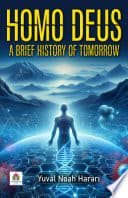
Homo Deus
Yuval Noah Harari
A sequel to Sapiens that explores humanity's future and potential technological transformations. Harari examines how humans might evolve with advancing technologies like artificial intelligence and genetic engineering. The book continues the intellectual exploration of human nature and potential future trajectories. It provides a speculative yet rigorous analysis of human potential and challenges. A thought-provoking companion to Sapiens.
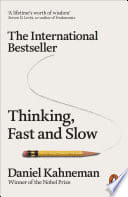
Thinking, Fast and Slow
Daniel Kahneman
An exploration of human cognitive processes and decision-making mechanisms. Kahneman reveals how humans think using two distinct systems: intuitive and analytical. The book provides deep insights into human psychological biases and reasoning. It challenges traditional assumptions about rational decision-making. A groundbreaking work in cognitive psychology.
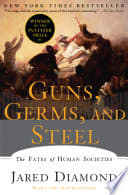
Guns, Germs, and Steel
Jared Diamond
A groundbreaking exploration of human history that examines how geography and environment shaped human societies. Diamond investigates why some civilizations developed more advanced technologies and became dominant. The book provides a comprehensive analysis of human development across continents, similar to Harari's approach of integrating multiple disciplines. It offers profound insights into human progress and cultural evolution. A landmark work that challenges traditional historical narratives.
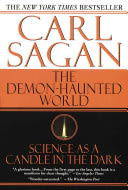
The Demon-Haunted World
Carl Sagan
A passionate defense of scientific thinking and critical reasoning. Sagan explores how scientific method can help understand the world and combat superstition. The book encourages rational thinking and skeptical investigation of claims. It provides tools for understanding complex scientific and social phenomena. A powerful argument for scientific literacy.
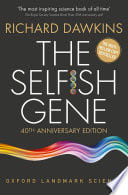
The Selfish Gene
Richard Dawkins
A revolutionary work that explores evolution from the perspective of genes. Dawkins introduces groundbreaking ideas about how genes drive biological and behavioral evolution. The book provides deep insights into natural selection and genetic mechanisms. It challenges traditional views of evolutionary processes and individual organism behavior. A seminal work that transformed understanding of biological evolution.
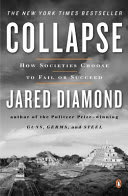
Collapse
Jared Diamond
An investigation of how societies choose to succeed or fail through environmental and cultural decisions. Diamond examines historical civilizations and their responses to environmental challenges. The book provides deep insights into human societal adaptation and resilience. It explores complex interactions between human societies and their environments. A compelling analysis of historical social dynamics.
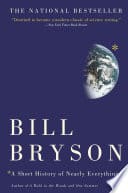
A Short History of Nearly Everything
Bill Bryson
A witty and accessible exploration of scientific discovery and human understanding of the world. Bryson covers complex scientific concepts with humor and clarity, making challenging topics engaging for general readers. The book traces the history of scientific knowledge from the Big Bang to human civilization. It shares Harari's approach of synthesizing complex information into a compelling narrative. A fascinating journey through scientific and human history.
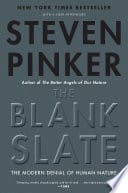
The Blank Slate
Steven Pinker
A comprehensive examination of human nature, challenging traditional beliefs about human behavior and cognition. Pinker explores the interaction between genetics, environment, and human development. The book provides scientific insights into human psychology and cultural evolution. It offers a nuanced perspective on human potential and limitations. A rigorous investigation of human nature and behavior.
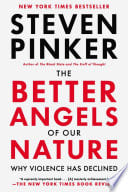
The Better Angels of Our Nature
Steven Pinker
A comprehensive analysis of declining human violence throughout history. Pinker uses extensive data to demonstrate how human societies have become progressively less violent. The book explores psychological and cultural factors driving this trend. It provides a hopeful perspective on human moral progress. A nuanced examination of human social evolution.
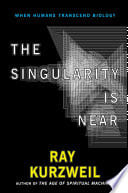
The Singularity Is Near
Ray Kurzweil
An exploration of technological evolution and potential future human transformation. Kurzweil predicts radical changes through exponential technological growth, particularly in artificial intelligence and biotechnology. The book examines how human intelligence might merge with technological systems. It shares Harari's forward-looking perspective on human potential and technological disruption. A visionary analysis of potential technological futures.
No account connected — sign in to comment.