
Paul Schrader was in meltdown in 1972. Drinking heavily, living in his car, he was hospitalised with a gastric ulcer. There he read about Arthur Bremer's attempt to assassinate Alabama Governor George Wallace: the story was the germ of his screenplay for Taxi Driver (1976). Executives at Columbia hated the script, but when Martin Scorsese and Robert De Niro, who were flying high after the triumphs of Mean Streets (1973) and The Godfather Part II (1974), signed up, Taxi Driver became too good a package to refuse. Scorsese transformed the script into what is now considered one of the two or three definitive films of the 1970s. De Niro is mesmerising as Travis Bickle – pent-up, bigoted, steadily slipping into psychosis, the personification of American masculinity post-Vietnam. Cybill Shepherd and Jodie Foster give fine support and Scorsese brought in Bernard Herrmann, the greatest of film composers, to write what turned out to be his last score. Crucially, Scorsese rooted Taxi Driver in its New York locations, tuning the film's violence into the hard reality of the city. Technically thrilling though it is, Taxi Driver is profoundly disturbing – finding, as Amy Taubin shows, racism, misogyny and gun fetishism at the heart of American culture. In her foreword to this special edition, published to celebrate the 20th anniversary of the BFI Film Classics series, Amy Taubin considers Taxi Driver anew in the context of contemporary politics of race and masculinity in the US, and draws on an exclusive interview with Robert De Niro about his memories of making the film.

Average Rating
Informations
About the author
Amy Taubin
Author
Amy Taubin is an American author and film critic. She is a contributing editor for two prominent film magazines, the British Sight & Sound and the American Film Comment. She has also written regularly for the SoHo Weekly News, The Village Voice, The Millennium Film Journal, and Artforum, and used to be curator of video and film at the non-profit experimental performance space The Kitchen.
Taxi Driver
by Amy Taubin
Books Like Taxi Driver
If you're looking for books similar to Taxi Driver, here are some recommendations based on themes, tone, and narrative style.
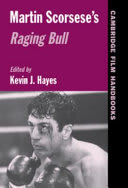
Raging Bull
Martin Scorsese
Another collaboration between Scorsese and De Niro that explores masculine rage and self-destruction. The biographical film follows boxer Jake LaMotta's violent personal and professional life. Like Taxi Driver, it examines the psychological breakdown of a deeply troubled male protagonist. De Niro's transformative performance reveals the destructive potential of unchecked masculinity and inner turmoil. The black-and-white cinematography intensifies the film's raw emotional landscape.
The Long Goodbye
Raymond Chandler
A classic noir novel featuring private detective Philip Marlowe navigating the corrupt underbelly of Los Angeles. The book shares Taxi Driver's exploration of urban decay, moral ambiguity, and individual alienation. Chandler's protagonist represents a different but equally complex masculine archetype struggling against systemic corruption. The novel's gritty realism and psychological depth provide a literary predecessor to Travis Bickle's urban odyssey. Marlowe's moral code and social critique resonate with Taxi Driver's thematic concerns.
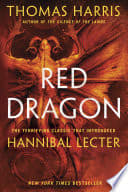
Red Dragon
Thomas Harris
A psychological thriller exploring the mind of a serial killer and the detective pursuing him. The novel delves into themes of psychological profiling, violence, and human complexity. Like Taxi Driver, the book offers a deep exploration of psychological dysfunction and social marginalization. Harris provides a sophisticated examination of criminal psychology and human motivation. The narrative's psychological depth resonates with Travis Bickle's complex character.
Clockers
Richard Price
A powerful novel about urban crime, race, and systemic violence in a New Jersey housing project. The story follows Strike, a low-level drug dealer caught between criminal life and potential redemption. Like Taxi Driver, the book explores themes of urban isolation, racial tension, and psychological pressure. Price's detailed, empathetic portrayal of marginalized characters reveals the complex social dynamics underlying urban violence. The narrative provides a nuanced examination of masculinity and survival.
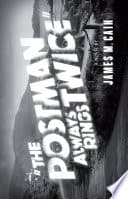
The Postman Always Rings Twice
James M. Cain
A classic noir novel about passion, murder, and moral compromise. The story follows Frank and Cora, whose illicit affair leads to a murder plot. Like Taxi Driver, the book explores themes of moral breakdown and desperate human desire. Cain's novel reveals the psychological tensions underlying seemingly normal social interactions. The narrative's exploration of transgression and moral ambiguity resonates with Travis Bickle's psychological journey.
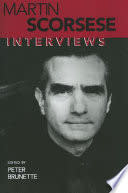
Mean Streets
Martin Scorsese
A gritty exploration of Catholic guilt and urban violence in New York's Little Italy. The film follows Charlie, a small-time gangster struggling with his moral conscience and violent environment. It features Robert De Niro in a breakthrough performance that prefigures his later work in Taxi Driver. The movie delves deep into themes of masculinity, redemption, and the psychological tensions of urban life. Scorsese's raw, intimate style captures the brutal realities of street-level criminal existence.
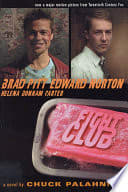
Fight Club
Chuck Palahniuk
A provocative novel about masculinity, consumerism, and psychological breakdown. The story follows an unnamed narrator who creates an underground fight club as a form of masculine rebellion. Similar to Taxi Driver, the book explores male alienation, social disconnection, and destructive impulses. Palahniuk's dark satire reveals the psychological tensions underlying contemporary masculine identity. The narrative critiques consumer culture and offers a radical examination of male psychological crisis.
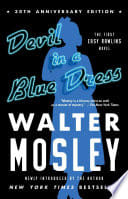
Devil in a Blue Dress
Walter Mosley
A noir detective novel set in 1940s Los Angeles, exploring race, crime, and social dynamics. The story follows Easy Rawlins, a Black private detective navigating a complex racial landscape. Like Taxi Driver, the book offers a nuanced exploration of urban marginalization and individual agency. Mosley's novel provides a rich examination of social tension and personal survival. The protagonist's moral complexity echoes Travis Bickle's psychological landscape.
American Psycho
Bret Easton Ellis
A satirical novel about masculinity, violence, and alienation in 1980s New York. The story follows Patrick Bateman, a Wall Street investment banker who descends into murderous psychosis. Like Travis Bickle, Bateman represents a toxic masculine archetype disconnected from genuine human emotion. The book critiques consumer culture, social performativity, and the psychological fractures of urban professional life. Its dark humor and psychological intensity echo Taxi Driver's exploration of mental disintegration.
The Killer Inside Me
Jim Thompson
A noir novel exploring the psychological landscape of a seemingly normal small-town deputy sheriff who is secretly a violent psychopath. The book provides a chilling first-person narrative of a deeply disturbed protagonist, reminiscent of Travis Bickle's psychological complexity. Thompson's novel delves into themes of hidden violence, social performance, and psychological disintegration. The protagonist's internal monologue reveals the dangerous potential lurking beneath a calm exterior. Like Taxi Driver, the book offers a profound exploration of masculine pathology.
The Killer
Georges Simenon
A psychological novel about a man's gradual descent into criminal behavior. The story follows a seemingly ordinary individual who becomes increasingly detached from social norms. Similar to Taxi Driver, the book explores the psychological mechanisms of alienation and violence. Simenon provides a nuanced examination of individual psychological breakdown. The narrative's deep psychological insight mirrors Travis Bickle's complex inner world.
The Friends of Eddie Coyle
George V. Higgins
A groundbreaking crime novel set in the gritty underworld of Boston's criminal ecosystem. The book offers a realistic portrayal of small-time criminals navigating a harsh urban landscape. Its naturalistic dialogue and unflinching look at criminal life share similarities with Taxi Driver's raw depiction of urban alienation. The protagonist's moral ambiguity and desperate circumstances reflect similar themes of social marginalization. Higgins' novel provides a nuanced exploration of criminal psychology.
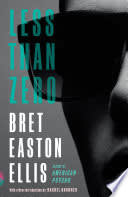
Less Than Zero
Bret Easton Ellis
A novel about wealthy Los Angeles youth experiencing profound emotional disconnection and moral nihilism. The story follows Clay, a college student returning to a world of privilege and emotional emptiness. Like Taxi Driver, the book explores themes of urban alienation, psychological numbness, and social critique. Ellis reveals the hollow core of consumer culture and generational disillusionment. The narrative's detached perspective mirrors Travis Bickle's psychological isolation.
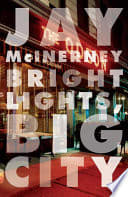
Bright Lights, Big City
Jay McInerney
A novel about urban alienation and personal disintegration in 1980s New York. The story follows a young magazine fact-checker spiraling through cocaine-fueled nights and professional despair. Like Taxi Driver, the book explores themes of urban isolation, psychological breakdown, and masculine identity crisis. McInerney's protagonist represents a different but equally potent form of urban disconnection. The narrative captures the existential angst of a young professional lost in the city's overwhelming landscape.
No account connected — sign in to comment.