
INTERNATIONAL BESTSELLER Working at the local processing plant, Marcos is in the business of slaughtering humans—though no one calls them that anymore. His wife has left him, his father is sinking into dementia, and Marcos tries not to think too hard about how he makes a living. After all, it happened so quickly. First, it was reported that an infectious virus has made all animal meat poisonous to humans. Then governments initiated the “Transition.” Now, eating human meat—“special meat”—is legal. Marcos tries to stick to numbers, consignments, processing. Then one day he’s given a gift: a live specimen of the finest quality. Though he’s aware that any form of personal contact is forbidden on pain of death, little by little he starts to treat her like a human being. And soon, he becomes tortured by what has been lost—and what might still be saved.

Average Rating
Informations
About the author
Agustina Bazterrica
Author
Agustina Bazterrica is an Argentine writer. She is noted for her short stories and her novels, and she has won multiple literary prizes.
Tender Is the Flesh
by Agustina Bazterrica
Books Like Tender Is the Flesh
If you're looking for books similar to Tender Is the Flesh, here are some recommendations based on themes, tone, and narrative style.

The Road
Cormac McCarthy
In a post-apocalyptic world, a father and son journey through a desolate landscape where survival requires brutal moral compromises. The novel explores themes of human survival, cannibalism, and the breakdown of societal norms. Like 'Tender Is the Flesh', it examines how humanity adapts to extreme circumstances and the psychological toll of survival. The bleak narrative style and exploration of human consumption create a haunting parallel to Bazterrica's work.

1984
George Orwell
A seminal dystopian novel about a totalitarian society that systematically eliminates individual thought and humanity. The narrative explores how institutional power can completely reshape human perception and behavior. Similar to 'Tender Is the Flesh', it reveals the psychological mechanisms of systemic dehumanization. The dark, introspective approach creates a powerful exploration of societal control.

The Handmaid's Tale
Margaret Atwood
A dystopian novel depicting a society where women are systematically dehumanized and treated as reproductive vessels. The narrative explores how institutional systems can normalize extreme forms of oppression. Similar to 'Tender Is the Flesh', it reveals the psychological mechanisms that allow societies to rationalize inhuman treatment. The unflinching examination of systemic dehumanization creates a powerful parallel.
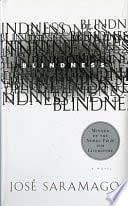
Blindness
José Saramago
A mysterious epidemic of blindness causes societal collapse, revealing the fragile nature of human civilization. The novel depicts how quickly social structures disintegrate when fundamental assumptions are challenged. Like Bazterrica's work, it examines human behavior under extreme conditions and the thin veneer of civilization. The stark, unflinching narrative style explores how quickly people can become dehumanized.
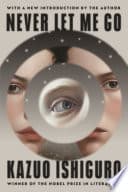
Never Let Me Go
Kazuo Ishiguro
A dystopian novel about human clones raised for organ donation, revealing a society that has normalized dehumanization. The story follows characters who gradually understand their predetermined fate in a system that treats them as commodities. Similar to 'Tender Is the Flesh', the book explores how societies can rationalize treating certain beings as less than human. The quiet, introspective tone and ethical complexity make it a compelling companion read.

Brave New World
Aldous Huxley
A classic dystopian novel exploring a society engineered for total control through technological and psychological manipulation. The story reveals how systemic processes can reduce human beings to mere functional units. Like Bazterrica's work, it examines the potential for societies to normalize profoundly unethical practices. The philosophical depth and speculative approach create a compelling thematic connection.
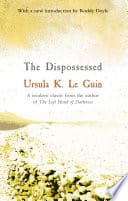
The Dispossessed
Ursula K. Le Guin
A philosophical science fiction novel exploring different social systems and the nature of human freedom. The story examines how societal structures fundamentally shape human experience and perception. Like Bazterrica's work, it offers a deep exploration of systemic thinking and human adaptation. The intellectual depth and speculative approach create a nuanced companion to the main novel.

Oryx and Crake
Margaret Atwood
A post-apocalyptic novel exploring genetic engineering and the potential consequences of scientific manipulation. The story reveals a world fundamentally transformed by human technological intervention, much like the meat-processing society in 'Tender Is the Flesh'. Atwood's narrative examines how scientific rationalization can lead to profound ethical breaches. The dark, speculative approach mirrors Bazterrica's exploration of systemic dehumanization.
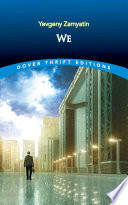
We
Yevgeny Zamyatin
A pioneering dystopian novel about a totalitarian society that completely controls individual human experience. The narrative explores how systemic oppression can normalize inhuman treatment and eliminate individual agency. Similar to 'Tender Is the Flesh', it reveals how bureaucratic systems can rationalize extreme forms of dehumanization. The philosophical depth and critique of societal structures create a compelling parallel.

High-Rise
J.G. Ballard
A novel about a luxury apartment building that descends into tribal warfare and social breakdown. The story examines how quickly civilized behavior can collapse when established social structures are challenged. Like Bazterrica's work, it explores the thin line between civilization and barbarism. The psychological exploration of human behavior under extreme conditions creates a thematic resonance.
No account connected — sign in to comment.