
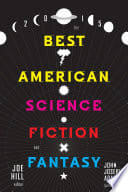
Imaginative fiction from Neil Gaiman, Karen Russell, Daniel H. Wilson, and more, selected by New York Times-bestselling author Joe Hill. Science fiction and fantasy enjoy a long literary tradition, stretching from Mary Shelley, H. G. Wells, and Jules Verne to Ray Bradbury, Ursula K. Le Guin, and William Gibson. In The Best American Science Fiction and Fantasy, 2015 award-winning editor John Joseph Adams and Joe Hill deliver a diverse and vibrant collection of stories published in the previous year. Featuring writers with deep science fiction and fantasy backgrounds, along with those who are infusing traditional fiction with speculative elements, these stories uphold a longstanding tradition in both genres—looking at the world and asking, What if? The Best American Science Fiction and Fantasy, 2015 includes Kelly Link, Neil Gaiman, Karen Russell T. C. Boyle, Sofia Samatar, Jo Walton, Cat Rambo Daniel H. Wilson, Seanan McGuire, Jess Row, and more. "The overall quality of the work is very high."— Publishers Weekly
Average Rating
Informations
About the author
Joe Hill, John Joseph Adams
Author
The Best American Science Fiction and Fantasy 2015
by Joe Hill, John Joseph Adams
Books Like The Best American Science Fiction and Fantasy 2015
If you're looking for books similar to The Best American Science Fiction and Fantasy 2015, here are some recommendations based on themes, tone, and narrative style.
Exhalation
Ted Chiang
A collection of speculative short stories that explore profound philosophical and scientific concepts through imaginative scenarios. Chiang's work, like the anthology, pushes the boundaries of traditional storytelling by asking complex 'what if' questions. Each story combines intellectual depth with emotional resonance, similar to the diverse narrative approaches in the original collection.
Kindred
Octavia Butler
A groundbreaking science fiction novel about a modern Black woman transported back to a pre-Civil War plantation. Butler uses time travel as a mechanism to explore racism, power dynamics, and historical trauma. The novel's speculative approach and social commentary align with the anthology's interest in thought-provoking narratives.
The Underground Railroad
Colson Whitehead
A powerful alternate history novel that reimagines the Underground Railroad as a literal subterranean train system. The story follows Cora, a slave seeking freedom through a fantastical underground network. Whitehead's speculative approach and genre-blending narrative align with the anthology's exploration of imaginative storytelling.
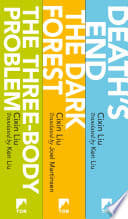
The Three-Body Problem
Cixin Liu
A complex science fiction novel exploring first contact with an alien civilization through intricate scientific and historical contexts. The narrative spans multiple timelines and scientific disciplines, presenting a unique perspective on humanity's potential cosmic interactions. Liu's work shares the anthology's commitment to innovative, intellectually challenging storytelling.
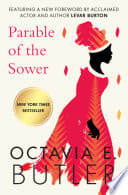
Parable of the Sower
Octavia Butler
A dystopian novel set in a near-future America devastated by climate change and social collapse. The story follows a young woman developing a new philosophical and spiritual framework for survival. Butler's speculative exploration of social transformation reflects the anthology's interest in imaginative social commentary.
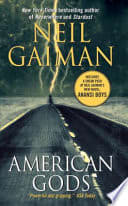
American Gods
Neil Gaiman
A mythological fantasy novel that blends contemporary American culture with ancient mythological beings. The story follows an ex-convict who becomes embroiled in a conflict between old gods and new technological deities. Gaiman's narrative style mirrors the anthology's speculative approach, exploring hidden mythologies and supernatural possibilities within familiar settings.
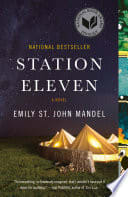
Station Eleven
Emily St. John Mandel
A post-apocalyptic novel exploring human resilience after a devastating pandemic. The story weaves together multiple narratives across time, focusing on art, memory, and survival. Mandel's genre-blending approach and philosophical exploration mirror the anthology's diverse and thoughtful storytelling.
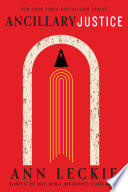
Ancillary Justice
Ann Leckie
A space opera that challenges traditional narrative perspectives through a protagonist who was once an AI controlling multiple human bodies. Leckie explores complex themes of identity, consciousness, and colonialism through innovative science fiction storytelling. The novel's genre-expanding approach aligns with the anthology's diverse narrative strategies.
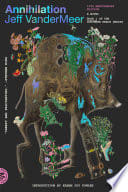
Annihilation
Jeff VanderMeer
A surreal science fiction novel about a mysterious ecological zone where natural laws seem suspended. A team of scientists explores an inexplicable landscape filled with bizarre transformations and incomprehensible phenomena. VanderMeer's work shares the anthology's commitment to pushing genre boundaries and exploring strange, liminal spaces.
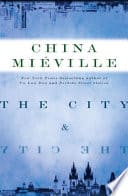
The City & The City
China Miéville
A genre-defying detective novel set in two overlapping cities where citizens must deliberately 'unsee' each other. Miéville creates a complex narrative that blends crime fiction, fantasy, and political allegory. The novel's innovative approach to reality and perception mirrors the anthology's commitment to boundary-pushing storytelling.
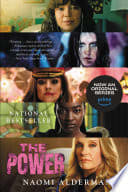
The Power
Naomi Alderman
A speculative fiction novel exploring a world where women develop the ability to generate electrical shocks, fundamentally transforming global power structures. Alderman creates a provocative thought experiment about gender, violence, and social transformation. The novel's imaginative premise reflects the anthology's commitment to challenging narrative conventions.
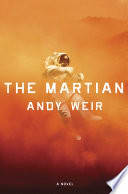
The Martian
Andy Weir
A scientifically grounded science fiction novel about an astronaut stranded alone on Mars. The protagonist uses ingenuity and scientific problem-solving to survive in an hostile environment. Weir's narrative combines technical detail with human drama, reflecting the anthology's interest in speculative scenarios rooted in scientific possibility.
No account connected — sign in to comment.