
4.7/5
Average Rating
Informations
Genre
Business & Economics
Published16 novembre 2015
Recommendations10
About the author
Michael Lewis
Author
Michael Monroe Lewis is an American author and financial journalist. He has also been a contributing editor to Vanity Fair since 2009, writing mostly on business, finance, and economics. He is known for his nonfiction work, particularly his coverage of financial crises and behavioral finance.
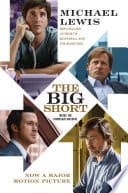
The Big Short: Inside the Doomsday Machine (Movie Tie-in Edition)
by Michael Lewis
Business & Economics
Books Like The Big Short: Inside the Doomsday Machine (Movie Tie-in Edition)
If you're looking for books similar to The Big Short: Inside the Doomsday Machine (Movie Tie-in Edition), here are some recommendations based on themes, tone, and narrative style.
Top 1
96%
Flash Boys
Michael Lewis
A fascinating expose of high-frequency trading in the US stock market, revealing how the system is rigged. Like The Big Short, it follows outsiders who discover and challenge Wall Street's hidden practices. Perfect for readers who enjoy detailed financial investigations with compelling characters.
Top 2
92%
Too Big to Fail
Andrew Ross Sorkin
A comprehensive account of the 2008 financial crisis from the perspective of Wall Street CEOs and government regulators. Provides an inside look at the decisions and drama that led to the economic collapse, complementing The Big Short's outsider perspective.
Top 3
90%
Liar's Poker
Michael Lewis
Lewis's first book details his experiences as a bond trader at Salomon Brothers in the 1980s. Exposes the excess and absurdity of Wall Street culture with the same sharp wit and insight found in The Big Short. Essential reading for understanding the evolution of modern finance.
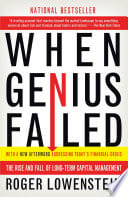
88%
When Genius Failed
Roger Lowenstein
Chronicles the rise and spectacular fall of Long-Term Capital Management, a hedge fund that collapsed in 1998. Explores themes of hubris, risk, and market manipulation similar to those in The Big Short. Shows how the seeds of the 2008 crisis were planted years earlier.
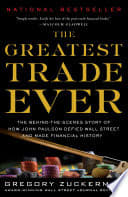
86%
The Greatest Trade Ever
Gregory Zuckerman
Details how hedge fund manager John Paulson made billions betting against the housing market. Parallels The Big Short's narrative of contrarian investors who saw the crisis coming. Offers additional perspective on the same historical events.
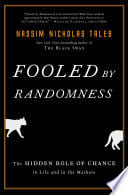
84%
Fooled by Randomness
Nassim Nicholas Taleb
A philosophical examination of luck, uncertainty, and risk in financial markets. Challenges conventional wisdom about success in trading and investing. Perfect for readers who appreciate The Big Short's skepticism of financial industry expertise.
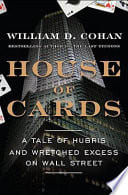
82%
House of Cards
William D. Cohan
A detailed account of the collapse of Bear Stearns, one of the first major casualties of the financial crisis. Provides insight into the culture of investment banking and the mechanisms of failure. Complements The Big Short's analysis of institutional collapse.
80%
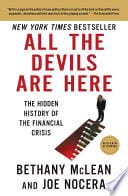
All the Devils Are Here
Bethany McLean
Investigates the deep roots of the financial crisis, examining the key players and institutions responsible. Like The Big Short, it uncovers the systemic problems in finance. Offers a broader historical context for the 2008 crash.
78%
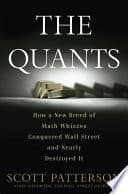
The Quants
Scott Patterson
Explores the world of quantitative traders who use complex mathematical models to play the markets. Shows how their techniques contributed to market instability. Similar to The Big Short in its criticism of financial innovation gone wrong.
76%
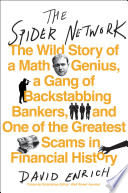
The Spider Network
David Enrich
Uncovers the LIBOR scandal, where traders manipulated global interest rates for profit. Features the same themes of financial corruption and systemic failure found in The Big Short. Shows how individual greed can impact global markets.
No account connected — sign in to comment.