
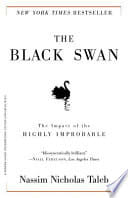
In the author's point of view, a black swan is an improbable event with three principal characteristics - It is unpredictable; it carries a massive impact; and, after the fact, we concoct an explanation that makes it appear less random, and more predictable, than it was. Why do we not acknowledge the phenomenon of black swans until after they occur? Part of the answer, according to Taleb, is that humans are hardwired to learn specifics when they should be focused on generalities. We concentrate on things we already know and time and time again fail to take into consideration what we don't know. We are, therefore, unable to truly estimate opportunities, too vulnerable to the impulse to simplify, narrate, and categorize, and not open enough to rewarding those who can imagine the 'impossible'.
Average Rating
Informations
About the author
Nassim Nicholas Taleb
Author
Nassim Nicholas Taleb is a Lebanese-American essayist, mathematical statistician, former option trader, risk analyst, and aphorist. His work concerns problems of randomness, probability, complexity, and uncertainty.
The Black Swan
by Nassim Nicholas Taleb
Books Like The Black Swan
If you're looking for books similar to The Black Swan, here are some recommendations based on themes, tone, and narrative style.
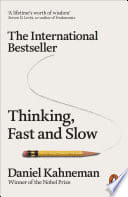
Thinking, Fast and Slow
Daniel Kahneman
A groundbreaking exploration of human decision-making and cognitive biases. Kahneman reveals how our thinking is divided into two systems: one fast and intuitive, the other slow and analytical. The book examines how these systems lead us to make irrational judgments and misinterpret probabilities. It provides deep insights into human psychology and cognitive limitations, similar to Taleb's examination of unpredictability.
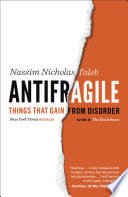
Antifragile
Nassim Nicholas Taleb
Another seminal work by Taleb that explores systems that gain from disorder and uncertainty. The book argues that some things benefit from shocks, randomness, and stress, becoming stronger rather than weaker. It extends the concepts introduced in The Black Swan, providing a framework for understanding how to thrive in an unpredictable world. Taleb challenges conventional wisdom about risk and resilience.
Nassim Nicholas Taleb: Collected Works
Nassim Nicholas Taleb
A comprehensive collection of Taleb's works that provides deeper context for his ideas about uncertainty and randomness. The compilation includes his most significant writings on probability, risk, and human decision-making. It offers a comprehensive view of Taleb's philosophical and analytical approach to understanding complex systems. Readers can gain a more nuanced understanding of his groundbreaking concepts.
Fooled by Randomness
Nassim Nicholas Taleb
Taleb's earlier work that introduces many concepts later expanded in The Black Swan. The book explores how humans misinterpret random events and mistakenly attribute success to skill. It reveals how chance plays a more significant role in our lives than we typically acknowledge. Taleb challenges financial and professional narratives that ignore the impact of randomness.
The Signal and the Noise
Nate Silver
A comprehensive analysis of prediction and probability in various fields, from economics to sports and politics. Silver explores why some predictions succeed while others fail, examining the challenges of extracting meaningful signals from complex data. The book shares Taleb's skepticism about predictive models and highlights the limitations of human forecasting. It provides a nuanced look at uncertainty and decision-making.
Superforecasting
Philip E. Tetlock
An investigation into how some people consistently make more accurate predictions than others. Tetlock explores the cognitive strategies and approaches that enable better forecasting. The book challenges traditional assumptions about expertise and provides insights into improving predictive thinking. It complements Taleb's critique of prediction by offering constructive approaches to understanding uncertainty.
Algorithms to Live By
Brian Christian and Tom Griffiths
An innovative exploration of computer science principles applied to human decision-making. The book reveals how computational thinking can help us navigate complex, uncertain environments. Christian and Griffiths demonstrate how algorithmic approaches can provide insights into solving real-world problems. It offers a unique perspective on managing uncertainty and making decisions.
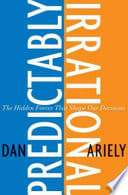
Predictably Irrational
Dan Ariely
An exploration of the hidden forces that shape our decisions, revealing systematic irrationality in human behavior. Ariely demonstrates how we consistently make counterintuitive and seemingly illogical choices. The book examines cognitive biases and psychological mechanisms that lead us to make predictable mistakes. It complements Taleb's work by showing how our mental frameworks distort our understanding of probability.
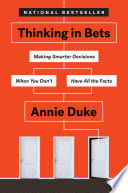
Thinking in Bets
Annie Duke
A strategic approach to decision-making under uncertainty, drawing from poker and cognitive psychology. Duke reveals how probabilistic thinking can improve our choices in complex environments. The book provides practical strategies for managing uncertainty and making better decisions. It shares Taleb's interest in understanding how we process risk and randomness.
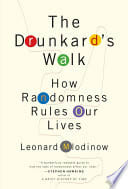
The Drunkard's Walk
Leonard Mlodinow
A fascinating exploration of randomness and probability in everyday life. Mlodinow reveals how chance influences our experiences, challenging our perception of control and predictability. The book demonstrates how seemingly meaningful patterns are often the result of random fluctuations. It provides mathematical and psychological insights into understanding uncertainty, similar to Taleb's approach.
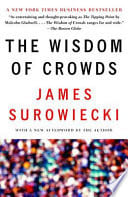
The Wisdom of Crowds
James Surowiecki
An exploration of collective intelligence and how groups can make better decisions than individual experts. Surowiecki demonstrates how diverse perspectives can lead to more accurate predictions and problem-solving. The book reveals the conditions under which collective decision-making becomes powerful. It provides an interesting counterpoint to Taleb's skepticism about human predictive capabilities.
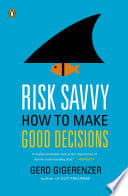
Risk Savvy
Gerd Gigerenzer
A practical guide to understanding and managing risk in an uncertain world. Gigerenzer argues that we can make better decisions by developing intuitive understanding of probability. The book provides strategies for navigating complex environments with limited information. It shares Taleb's skepticism of complex statistical models and emphasizes practical decision-making.
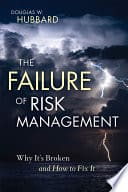
The Failure of Risk Management
Douglas W. Hubbard
A critical examination of traditional risk management approaches and their fundamental limitations. Hubbard exposes the flaws in conventional risk assessment methods and provides alternative strategies. The book challenges existing paradigms of understanding and managing uncertainty. It resonates with Taleb's critique of oversimplified risk models.
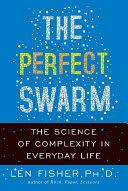
The Perfect Swarm
Len Fisher
An exploration of collective behavior and emergent phenomena in complex systems. Fisher examines how simple rules can generate complex, unpredictable outcomes in nature and human societies. The book provides insights into self-organization and collective intelligence. It complements Taleb's work by showing how seemingly random systems can have underlying patterns.
No account connected — sign in to comment.