
Now a Hulu series starring Elizabeth Moss. The Handmaid's Tale is an instant classic and eerily prescient cultural phenomenon, from "the patron saint of feminist dystopian fiction" (New York Times) The Handmaid’s Tale is a novel of such power that the reader will be unable to forget its images and its forecast. Set in the near future, it describes life in what was once the United States and is now called the Republic of Gilead, a monotheocracy that has reacted to social unrest and a sharply declining birthrate by reverting to, and going beyond, the repressive intolerance of the original Puritans. The regime takes the Book of Genesis absolutely at its word, with bizarre consequences for the women and men in its population. The story is told through the eyes of Offred, one of the unfortunate Handmaids under the new social order. In condensed but eloquent prose, by turns cool-eyed, tender, despairing, passionate, and wry, she reveals to us the dark corners behind the establishment’s calm facade, as certain tendencies now in existence are carried to their logical conclusions. The Handmaid’s Tale is funny, unexpected, horrifying, and altogether convincing. It is at once scathing satire, dire warning, and a tour de force. It is Margaret Atwood at her best.

Average Rating
Informations
About the author
Margaret Atwood
Author
Margaret Eleanor Atwood is a Canadian novelist, poet, literary critic, and inventor. Since 1961, she has published 18 books of poetry, 18 novels, 11 books of nonfiction, nine collections of short fiction, eight children's books, two graphic novels, and a number of small press editions of both poetry and fiction. Her best-known work is the 1985 dystopian novel The Handmaid's Tale. Atwood has won numerous awards and honors for her writing, including two Booker Prizes, the Arthur C. Clarke Award, the Governor General's Award, the Franz Kafka Prize, the Prince of Asturias Award for literature, and the National Book Critics and PEN Center USA Lifetime Achievement Awards. A number of her works have been adapted for film and television.
The Handmaid's Tale
by Margaret Atwood
Books Like The Handmaid's Tale
If you're looking for books similar to The Handmaid's Tale, here are some recommendations based on themes, tone, and narrative style.
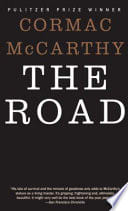
The Road
Cormac McCarthy
A post-apocalyptic novel following a father and son traveling through a devastated landscape. The book explores survival, humanity, and moral choices in extreme circumstances. Like The Handmaid's Tale, it offers a stark examination of societal breakdown and individual resilience. The narrative is a haunting exploration of hope and human connection in a world stripped of civilization.
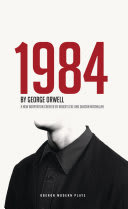
1984
George Orwell
A groundbreaking dystopian novel exploring totalitarian control and loss of individual freedom. The story follows Winston Smith, who rebels against a oppressive government that monitors and controls every aspect of citizens' lives. Like The Handmaid's Tale, it examines how power structures can strip away human rights and personal autonomy. The novel provides a chilling critique of surveillance, propaganda, and systemic oppression.
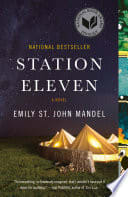
Station Eleven
Emily St. John Mandel
A post-apocalyptic novel exploring human survival and art after a devastating pandemic. The narrative weaves together multiple storylines about resilience and connection in a transformed world. Like The Handmaid's Tale, it offers a nuanced exploration of societal collapse and individual human experience. The novel examines how culture and humanity persist even in the most challenging circumstances.
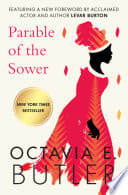
Parable of the Sower
Octavia Butler
A powerful dystopian novel about a young woman navigating a collapsing society in near-future California. The protagonist creates a new belief system while surviving environmental and social breakdown. Similar to The Handmaid's Tale, it explores themes of female resilience, societal collapse, and resistance against oppressive systems. Butler's work offers a profound examination of survival and hope in a world falling apart.
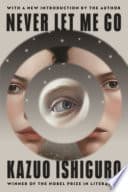
Never Let Me Go
Kazuo Ishiguro
A haunting novel about human clones raised for organ donation in a dystopian alternate England. The story explores themes of identity, humanity, and systemic dehumanization. Like The Handmaid's Tale, it presents a chilling vision of how society can normalize extreme forms of oppression. The narrative is subtle yet deeply disturbing in its examination of human worth and institutional control.
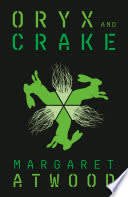
Oryx and Crake
Margaret Atwood
Another dystopian novel by Atwood exploring genetic engineering and societal collapse. The story follows a protagonist navigating a world dramatically transformed by scientific manipulation. As with The Handmaid's Tale, it offers a sharp critique of potential future scenarios driven by current technological and social trends. The novel examines the potential consequences of unchecked scientific and corporate power.
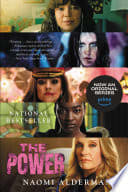
The Power
Naomi Alderman
A speculative fiction novel where women develop the ability to generate electrical shocks, fundamentally changing global power dynamics. The book explores gender, power, and societal structures through a provocative lens. Similar to The Handmaid's Tale, it offers a sharp critique of systemic oppression and examines what happens when traditional power structures are dramatically disrupted.
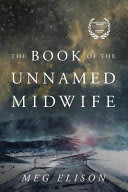
The Book of the Unnamed Midwife
Meg Elison
A post-apocalyptic novel about a world decimated by a plague that kills most women. The story follows a survivor documenting her experiences in a world of extreme gender imbalance. Similar to The Handmaid's Tale, it explores themes of female survival and resistance in a dramatically altered society. The narrative provides a powerful examination of gender, power, and resilience.
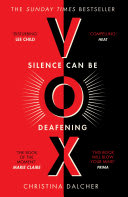
Vox
Christina Dalcher
A near-future dystopia where women are limited to speaking only 100 words per day. The novel explores gender oppression and resistance in a society that systematically silences women. Directly inspired by The Handmaid's Tale, it examines how quickly rights can be stripped away and the power of individual rebellion. The protagonist fights against a regime that seeks to control women's fundamental freedoms.
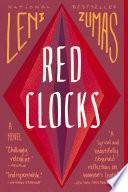
Red Clocks
Leni Zumas
A dystopian novel about reproductive rights in an America where abortion and in-vitro fertilization are illegal. The story follows five women navigating a world of restricted reproductive choices. Directly echoing themes from The Handmaid's Tale, it explores bodily autonomy and systemic control over women's bodies. The narrative provides a powerful critique of potential future reproductive restrictions.
No account connected — sign in to comment.