
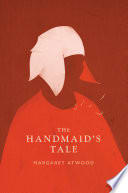
An instant classic and eerily prescient cultural phenomenon, from “the patron saint of feminist dystopian fiction” (New York Times). Now an award-winning Hulu series starring Elizabeth Moss. In this multi-award-winning, bestselling novel, Margaret Atwood has created a stunning Orwellian vision of the near future. This is the story of Offred, one of the unfortunate “Handmaids” under the new social order who have only one purpose: to breed. In Gilead, where women are prohibited from holding jobs, reading, and forming friendships, Offred’s persistent memories of life in the “time before” and her will to survive are acts of rebellion. Provocative, startling, prophetic, and with Margaret Atwood’s devastating irony, wit, and acute perceptive powers in full force, The Handmaid’s Tale is at once a mordant satire and a dire warning.
Average Rating
Informations
About the author
Margaret Atwood
Author
Margaret Eleanor Atwood is a Canadian novelist, poet, literary critic, and inventor. Since 1961, she has published 18 books of poetry, 18 novels, 11 books of nonfiction, nine collections of short fiction, eight children's books, two graphic novels, and a number of small press editions of both poetry and fiction. Her best-known work is the 1985 dystopian novel The Handmaid's Tale. Atwood has won numerous awards and honors for her writing, including two Booker Prizes, the Arthur C. Clarke Award, the Governor General's Award, the Franz Kafka Prize, the Prince of Asturias Award for literature, and the National Book Critics and PEN Center USA Lifetime Achievement Awards. A number of her works have been adapted for film and television.
The Handmaid's Tale
by Margaret Atwood
Books Like The Handmaid's Tale
If you're looking for books similar to The Handmaid's Tale, here are some recommendations based on themes, tone, and narrative style.
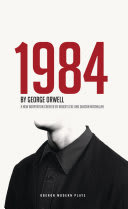
1984
George Orwell
A groundbreaking dystopian novel exploring totalitarian control and loss of individual freedom. Like The Handmaid's Tale, it depicts a society where personal autonomy is systematically destroyed by an oppressive government. The story follows Winston Smith's rebellion against a surveillance state that manipulates language and history. Orwell's chilling vision of a world without personal liberty resonates deeply with themes of power, resistance, and human dignity.
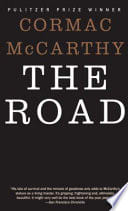
The Road
Cormac McCarthy
A post-apocalyptic novel exploring survival in a devastated world. Like The Handmaid's Tale, it examines human resilience in the face of systemic collapse. The story follows a father and son navigating a brutal landscape, revealing humanity's capacity for both cruelty and compassion. McCarthy's stark prose creates a haunting meditation on survival and moral choice.
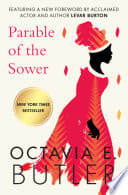
Parable of the Sower
Octavia Butler
A dystopian novel set in a collapsing America, focusing on a young woman's survival and resistance. Similar to The Handmaid's Tale, it explores themes of societal breakdown, personal resilience, and systemic oppression. The protagonist creates a new belief system as a means of survival and hope in a world descending into chaos. Butler's work powerfully examines social transformation and individual agency.
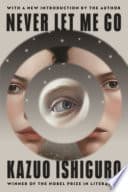
Never Let Me Go
Kazuo Ishiguro
A haunting dystopian narrative about human worth and societal dehumanization. Like The Handmaid's Tale, it explores how systems can reduce human beings to mere functions. The story follows cloned individuals raised solely for organ donation, revealing the subtle mechanisms of institutional control. Ishiguro's nuanced approach examines personal agency within a predetermined social structure.
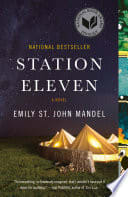
Station Eleven
Emily St. John Mandel
A post-apocalyptic novel exploring human connection after a devastating pandemic. Similar to The Handmaid's Tale, it examines societal transformation and individual survival. The narrative follows interconnected characters rebuilding civilization, emphasizing art and human relationships. Mandel's nuanced approach reveals hope and resilience in the aftermath of systemic collapse.
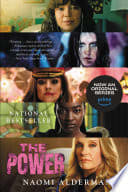
The Power
Naomi Alderman
A provocative speculative fiction novel where women develop the ability to generate electrical shocks, fundamentally altering global power dynamics. Like The Handmaid's Tale, it offers a radical reimagining of gender relations and societal structures. The book explores how power can corrupt and transform social hierarchies when traditional gender roles are dramatically reversed. Alderman's narrative provides a complex examination of systemic oppression.
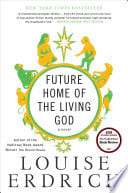
Future Home of the Living God
Louise Erdrich
A dystopian novel about reproductive control and societal transformation. Similar to The Handmaid's Tale, it explores a world where women's bodies become sites of political struggle. The narrative follows a pregnant woman navigating a collapsing society that seeks to control reproduction. Erdrich creates a compelling exploration of bodily autonomy and resistance.
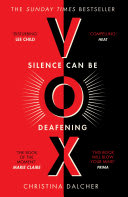
Vox
Christina Dalcher
A dystopian novel where women are limited to speaking only 100 words per day, echoing the oppressive gender restrictions in The Handmaid's Tale. The story explores the consequences of extreme patriarchal control and the resilience of women fighting against systemic oppression. Set in a near-future America, it examines how quickly civil liberties can be stripped away. The protagonist's journey of resistance mirrors Offred's struggle for autonomy and survival.
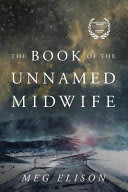
The Book of the Unnamed Midwife
Meg Elison
A post-apocalyptic feminist novel about reproductive survival after a global pandemic. Like The Handmaid's Tale, it explores women's autonomy and survival in a dramatically altered world. The story follows a midwife navigating a landscape where women are scarce and reproduction is fraught with danger. Elison provides a powerful examination of gender, power, and survival.
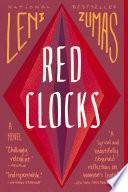
Red Clocks
Leni Zumas
A speculative fiction novel exploring reproductive rights in a world where abortion is illegal. Similar to The Handmaid's Tale, it examines women's bodily autonomy and the political control of female reproduction. The narrative follows multiple women navigating a restrictive legal landscape that limits their reproductive choices. Zumas creates a compelling exploration of gender, power, and personal freedom.
No account connected — sign in to comment.