
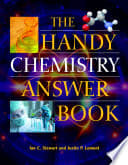
Don't be mixed up about chemistry! Simplify the complex chemical reactions that take place everywhere in our lives with this engaging, easy-to-follow, question-and-answer guide! Where would we be without atoms and compounds? Gas, liquids, solids, and plasma? Acids and bases? Bonds and reactions? Matter and energy? The Handy Chemistry Answer Book covers the building blocks of life and the universe. The secret life of atoms, how polar bears aren’t actually white, why oil and water don't mix, and much, much more are revealed and explained. This informative guide covers the basics of chemistry (history, atomic structures, chemical bonds and reactions, organic and inorganic chemistry) to more advanced material (nuclear chemistry, biochemistry, physical and theoretical chemistry) by answering nearly 1,000 common chemistry questions, including ... What causes lightning? How does photosynthesis work? What are hard and soft Lewis acids and bases? What makes a fabric “waterproof”? What are the twelve principles of green chemistry? When did alchemists finally abandon trying to make gold? What is Le Chatelier’s principle? What do the different octane ratings mean at the gas pump? What is genetic engineering? Why is calcium important for strong bones? What is the 18-electron rule? Why does chocolate turn white as it ages? Chemical reactions that rule the world; their properties, structure, composition, behavior, and history are tackled and explained in plain English in The Handy Chemistry Answer Book. With many photos, illustrations, a few formulas, molecular diagrams, and other graphics, this fun, fact-filled tome is richly illustrated. A history of chemistry timeline, appendices on Nobel Prize in Chemistry winners, a bibliography, further reading section, glossary of terms, a table of physical constants, a table of conversion factors, and extensive index add to its usefulness.
Average Rating
Informations
About the author
Justin P. Lomont, Ian C. Stewart
Author
The Handy Chemistry Answer Book
by Justin P. Lomont, Ian C. Stewart
Books Like The Handy Chemistry Answer Book
If you're looking for books similar to The Handy Chemistry Answer Book, here are some recommendations based on themes, tone, and narrative style.
The Disappearing Spoon
Sam Kean
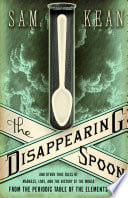
A fascinating exploration of the periodic table that reveals the hidden stories behind chemical elements. The book combines scientific facts with engaging narratives about how elements have shaped human history and technology. It presents complex chemical concepts in an accessible, entertaining manner similar to the main book. Readers will learn surprising and amusing anecdotes about scientific discoveries and the unique properties of different elements.
A Short History of Nearly Everything
Bill Bryson
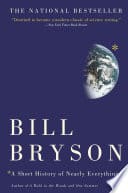
A comprehensive and humorous journey through scientific understanding, covering chemistry, physics, and biology. Bryson breaks down complex scientific concepts into digestible, engaging explanations for general readers. The book shares a similar approach of making science approachable and interesting to non-experts. It provides context and human stories behind scientific discoveries, much like the chemistry answer book.
What If?
Randall Munroe
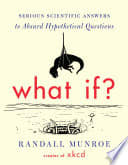
A scientifically rigorous yet humorous book answering bizarre hypothetical questions using scientific reasoning. Munroe applies scientific principles to explain seemingly impossible scenarios, much like the answer book's approach to chemistry questions. The book combines technical accuracy with entertaining explanations. Readers will enjoy its blend of scientific knowledge and playful exploration.
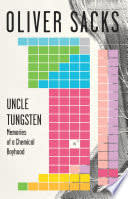
Uncle Tungsten
Oliver Sacks
A memoir that combines personal history with a passionate exploration of chemistry and its wonders. Sacks shares his childhood fascination with chemical elements and scientific discovery. The book provides an intimate and engaging look at chemistry's role in understanding the world. It captures the same sense of wonder and curiosity found in the chemistry answer book.
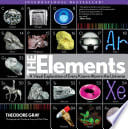
The Elements
Theodore Gray
A visually stunning exploration of chemical elements and their properties. The book combines scientific information with beautiful photography and engaging descriptions. Like the main book, it makes chemistry accessible and fascinating to general readers. Readers will gain a comprehensive understanding of elements and their unique characteristics.
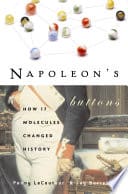
Napoleon's Buttons
Penny Le Couteur and Jay Burreson
An innovative book exploring how molecules have influenced human history and development. The authors connect chemical properties to significant historical events and technological innovations. Like the main book, it explains scientific concepts through interesting narratives and real-world applications. Readers will gain insights into how chemistry shapes our understanding of the world.
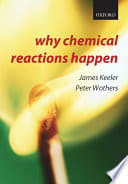
Why Chemical Reactions Happen
James Keeler and Peter Wothers
A comprehensive exploration of chemical reaction mechanisms and principles. The book provides in-depth explanations of how and why chemical reactions occur. Like the main book, it offers clear, systematic answers to complex chemical questions. Readers will gain a deeper understanding of the fundamental principles governing chemical interactions.
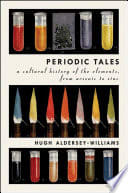
Periodic Tales
Hugh Aldersey-Williams
An exploration of chemical elements and their cultural significance throughout human history. The book reveals the stories behind different elements and their impact on human civilization. Like the main book, it presents scientific information in an accessible and engaging manner. Readers will gain a deeper understanding of chemistry's role in our world.
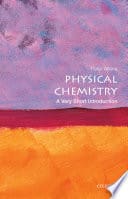
Chemistry: A Very Short Introduction
Peter Atkins
A concise overview of chemistry's fundamental principles and most important concepts. The book provides a compact yet comprehensive introduction to chemical science. Similar to the answer book, it breaks down complex ideas into digestible explanations. Readers will appreciate its clear, straightforward approach to understanding chemistry.
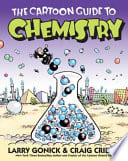
The Cartoon Guide to Chemistry
Larry Gonick
A visually engaging introduction to chemical principles using cartoon illustrations. The book breaks down complex chemistry concepts into easy-to-understand visual explanations. Similar to the answer book, it makes scientific information accessible to general readers. The playful approach helps demystify challenging chemical topics.
No account connected — sign in to comment.