
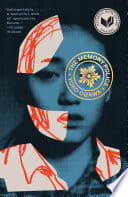
Finalist for the International Booker Prize and the National Book Award A haunting Orwellian novel about the terrors of state surveillance, from the acclaimed author of The Housekeeper and the Professor. On an unnamed island, objects are disappearing: first hats, then ribbons, birds, roses. . . . Most of the inhabitants are oblivious to these changes, while those few able to recall the lost objects live in fear of the draconian Memory Police, who are committed to ensuring that what has disappeared remains forgotten. When a young writer discovers that her editor is in danger, she concocts a plan to hide him beneath her f loorboards, and together they cling to her writing as the last way of preserving the past. Powerful and provocative, The Memory Police is a stunning novel about the trauma of loss. ONE OF THE BEST BOOKS OF THE YEAR THE NEW YORK TIMES * THE WASHINGTON POST * TIME * CHICAGO TRIBUNE * THE GUARDIAN * ESQUIRE * THE DALLAS MORNING NEWS * FINANCIAL TIMES * LIBRARY JOURNAL * THE A.V. CLUB * KIRKUS REVIEWS * LITERARY HUB American Book Award winner
Average Rating
Informations
About the author
Yoko Ogawa
Author
Yōko Ogawa is a Japanese writer. Her work has won every major Japanese literary award, including the Akutagawa Prize and the Yomiuri Prize. Internationally, she has been the recipient of the Shirley Jackson Award and the American Book Award. The Memory Police was also shortlisted for the International Booker Prize in 2020.
The Memory Police
by Yoko Ogawa
Books Like The Memory Police
If you're looking for books similar to The Memory Police, here are some recommendations based on themes, tone, and narrative style.
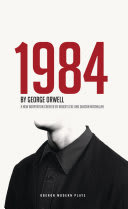
1984
George Orwell
A dystopian novel exploring themes of totalitarian control and systematic erasure of memory and identity. The story follows Winston Smith, who rebels against a oppressive government that manipulates truth and suppresses individual thought. Like 'The Memory Police', it examines how authoritarian systems control populations through surveillance and psychological manipulation. The book is a chilling exploration of power, memory, and resistance.
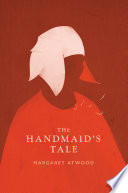
The Handmaid's Tale
Margaret Atwood
A dystopian novel depicting a totalitarian society where women are stripped of rights and identity. The story follows Offred, who struggles to maintain her sense of self under extreme oppression. Similar to 'The Memory Police', it explores themes of systemic control and individual resistance. The book is a powerful critique of authoritarian systems.
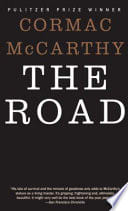
The Road
Cormac McCarthy
A stark post-apocalyptic novel about a father and son's survival journey. The narrative explores themes of memory, hope, and human connection in a devastated world. Similar to 'The Memory Police', it delves into how individuals maintain humanity under extreme circumstances. The book is a powerful meditation on survival and love.
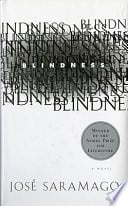
Blindness
José Saramago
A powerful allegory about societal breakdown when an unexplained epidemic of blindness sweeps through a city. The narrative explores human vulnerability and social structures under extreme conditions. Similar to 'The Memory Police', it examines how communities respond to systemic disruption and loss. The novel reveals profound insights into human nature and collective survival.
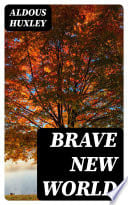
Brave New World
Aldous Huxley
A classic dystopian novel about a society controlled through psychological manipulation and technological conditioning. The narrative explores how governments can suppress individual thought and emotion. Like 'The Memory Police', it examines the mechanisms of social control and loss of personal identity. The book offers a chilling vision of technological authoritarianism.
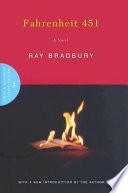
Fahrenheit 451
Ray Bradbury
A dystopian novel about a society that burns books to suppress independent thinking. The story follows a fireman who begins to question his role in suppressing knowledge. Like 'The Memory Police', it explores themes of memory, censorship, and resistance. The narrative is a powerful critique of authoritarian control.
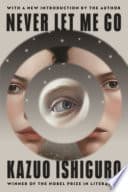
Never Let Me Go
Kazuo Ishiguro
A haunting novel about identity, memory, and human worth in a dystopian world. The story follows clones raised for organ donation, exploring themes of loss and suppressed humanity. Like 'The Memory Police', it delves into how systems can dehumanize individuals and erase personal histories. The narrative is subtle yet deeply emotional.
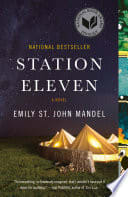
Station Eleven
Emily St. John Mandel
A post-apocalyptic novel about survival, art, and memory after a devastating pandemic. The narrative weaves together multiple storylines exploring human resilience. Like 'The Memory Police', it examines how communities preserve culture and identity in the face of massive disruption. The book offers a nuanced exploration of memory and survival.
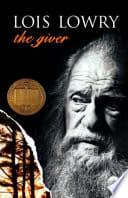
The Giver
Lois Lowry
A young adult novel about a seemingly perfect society that suppresses individual emotions and memories. The story follows Jonas, who discovers the truth about his controlled world. Similar to 'The Memory Police', it examines how societies maintain order through memory manipulation. The book offers a profound exploration of individual awakening.
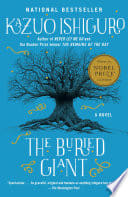
The Buried Giant
Kazuo Ishiguro
A mythical novel exploring memory, love, and collective forgetting in post-Arthurian Britain. The story follows an elderly couple on a journey through a landscape where memories mysteriously fade. Similar to 'The Memory Police', it investigates how memory shapes identity and social relationships. The narrative is both intimate and allegorical.
No account connected — sign in to comment.