
The summation of the existentialist philosophy threaded throughout all his writing, Albert Camus' The Myth of Sisyphus is translated by Justin O'Brien with an introduction by James Wood in Penguin Classics. In this profound and moving philosophical statement, Camus poses the fundamental question: is life worth living? If human existence holds no significance, what can keep us from suicide? As Camus argues, if there is no God to give meaning to our lives, humans must take on that purpose themselves. This is our 'absurd' task, like Sisyphus forever rolling his rock up a hill, as the inevitability of death constantly overshadows us. Written during the bleakest days of the Second World War, The Myth of Sisyphus (Le Mythe de Sisyphe) argues for an acceptance of reality that encompasses revolt, passion and, above all, liberty. This volume contains several other essays, including lyrical evocations of the sunlit cities of Algiers and Oran, the settings of his great novels The Outsider and The Plague. Albert Camus (1913-60) is the author of a number of best-selling and highly influential works, all of which are published by Penguin. They include The Fall, The Outsider and The First Man. Awarded the Nobel Prize for Literature in 1957, Camus is remembered as one of the few writers to have shaped the intellectual climate of post-war France, but beyond that, his fame has been international. If you enjoyed The Myth of Sisyphus, you might like Camus' The Outsider, also available in Penguin Modern Classics. 'Camus could never cease to be one of the principal forces in our domain, nor to represent, in his own way, the history of France and of this century' Jean-Paul Sartre

Average Rating
Informations
About the author
Albert Camus
Author
Albert Camus was a French philosopher, novelist, author, dramatist, journalist, world federalist, and political activist. He was the recipient of the 1957 Nobel Prize in Literature at the age of 44, the second-youngest recipient in history. His works include The Stranger, The Plague, The Myth of Sisyphus, The Fall and The Rebel.
The Modern Classics Myth of Sisyphus
by Albert Camus
Books Like The Modern Classics Myth of Sisyphus
If you're looking for books similar to The Modern Classics Myth of Sisyphus, here are some recommendations based on themes, tone, and narrative style.
Being and Nothingness
Jean-Paul Sartre
A seminal philosophical work exploring existentialist themes of human freedom, consciousness, and personal responsibility. Sartre delves into the nature of human existence, arguing that individuals create their own meaning through choices and actions. The book examines the concept of radical freedom and the individual's struggle to define themselves in an inherently meaningless world. Like Camus' work, it challenges traditional philosophical and moral assumptions about human nature and purpose.
The Plague
Albert Camus
A philosophical novel set in Algeria during a devastating plague outbreak, exploring themes of human solidarity, suffering, and resistance. The narrative follows various characters as they confront the absurdity of their situation and choose to fight against seemingly insurmountable challenges. Camus uses the plague as a metaphor for human struggle and the importance of collective action in the face of meaninglessness. The book reflects the existentialist themes of personal choice and moral responsibility.
Existentialism from Dostoevsky to Sartre
Walter Kaufmann
A comprehensive anthology tracing the philosophical development of existentialist thought from its literary and philosophical origins. Kaufmann provides critical context and analysis of key existentialist texts and thinkers. The book offers insights into the philosophical principles underlying existentialist writing, including works by Camus and Sartre. It serves as an excellent companion to understanding the broader philosophical context of existentialist thought.
The Outsider
Albert Camus
A philosophical novel exploring existentialism and alienation through the story of Meursault, a detached French Algerian who commits a seemingly senseless murder. The protagonist's emotional indifference and rejection of societal norms reflect the absurdist philosophy central to Camus' work. Like The Myth of Sisyphus, it confronts the meaninglessness of human existence and individual struggle against societal expectations. The novel challenges readers to consider the nature of meaning, morality, and personal authenticity in an indifferent universe.
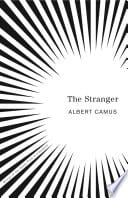
The Stranger
Albert Camus
An existentialist novel exploring themes of alienation, indifference, and the absurdity of human existence. The protagonist, Meursault, demonstrates a radical detachment from societal norms and emotional expectations. Through his indifferent response to life's significant events, Camus challenges traditional notions of morality and meaning. The novel reflects the philosophical principles explored in The Myth of Sisyphus, emphasizing individual confrontation with an inherently meaningless universe.
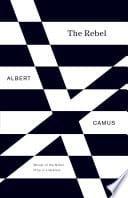
The Rebel
Albert Camus
A philosophical essay examining the nature of rebellion and revolution throughout human history. Camus explores the philosophical and historical dimensions of human resistance against oppression and meaninglessness. The book analyzes various revolutionary movements and their philosophical underpinnings, challenging readers to consider the moral complexities of political action. It extends the existentialist themes of individual choice and moral responsibility.
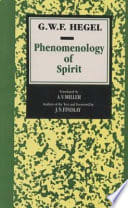
The Phenomenology of Spirit
Georg Wilhelm Friedrich Hegel
A foundational philosophical work exploring consciousness, self-awareness, and historical development of human understanding. Hegel examines the dialectical process of philosophical and historical progression, influencing later existentialist thinkers. The book provides a complex philosophical framework for understanding human consciousness and social development. While predating existentialism, it offers philosophical groundwork that influenced later existentialist thought.
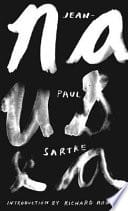
Nausea
Jean-Paul Sartre
A philosophical novel that explores existential angst and the absurdity of human existence through the experiences of Antoine Roquentin. The protagonist confronts the meaninglessness of life and struggles with overwhelming feelings of alienation and despair. Sartre uses the narrative to illustrate existentialist concepts of individual freedom and the lack of inherent meaning in the universe. The book resonates with Camus' philosophical explorations of human condition and personal struggle.
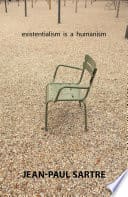
Existentialism Is a Humanism
Jean-Paul Sartre
A philosophical lecture that provides a concise explanation of existentialist philosophy, emphasizing individual freedom and personal responsibility. Sartre argues that humans are fundamentally free to create their own essence through their choices and actions. The text explores the core existentialist principle that existence precedes essence, challenging traditional philosophical and religious perspectives. It complements Camus' philosophical investigations into human meaning and purpose.
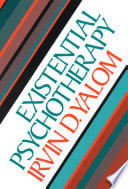
Existential Psychotherapy
Irvin D. Yalom
A comprehensive exploration of existential psychology, examining how philosophical principles can inform therapeutic approaches. Yalom discusses fundamental existential concerns such as death, freedom, isolation, and meaninglessness. The book bridges philosophical theory and psychological practice, offering insights into human motivation and psychological struggle. It provides a practical perspective on the existential themes explored in Camus' philosophical works.
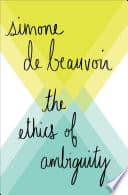
The Ethics of Ambiguity
Simone de Beauvoir
A philosophical exploration of existentialist ethics and personal responsibility. De Beauvoir examines the moral implications of human freedom and the challenges of creating personal meaning. The book extends existentialist principles by focusing on ethical choices and interpersonal relationships. It provides a nuanced philosophical perspective complementing Camus' investigations of human existence and moral complexity.
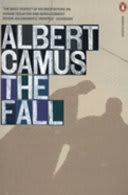
The Fall
Albert Camus
A complex philosophical monologue exploring guilt, judgment, and human hypocrisy through the confession of Jean-Baptiste Clamence. The narrative challenges readers' perceptions of morality and self-perception, revealing the intricate layers of human psychology. Camus uses the protagonist's self-reflection to examine existential themes of personal responsibility and the difficulty of authentic living. The book continues Camus' exploration of individual struggle and moral complexity.
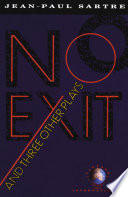
No Exit
Jean-Paul Sartre
A philosophical play that explores existentialist themes of personal freedom, interpersonal relationships, and psychological torment. Three characters are trapped in a room, revealing the complex dynamics of human interaction and self-perception. Sartre uses the scenario to illustrate the concept that 'hell is other people' and the ongoing struggle for individual authenticity. The work resonates with Camus' exploration of human struggle and existential challenges.
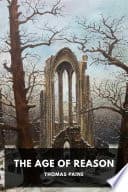
The Age of Reason
Jean-Paul Sartre
A novel exploring existentialist themes of personal freedom, choice, and the complexities of human relationships. Set in pre-World War II Paris, the narrative follows characters confronting their personal limitations and moral choices. Sartre examines the psychological and philosophical challenges of individual authenticity and self-determination. The book reflects the existentialist principles of personal responsibility and the creation of individual meaning.
No account connected — sign in to comment.