
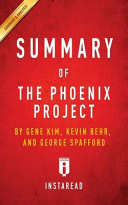
***Over a half-million sold! And available now, the Wall Street Journal Bestselling sequel The Unicorn Project*** “Every person involved in a failed IT project should be forced to read this book.”—TIM O'REILLY, Founder & CEO of O'Reilly Media “The Phoenix Project is a must read for business and IT executives who are struggling with the growing complexity of IT.”—JIM WHITEHURST, President and CEO, Red Hat, Inc. Five years after this sleeper hit took on the world of IT and flipped it on it's head, the 5th Anniversary Edition of The Phoenix Project continues to guide IT in the DevOps revolution. In this newly updated and expanded edition of the bestselling The Phoenix Project, co-author Gene Kim includes a new afterword and a deeper delve into the Three Ways as described in The DevOps Handbook. Bill, an IT manager at Parts Unlimited, has been tasked with taking on a project critical to the future of the business, code named Phoenix Project. But the project is massively over budget and behind schedule. The CEO demands Bill must fix the mess in ninety days or else Bill's entire department will be outsourced. With the help of a prospective board member and his mysterious philosophy of The Three Ways, Bill starts to see that IT work has more in common with a manufacturing plant work than he ever imagined. With the clock ticking, Bill must organize work flow streamline interdepartmental communications, and effectively serve the other business functions at Parts Unlimited. In a fast-paced and entertaining style, three luminaries of the DevOps movement deliver a story that anyone who works in IT will recognize. Readers will not only learn how to improve their own IT organizations, they'll never view IT the same way again. “This book is a gripping read that captures brilliantly the dilemmas that face companies which depend on IT, and offers real-world solutions.”—JEZ HUMBLE, Co-author of Continuous Delivery, Lean Enterprise, Accelerate, and The DevOps Handbook
Average Rating
Informations
About the author
Gene Kim, Kevin Behr, George Spafford
Author
The Phoenix Project
by Gene Kim, Kevin Behr, George Spafford
Books Like The Phoenix Project
If you're looking for books similar to The Phoenix Project, here are some recommendations based on themes, tone, and narrative style.
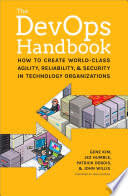
The DevOps Handbook
Gene Kim, Jez Humble, Patrick Debois, John Willis
A comprehensive guide to implementing DevOps practices in organizations. The book provides practical strategies for improving IT operations and software delivery. It explores the cultural and technical transformations needed for successful DevOps adoption. Written by the same authors as The Phoenix Project, it offers deep insights into the Three Ways methodology.
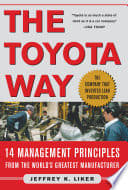
The Toyota Way
Jeffrey Liker
A definitive book about Toyota's management philosophy and lean manufacturing principles. It explores systematic approaches to continuous improvement and organizational excellence. The book provides insights into process optimization and cultural transformation. Its focus on systemic thinking resonates with The Phoenix Project's core themes.
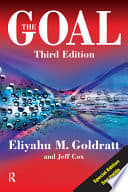
The Goal
Eliyahu M. Goldratt
A groundbreaking business novel about manufacturing and process improvement. The story follows a plant manager who learns to optimize production using the Theory of Constraints. It uses a narrative approach to explain complex business and management concepts. The book's focus on systemic thinking and continuous improvement mirrors The Phoenix Project's approach.
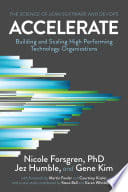
Accelerate
Nicole Forsgren, Jez Humble, Gene Kim
A research-driven book about high-performing technology organizations. It presents scientific evidence for effective software delivery and operational practices. The book explores key metrics and capabilities that drive organizational performance. Its data-driven approach provides deeper context to the narrative lessons in The Phoenix Project.
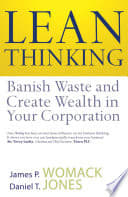
Lean Thinking
James P. Womack, Daniel T. Jones
A seminal work on lean management principles and organizational transformation. The book explores how companies can eliminate waste and create more efficient processes. It provides a framework for understanding value creation and continuous improvement. The strategic approach to organizational change aligns closely with The Phoenix Project's themes.
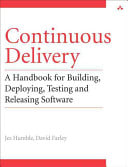
Continuous Delivery
Jez Humble, David Farley
A comprehensive guide to implementing automated software delivery practices. The book provides technical and organizational strategies for improving software development and deployment. It explores techniques for reducing risk and increasing efficiency in software delivery. Its technical depth complements the narrative approach of The Phoenix Project.
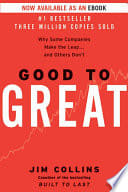
Good to Great
Jim Collins
A research-driven exploration of what makes companies transition from good to exceptional performance. The book identifies key principles and leadership strategies that drive organizational transformation. It provides insights into cultural change and strategic thinking. Its focus on organizational improvement aligns with The Phoenix Project's themes.
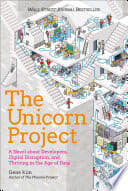
The Unicorn Project
Gene Kim
A companion novel to The Phoenix Project that explores digital transformation from a developer's perspective. The book follows a software developer navigating complex organizational challenges. It provides insights into modern software development and IT management. Written by the same author, it complements the original story's DevOps philosophy.
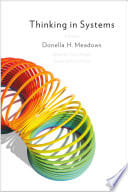
Thinking in Systems
Donella H. Meadows
A foundational text on systems thinking and complex organizational dynamics. The book provides frameworks for understanding interconnected systems and their behavior. It explores how small changes can create significant organizational impacts. Its analytical approach complements the problem-solving narrative in The Phoenix Project.
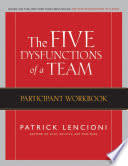
The Five Dysfunctions of a Team
Patrick Lencioni
A leadership fable about building effective teams and organizational culture. The book explores common challenges in team dynamics and communication. It provides practical strategies for overcoming interpersonal obstacles. The narrative style and focus on organizational transformation align with The Phoenix Project's storytelling approach.
No account connected — sign in to comment.