
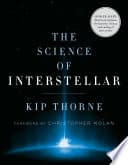
A journey through the otherworldly science behind Christopher Nolan’s award-winning film, Interstellar, from executive producer and Nobel Prize-winning physicist Kip Thorne. Interstellar, from acclaimed filmmaker Christopher Nolan, takes us on a fantastic voyage far beyond our solar system. Yet in The Science of Interstellar, Kip Thorne, the Nobel prize-winning physicist who assisted Nolan on the scientific aspects of Interstellar, shows us that the movie’s jaw-dropping events and stunning, never-before-attempted visuals are grounded in real science. Thorne shares his experiences working as the science adviser on the film and then moves on to the science itself. In chapters on wormholes, black holes, interstellar travel, and much more, Thorne’s scientific insights—many of them triggered during the actual scripting and shooting of Interstellar—describe the physical laws that govern our universe and the truly astounding phenomena that those laws make possible. Interstellar and all related characters and elements are trademarks of and © Warner Bros. Entertainment Inc. (s14).
Average Rating
Informations
About the author
Kip Thorne
Author
Kip Stephen Thorne is an American theoretical physicist and writer known for his contributions in gravitational physics and astrophysics. Along with Rainer Weiss and Barry C. Barish, he was awarded the 2017 Nobel Prize in Physics for his contributions to the LIGO detector and the observation of gravitational waves.
The Science of Interstellar
by Kip Thorne
Books Like The Science of Interstellar
If you're looking for books similar to The Science of Interstellar, here are some recommendations based on themes, tone, and narrative style.
Black Holes and Time Warps
Kip Thorne
Another seminal work by Thorne exploring the most extreme objects in the universe. The book provides deep scientific insights into black holes and Einstein's theories. It represents Thorne's signature style of explaining complex physics with clarity and wonder. Readers gain profound understanding of cosmic phenomena.
Cosmos
Carl Sagan
A seminal work that explores the universe's grandeur and humanity's place within it. Sagan combines scientific rigor with poetic imagination, much like Thorne's approach to explaining complex physics. The book provides a comprehensive yet accessible exploration of astronomical concepts and cosmic evolution.
A Brief History of Time
Stephen Hawking
A groundbreaking exploration of complex cosmological concepts for general readers. Hawking explains black holes, space-time, and the origins of the universe with remarkable clarity. The book bridges advanced physics and accessible storytelling, much like Thorne's approach. It provides deep insights into fundamental scientific mysteries that challenge our understanding of reality.
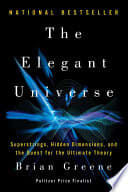
The Elegant Universe
Brian Greene
An exploration of string theory and quantum mechanics that makes complex scientific concepts accessible. Greene explains cutting-edge physics with clarity and enthusiasm. The book delves into theoretical physics in a way that resonates with Thorne's scientific storytelling. It challenges readers to reimagine the fundamental nature of reality.
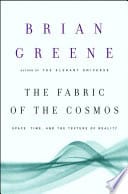
The Fabric of the Cosmos
Brian Greene
A comprehensive exploration of space, time, and the nature of the universe. Greene breaks down complex physical theories with remarkable clarity. The book investigates fundamental questions about reality and cosmic structure. It provides insights similar to Thorne's scientific storytelling.
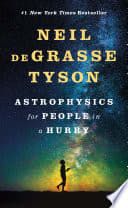
Astrophysics for People in a Hurry
Neil deGrasse Tyson
A concise and engaging overview of the universe's most fascinating phenomena. Tyson breaks down complex astronomical concepts into digestible explanations. The book captures scientific wonder in a way similar to Thorne's writing style. It offers readers a quick but profound journey through cosmic understanding.
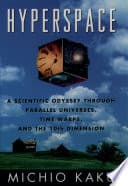
Hyperspace
Michio Kaku
An exploration of higher dimensional physics and theoretical cosmology. Kaku explains complex scientific concepts with engaging storytelling. The book challenges readers' understanding of space, time, and reality. It shares Thorne's approach of making advanced scientific ideas accessible.
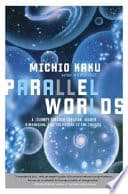
Parallel Worlds
Michio Kaku
An investigation into multiple universes and advanced theoretical physics. Kaku explores mind-bending concepts of quantum mechanics and cosmology. The book shares Thorne's approach of making complex scientific ideas comprehensible. It offers fascinating insights into potential alternate realities and cosmic structures.
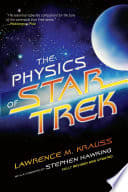
The Physics of Star Trek
Lawrence Krauss
An examination of scientific principles behind science fiction concepts. Krauss explores theoretical physics through the lens of popular culture. The book makes complex scientific ideas accessible and entertaining. It shares Thorne's approach of explaining advanced concepts through engaging storytelling.
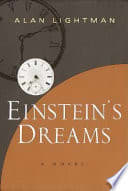
Einstein's Dreams
Alan Lightman
A poetic exploration of time and scientific imagination. Lightman blends scientific concepts with narrative creativity. The book offers a unique perspective on physics and human perception. It captures the wonder of scientific exploration in a manner reminiscent of Thorne's work.
No account connected — sign in to comment.