
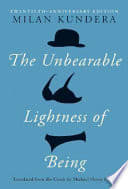
When The Unbearable Lightness of Being was first published in English, it was hailed as "a work of the boldest mastery, originality, and richness" by critic Elizabeth Hardwick and named one of the best books of 1984 by the New York Times Book Review. It went on to win the Los Angeles Times Book Prize for Fiction and quickly became an international bestseller. Twenty years later, the novel has established itself as a modern classic. To commemorate the anniversary of its first English-language publication, HarperCollins is proud to offer a special hardcover edition. A young woman in love with a man torn between his love for her and his incorrigible womanizing; one of his mistresses and her humbly faithful lover -- these are the two couples whose story is told in this masterful novel. Controlled by day, Tereza's jealousy awakens by night, transformed into ineffably sad death-dreams, while Tomas, a successful surgeon, alternates loving devotion to the dependent Tereza with the ardent pursuit of other women. Sabina, an independent, free-spirited artist, lives her life as a series of betrayals -- of parents, husband, country, love itself -- whereas her lover, the intellectual Franz, loses all because of his earnest goodness and fidelity. In a world in which lives are shaped by irrevocable choices and by fortuitous events, a world in which everything occurs but once, existence seems to lose its substance, its weight. Hence we feel, says the novelist, "the unbearable lightness of being" -- not only as the consequence of our private acts but also in the public sphere, and the two inevitably intertwine. This magnificent novel encompasses the extremes of comedy and tragedy, and embraces, it seems, all aspects of human existence. It juxtaposes geographically distant places (Prague, Geneva, Paris, Thailand, the United States, a forlorn Bohemian village); brilliant and playful reflections (on "eternal return," on kitsch, on man and animals -- Tomas and Tereza have a beloved doe named Karenin); and a variety of styles (from the farcical to the elegiac) to take its place as perhaps the major achievement of one of the world's truly great writers.
Average Rating
Informations
About the author
Milan Kundera
Author
Milan Kundera was a Czech and French novelist. Kundera went into exile in France in 1975, acquiring citizenship in 1981. His Czechoslovak citizenship was revoked in 1979, but he was granted Czech citizenship in 2019.
The Unbearable Lightness of Being
by Milan Kundera
Books Like The Unbearable Lightness of Being
If you're looking for books similar to The Unbearable Lightness of Being, here are some recommendations based on themes, tone, and narrative style.
One Hundred Years of Solitude
Gabriel García Márquez
An epic novel that explores the cyclical nature of human existence through multiple generations of a family. The book blends magical realism with profound philosophical insights about time, destiny, and human nature. Its complex narrative structure and deep psychological exploration echo Kundera's approach to storytelling. The novel examines the interconnectedness of personal and historical experiences.

The Stranger
Albert Camus
An existentialist novel exploring alienation, individual consciousness, and the absurdity of human existence. The protagonist's detached perspective challenges traditional moral frameworks. Like Kundera's work, it examines the complexity of human experience and personal choice. The novel offers a profound philosophical meditation on meaning and authenticity.

The Trial
Franz Kafka
A surreal novel exploring bureaucracy, individual alienation, and existential uncertainty. The protagonist faces an incomprehensible legal system that defies logical explanation. Like Kundera's work, it examines the absurdity of human experience and personal powerlessness. The novel offers a profound critique of social structures and individual consciousness.
The Metamorphosis
Franz Kafka
A surreal novella exploring alienation, identity, and human transformation. The story follows a man who inexplicably transforms into an insect, challenging traditional narrative expectations. Like Kundera's work, it examines the absurdity of human existence. The narrative offers a profound meditation on personal identity and social expectations.
Kafka on the Shore
Haruki Murakami
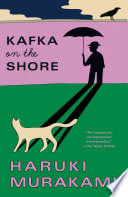
A surreal and philosophical novel exploring themes of identity, fate, and human connection. The story follows two parallel narratives that intertwine mysteriously. Murakami's unique style blends magical realism with deep psychological exploration. The book delves into existential questions similar to Kundera's work, examining the complexity of human relationships and personal choices.
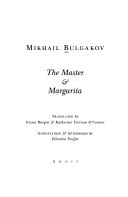
The Master and Margarita
Mikhail Bulgakov
A satirical novel that blends fantasy, philosophy, and political critique in a complex narrative. The book challenges reality through surreal and metaphysical elements. Its exploration of individual freedom and societal constraints resonates with Kundera's themes. The novel offers a deep examination of human nature and existential dilemmas.
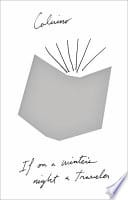
If on a Winter's Night a Traveler
Italo Calvino
A metafictional novel that explores the nature of reading and storytelling. The book plays with narrative structure and reader expectations in innovative ways. Its philosophical approach to storytelling resonates with Kundera's experimental style. The novel challenges traditional narrative conventions and examines the nature of literary experience.
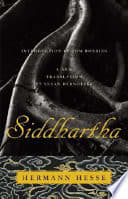
Siddhartha
Hermann Hesse
A philosophical novel about spiritual and personal discovery. The book follows an individual's journey of self-understanding and enlightenment. Its exploration of personal transformation and existential questions mirrors Kundera's themes. The narrative examines the nature of human experience and individual growth.

Invisible Cities
Italo Calvino
A philosophical exploration of imagination, perception, and the nature of cities. The book presents a series of fictional urban landscapes that challenge traditional narrative structures. Its experimental approach resonates with Kundera's innovative storytelling. The novel examines the relationship between memory, imagination, and reality.
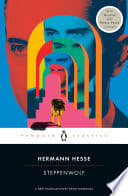
Steppenwolf
Hermann Hesse
A philosophical novel exploring individual consciousness and personal fragmentation. The protagonist struggles with his complex inner nature and societal expectations. Like Kundera's work, it examines the complexity of human experience. The book offers a deep psychological exploration of individual identity and social constraints.
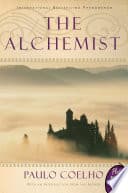
The Alchemist
Paulo Coelho
A philosophical novel about a young shepherd's journey of self-discovery and personal destiny. The book explores themes of individual purpose, personal transformation, and the meaning of life. Its narrative style combines spiritual insight with a deeply personal exploration of human experience. Similar to Kundera's work, it examines the weight of individual choices.
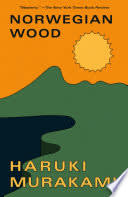
Norwegian Wood
Haruki Murakami
A melancholic novel exploring love, loss, and personal transformation. The story delves into complex emotional landscapes and psychological depths. Its introspective style and examination of human relationships mirror Kundera's approach. The book explores themes of memory, connection, and individual experience.
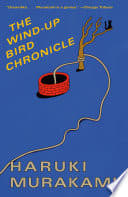
The Wind-Up Bird Chronicle
Haruki Murakami
A surreal novel exploring personal identity, historical trauma, and metaphysical connections. The narrative blends reality with dreamlike sequences, challenging traditional storytelling. Like Kundera's work, it examines the complexity of human experience and personal transformation. The book offers a deep psychological exploration of individual consciousness.
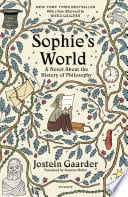
Sophie's World
Jostein Gaarder
A philosophical novel that explores complex existential ideas through a young girl's journey of intellectual discovery. The book weaves together philosophical concepts with a compelling narrative structure. It challenges readers to think deeply about existence, consciousness, and the nature of reality. Like Kundera's work, it blends intellectual discourse with storytelling.
No account connected — sign in to comment.