
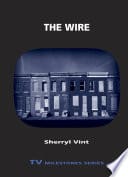
Analyzes how The Wire repurposed television drama for political critique. Frequently described by creator David Simon as a novel for television, The Wireredefined the police serial format by unfolding its narrative across many episodes, constructing themes for each of its seasons, and refusing to portray individual crimes outside of their social context. While it never achieved spectacular ratings or won an Emmy during its 2002-2008 run on HBO, the show was honored with several awards and has been described by critics as the best show on television. In this volume, author Sherryl Vint takes a close look at several episodes of The Wire to argue that the series challenges our understanding of the relationship between entertainment and social critique. Informed by recent work on race, poverty, and the transformation of the American inner city through neoliberalism, Vint provides a compelling analysis of The Wirein four chapters. First, she examines the season 1 episode "The Buys" as an example of the ways in which The Wire diverges from the police procedural format. She continues by considering season 2's "All's Prologue" and season 3's "Middle Ground" to explore in more detail The Wire's critique of the exclusions of the capitalist economy. In the final two chapters, she looks at "Final Grades," the fourth season finale, to highlight the problems with institutional inertia and show both the need for and barriers to reform, and uses the season 5 episode "Clarifications" to consider the failure of the media to adequately reflect the social issues depicted in The Wire. One of the landmark series of recent television history, The Wireis ripe for research and discussion. Fans of the series and those interested in social commentary and the media will appreciate Vint's new analysis in this volume.
Average Rating
Informations
About the author
Sherryl Vint
Author
US academic and critic (1969- )
The Wire
by Sherryl Vint
Books Like The Wire
If you're looking for books similar to The Wire, here are some recommendations based on themes, tone, and narrative style.
The New Jim Crow
Michelle Alexander
A groundbreaking analysis of mass incarceration and racial inequality in the American justice system. The book examines how criminal justice policies perpetuate racial discrimination and social marginalization. Similar to The Wire's critique of institutional systems, it provides a comprehensive look at systemic racism. The work offers a powerful exploration of how social structures maintain inequality.
Evicted
Matthew Desmond
A powerful ethnographic study of poverty and housing insecurity in American cities. The book follows several families struggling with housing challenges, revealing the systemic issues that perpetuate poverty. Like The Wire, it offers a nuanced, compassionate look at urban social dynamics. The narrative provides deep insights into the structural challenges facing urban communities.
The New Jim Crow
Michelle Alexander
A groundbreaking analysis of mass incarceration and racial inequality in the American justice system. The book examines how criminal justice policies perpetuate racial discrimination and social marginalization. Similar to The Wire's critique of institutional systems, it provides a comprehensive look at systemic racism. The work offers a powerful exploration of how social structures maintain inequality.
Homicide: A Year on the Killing Streets
David Simon
A non-fiction work by The Wire's creator that provides an intimate look at Baltimore's homicide department. Simon spent a year embedded with Baltimore police detectives, documenting their work and the systemic challenges they face. The book offers a raw, unfiltered perspective on urban crime, policing, and social dynamics. It serves as a foundational text for understanding the real-world inspiration behind The Wire's narrative approach.
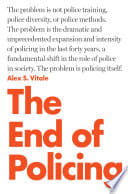
The End of Policing
Alex S. Vitale
A critical examination of modern policing and its role in social control. The book challenges traditional approaches to law enforcement and explores alternative models of community safety. Similar to The Wire's institutional critique, it offers a systemic analysis of policing. The work provides insights into the complex relationship between law enforcement and urban communities.
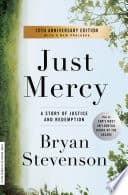
Just Mercy
Bryan Stevenson
A powerful memoir exploring racial injustice in the American legal system. The book follows the author's work defending marginalized individuals on death row, revealing systemic inequalities. Like The Wire, it offers a deep critique of institutional failures and social injustice. The narrative provides a compassionate and transformative look at the criminal justice system.
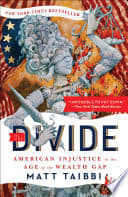
The Divide
Matt Taibbi
An investigative work examining economic inequality and justice in America. The book explores how legal and economic systems create different realities for rich and poor citizens. Similar to The Wire's systemic critique, it reveals the structural inequalities that shape urban life. The narrative provides a powerful analysis of social and economic injustice.
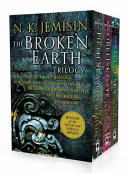
The Broken Earth Trilogy
N.K. Jemisin
A speculative fiction series that explores systemic oppression and social structures through a complex, multilayered narrative. While set in a fantasy world, the books offer a profound critique of institutional power and social dynamics. Similar to The Wire, it provides a deep examination of how systems shape individual experiences. The narrative challenges readers to think critically about social structures.
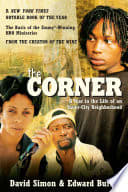
The Corner
David Simon and Edward Burns
A groundbreaking non-fiction book that explores the lives of drug dealers and users in West Baltimore. The book provides a deeply humanizing account of urban poverty and the drug trade, similar to The Wire's nuanced storytelling. It examines the systemic issues that trap individuals in cycles of poverty and crime. The narrative offers profound insights into the social structures that shape urban communities.
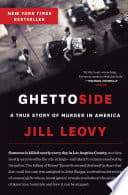
Ghettoside
Jill Leovy
A journalistic exploration of murder in Los Angeles, focusing on systemic issues in urban policing. The book provides an in-depth look at crime, race, and law enforcement in urban communities. Like The Wire, it offers a nuanced examination of institutional failures and social dynamics. The narrative reveals the complex human stories behind crime statistics.
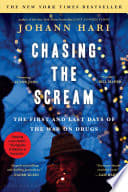
Chasing the Scream
Johann Hari
An exploration of drug addiction and the war on drugs, challenging traditional narratives. The book examines the social and political dimensions of drug policy and its impact on communities. Like The Wire, it offers a nuanced critique of institutional approaches to social problems. The narrative provides a compassionate and complex view of addiction and social policy.
Clockers
Richard Price
A novel that delves into the complex world of drug dealers and law enforcement in an urban setting. The story follows a young drug dealer and the detective investigating a murder, exploring themes of social inequality and institutional failure. Like The Wire, it offers a multi-perspective narrative that challenges simplistic views of crime and urban life. The book provides a deep, empathetic look at characters caught in systemic challenges.
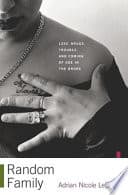
Random Family
Adrian Nicole LeBlanc
A deeply reported narrative about two Puerto Rican families in the Bronx, exploring poverty, crime, and survival. The book offers an intimate, long-term look at urban life and systemic challenges. Like The Wire, it provides a nuanced, compassionate view of individuals caught in complex social systems. The narrative reveals the human stories behind statistical abstractions.
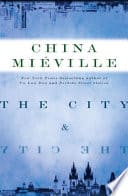
The City & The City
China Miéville
A complex detective novel that explores urban spaces and social boundaries through a unique narrative approach. The story follows two detectives investigating a murder that spans two interconnected cities with distinct social and political systems. Like The Wire, it offers a deep critique of institutional structures and urban complexity. The novel challenges readers to think about perception, boundaries, and social divisions.
No account connected — sign in to comment.