
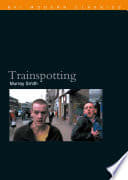
In 1996 "Trainspotting" was the biggest thing in British culture. Brilliantly and aggressively marketed it crossed into the mainstream despite being a black comedy set against the backdrop of heroin addiction in Edinburgh. Produced by Andrew MacDonald, scripted by John Hodge and directed by Danny Boyle, the team behind "Shallow Grave" (1994), "Trainspotting" was an adaptation of Irvine Welsh's barbed novel of the same title. The film is crucial for understanding British culture in the context of devolution and the rise of "Cool Britannia". Murray Smith unpicks the processes that led to the film's enormous success. He isolates various factors - the film's eclectic soundtrack, its depiction of Scottish identity, its attitude to deprivation, drugs and violence, its traffic with American cultural forms, its synthesis of realist and fantastic elements, and its complicated relationship to "heritage" - that make "Trainspotting" such a vivid document of its time.
Average Rating
Informations
About the author
Murray Smith
Author
Murray Smith may refer to:Murray Smith, Canadian lawyer and politician, member of the Legislative Assembly of Alberta, 1993–2004 Murray Smith (1930–2010), MP for Winnipeg North, 1958–1962 Murray Smith, United Future New Zealand Party politician & MP, 2002–2005 Murray Smith (writer) (1940–2003), British TV writer and producer Murray Robert Smith (1941–2009), New Zealand Labour Party politician & MP Robert Murray Smith (1831–1921), known as Murray Smith, politician in colonial Victoria, Australia Murray Smith, British professor of film studies and philosopher at the University of Kent
Trainspotting
by Murray Smith
Books Like Trainspotting
If you're looking for books similar to Trainspotting, here are some recommendations based on themes, tone, and narrative style.
Requiem for a Dream
Hubert Selby Jr.
A raw and intense exploration of addiction and desperation in urban America. The novel follows four characters spiraling into drug-induced destruction. Like 'Trainspotting', it offers a unflinching look at substance abuse and societal marginalization. The narrative is brutal, visceral, and psychologically complex.
Filth
Irvine Welsh
Another Welsh novel featuring a deeply flawed protagonist in Edinburgh. The book follows a corrupt police officer battling addiction and mental illness. Similar to 'Trainspotting', it uses dark humor and stream-of-consciousness narration. The novel explores Scottish urban culture and personal disintegration.
Down and Out in Paris and London
George Orwell
A semi-autobiographical account of poverty and survival. Orwell documents the harsh realities of marginalized urban life. Similar to 'Trainspotting', it provides an unromantic view of societal underbelly. The writing is direct and socially critical.
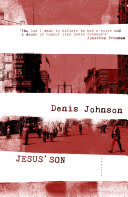
Jesus' Son
Denis Johnson
A collection of interconnected stories about addiction and survival. The book presents a fragmented, hallucinatory view of drug culture. Like 'Trainspotting', it uses dark humor and stream-of-consciousness techniques. The stories are raw, poetic, and emotionally intense.
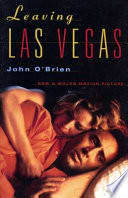
Leaving Las Vegas
John O'Brien
A devastating portrait of alcoholism and self-destruction. The novel follows a man deliberately drinking himself to death. Similar to 'Trainspotting', it presents addiction without sentimentality. The narrative is raw, honest, and emotionally devastating.
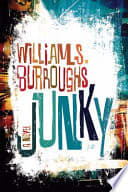
Junky
William S. Burroughs
A seminal work about heroin addiction and counterculture. The novel provides a stark, unsentimental account of drug use and its consequences. Like 'Trainspotting', it challenges societal norms and presents addiction as a complex human experience. The writing is direct and unflinching.
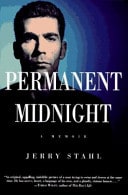
Permanent Midnight
Jerry Stahl
A memoir of heroin addiction in Hollywood. The author chronicles his struggles as a television writer battling substance abuse. Similar to 'Trainspotting', it offers a darkly comedic perspective on addiction. The narrative is brutally self-aware and unflinching.

The Basketball Diaries
Jim Carroll
A memoir of teenage addiction in New York City. Carroll documents his descent into heroin use with brutal honesty. Like 'Trainspotting', it uses a raw, unfiltered narrative style. The writing is visceral and psychologically revealing.
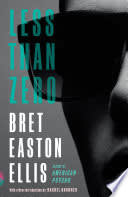
Less Than Zero
Bret Easton Ellis
A nihilistic portrayal of wealthy young Los Angeles residents. The novel explores alienation, substance abuse, and moral decay. Similar to 'Trainspotting', it critiques cultural disillusionment through a provocative lens. The narrative is detached and brutally honest.
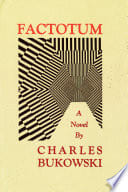
Factotum
Charles Bukowski
A novel about alcoholism, dead-end jobs, and marginalized existence. Bukowski's protagonist drifts through life with brutal indifference. Similar to 'Trainspotting', it presents a cynical view of societal expectations. The narrative is darkly humorous and unflinching.
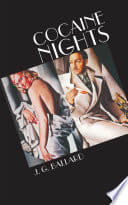
Cocaine Nights
J.G. Ballard
A provocative exploration of hedonism and social breakdown. The novel examines the dark undercurrents of leisure and excess. Like 'Trainspotting', it challenges societal norms and presents a cynical worldview. The narrative is surreal and psychologically complex.
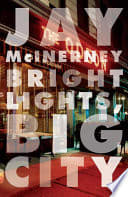
Bright Lights, Big City
Jay McInerney
A novel about 1980s New York City's cocaine-fueled culture. The protagonist navigates personal and professional disintegration. Like 'Trainspotting', it uses dark humor to explore addiction and alienation. The narrative is fast-paced and stylistically innovative.
No account connected — sign in to comment.