
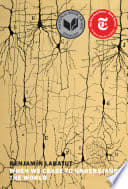
One of The New York Times Book Review’s 10 Best Books of 2021 Shortlisted for the 2021 International Booker Prize and the 2021 National Book Award for Translated Literature A fictional examination of the lives of real-life scientists and thinkers whose discoveries resulted in moral consequences beyond their imagining. When We Cease to Understand the World is a book about the complicated links between scientific and mathematical discovery, madness, and destruction. Fritz Haber, Alexander Grothendieck, Werner Heisenberg, Erwin Schrödinger—these are some of luminaries into whose troubled lives Benjamín Labatut thrusts the reader, showing us how they grappled with the most profound questions of existence. They have strokes of unparalleled genius, alienate friends and lovers, descend into isolation and insanity. Some of their discoveries reshape human life for the better; others pave the way to chaos and unimaginable suffering. The lines are never clear. At a breakneck pace and with a wealth of disturbing detail, Labatut uses the imaginative resources of fiction to tell the stories of the scientists and mathematicians who expanded our notions of the possible.
Average Rating
Informations
About the author
Benjamin Labatut
Author
Benjamín Labatut is a Chilean writer.
When We Cease to Understand the World
by Benjamin Labatut
Books Like When We Cease to Understand the World
If you're looking for books similar to When We Cease to Understand the World, here are some recommendations based on themes, tone, and narrative style.
Gödel, Escher, Bach
Douglas Hofstadter
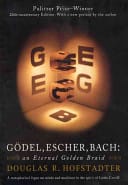
A groundbreaking exploration of consciousness, artificial intelligence, and the nature of symbolic systems. Hofstadter weaves together mathematics, art, and music to explore complex ideas about intelligence and meaning. The book challenges traditional boundaries between disciplines, revealing profound connections between seemingly disparate domains. It represents a unique approach to understanding complex intellectual systems.
The Immortal Life of Henrietta Lacks
Rebecca Skloot
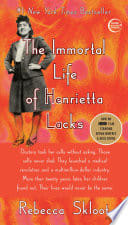
A powerful exploration of medical ethics, scientific discovery, and racial injustice through the story of Henrietta Lacks, whose cells became a crucial tool in medical research. The book examines the complex moral implications of scientific advancement and the human stories behind groundbreaking medical innovations. Skloot interweaves personal narrative with scientific investigation, revealing the profound human cost of scientific progress.
The Pleasure of Finding Things Out
Richard Feynman
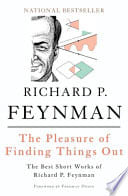
A collection of essays and lectures by the renowned physicist Richard Feynman, exploring the joy of scientific discovery and intellectual curiosity. Feynman shares personal insights into scientific thinking, mathematical creativity, and the profound wonder of understanding the universe. The book captures the intellectual passion that drives scientific innovation. It reveals the human dimension of scientific exploration.
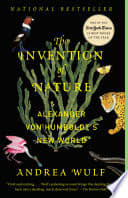
The Invention of Nature
Andrea Wulf
A compelling biography of Alexander von Humboldt, a pioneering scientist who revolutionized our understanding of the natural world. The book explores how Humboldt's interdisciplinary approach connected scientific disciplines and inspired future researchers. It delves into his groundbreaking expeditions and his profound impact on our comprehension of global ecological systems. Wulf's narrative captures the intellectual passion and curiosity of a remarkable scientific mind.
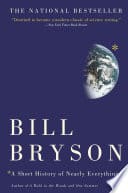
A Short History of Nearly Everything
Bill Bryson
A comprehensive and engaging exploration of scientific discovery across multiple disciplines. Bryson provides an accessible narrative of scientific progress, revealing the human stories behind major scientific breakthroughs. The book captures the wonder, complexity, and occasional absurdity of scientific exploration. It demonstrates how scientific curiosity drives human understanding of the world.
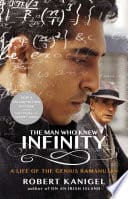
The Man Who Knew Infinity
Robert Kanigel
A biographical account of Srinivasa Ramanujan, a mathematical genius from India who made extraordinary contributions to number theory. The book explores the remarkable collaboration between Ramanujan and British mathematician G.H. Hardy. It reveals the struggles of a brilliant mind working outside traditional academic structures and the profound intellectual connections that transcend cultural boundaries. Kanigel illuminates the human story behind mathematical discovery.
Chaos
James Gleick
A groundbreaking exploration of chaos theory and its revolutionary impact on scientific understanding. Gleick traces the development of chaos theory across multiple scientific disciplines, revealing how seemingly random systems contain underlying patterns. The book explores the intellectual journey of scientists who challenged traditional scientific paradigms. It demonstrates how mathematical thinking can transform our understanding of complex systems.
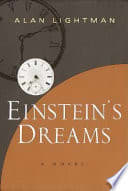
Einstein's Dreams
Alan Lightman
A poetic and imaginative exploration of time, scientific creativity, and the nature of human perception. The novel presents multiple conceptual worlds based on different interpretations of time, reflecting the revolutionary thinking of Albert Einstein. Lightman blends scientific imagination with philosophical reflection, creating a meditative narrative about the nature of scientific discovery. The book captures the profound mystery of scientific understanding.
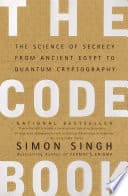
The Code Book
Simon Singh
A comprehensive history of cryptography that explores the intellectual challenges of code-breaking and information security. Singh traces the development of cryptographic techniques from ancient civilizations to modern digital encryption. The book reveals the intellectual battles and mathematical brilliance behind code-breaking, showing how scientific and mathematical thinking can transform human communication. It illuminates the profound connection between mathematics and communication.
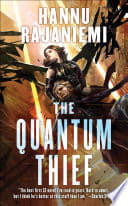
The Quantum Thief
Hannu Rajaniemi
A science fiction novel that explores complex scientific and philosophical concepts through a narrative of technological innovation and human transformation. The book imagines a future where scientific understanding has radically altered human experience and consciousness. Rajaniemi blends cutting-edge scientific concepts with speculative fiction, creating a narrative that challenges traditional boundaries of scientific imagination.
No account connected — sign in to comment.