
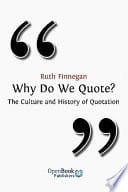
Quoting is all around us. But do we really know what it means? How do people actually quote today, and how did our present systems come about? This book brings together a down-to-earth account of contemporary quoting with an examination of the comparative and historical background that lies behind it and the characteristic way that quoting links past and present, the far and the near.Drawing from anthropology, cultural history, folklore, cultural studies, sociolinguistics, literary studies and the ethnography of speaking, Ruth Finnegan 's fascinating study sets our present conventions into crosscultural and historical perspective. She traces the curious history of quotation marks, examines the long tradition of quotation collections with their remarkable recycling across the centuries, and explores the uses of quotation in literary, visual and oral traditions. The book tracks the changing defi nitions and control of quoting over the millennia and in doing so throws new light on ideas such as imitation, allusion, authorship, originality and plagiarism .
Average Rating
Informations
About the author
Ruth Finnegan
Author
Ruth Hilary Finnegan is a Northern Irish linguistic anthropologist and Emeritus Professor of the Open University.
Why Do We Quote?
by Ruth Finnegan
Books Like Why Do We Quote?
If you're looking for books similar to Why Do We Quote?, here are some recommendations based on themes, tone, and narrative style.
The Ethnography of Communication
Dell Hymes
A groundbreaking work exploring communication's cultural contexts, directly aligned with Finnegan's scholarly interests. Hymes examines how communicative practices are culturally embedded and socially constructed. The book provides methodological approaches for understanding language in social contexts. It offers insights into communication's complex cultural dimensions. A foundational text in understanding language's social functions.
Quoting Speech in Early English
Merja Kytö
A linguistic analysis tracing historical quotation practices in English, directly engaging with themes from Finnegan's work. The book investigates how quotation methods evolved through different historical periods. It examines textual and linguistic strategies of representing speech across centuries. Kytö provides meticulous research on the development of quotation conventions. An essential text for understanding the historical linguistics of quotation.
The Social Meaning of Language
Peter Trudgill
An exploration of language's social dimensions that resonates with Finnegan's interdisciplinary perspective. Trudgill examines how linguistic variations reflect social identities and cultural practices. The book provides insights into language's role in social stratification and communication. It offers a comprehensive analysis of linguistic diversity's social significance. A nuanced study of language's complex social functions.
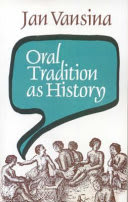
Oral Tradition as History
Jan Vansina
A seminal work exploring oral traditions' historical significance, resonating with Finnegan's research interests. Vansina examines how oral narratives preserve and transmit cultural memory. The book provides methodological approaches for understanding oral communication's historical functions. It offers insights into how spoken language constructs historical understanding. A foundational text in oral tradition studies.
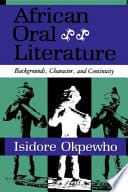
Oral Traditions in African Literature
Isidore Okpewho
An academic study exploring oral storytelling traditions that resonates with Finnegan's cross-cultural linguistic investigations. The book examines how oral narratives function in African cultural contexts, analyzing transmission, performance, and meaning. It provides scholarly insights into how language preserves cultural memory and communicative practices. Okpewho's work shares Finnegan's anthropological and comparative approach to understanding language. A rigorous examination of oral tradition's complex communicative mechanisms.
Anthropology of Writing
David Barton
A scholarly investigation into writing as a cultural practice, echoing Finnegan's cross-disciplinary methodology. The book explores writing's social and communicative functions beyond mere text production. Barton examines how writing practices reflect and shape cultural understanding. The work provides insights into literacy's broader cultural meanings. A nuanced analysis of writing as a complex social phenomenon.
Linguistic Anthropology
Alessandro Duranti
A comprehensive examination of language's cultural dimensions, sharing Finnegan's cross-disciplinary approach. Duranti investigates how linguistic practices are embedded in social and cultural contexts. The book provides theoretical frameworks for understanding communication beyond linguistic structures. It explores language's role in social interaction and cultural meaning-making. A sophisticated analysis of language's anthropological dimensions.
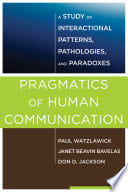
Pragmatics of Human Communication
Paul Watzlawick
An innovative exploration of communication's complex interactive dimensions, aligned with Finnegan's interdisciplinary approach. Watzlawick examines communication as a multifaceted social process. The book provides theoretical frameworks for understanding human interaction's subtle dynamics. It offers insights into communication's psychological and social complexities. A sophisticated analysis of communicative practices.
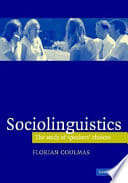
Sociolinguistics
Florian Coulmas
A comprehensive analysis of language's social variations, complementing Finnegan's scholarly approach. Coulmas examines linguistic diversity's social and cultural dimensions. The book provides theoretical frameworks for understanding communication's social complexity. It offers insights into how language reflects social stratification and cultural practices. A rigorous study of language's socially embedded nature.
The Oxford Guide to Library Resources in Linguistics
Michael Toolan
A comprehensive exploration of linguistic research resources that complements Finnegan's scholarly approach to language. This book provides deep insights into language studies, research methodologies, and academic approaches to understanding communication. It offers researchers and students a detailed guide to navigating linguistic scholarship. The work emphasizes systematic analysis of language resources and theoretical frameworks. Ideal for those interested in academic linguistic investigation.
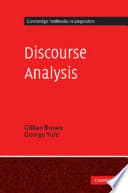
Discourse Analysis
Gillian Brown
A foundational text in linguistic pragmatics that complements Finnegan's analytical approach. The book provides comprehensive frameworks for understanding communicative interactions. Brown explores how language functions in social contexts, examining structural and contextual dimensions of communication. The work offers sophisticated tools for analyzing linguistic practices. An essential resource for understanding discourse complexity.
Language and Power
Norman Fairclough
An critical analysis of language's social and political dimensions, complementing Finnegan's broad scholarly approach. Fairclough examines how linguistic practices reflect and reproduce social power structures. The book provides theoretical frameworks for understanding communication's ideological functions. It offers sophisticated insights into language's role in social dynamics. A comprehensive study of linguistic power relations.
Language and Culture
Claire Kramsch
A comprehensive study of language's cultural dimensions, sharing Finnegan's cross-disciplinary perspective. Kramsch explores how linguistic practices reflect and construct cultural meanings. The book provides insights into language's role in cultural identity and social interaction. It offers sophisticated frameworks for understanding communication's cultural embeddedness. A nuanced examination of language's cultural functions.
Language and Identity
John Edwards
An interdisciplinary exploration of how language shapes cultural identity, complementing Finnegan's broad scholarly approach. The book examines how linguistic practices reflect and construct social meanings. Edwards investigates language's role in personal and collective identity formation across different cultural contexts. The work provides theoretical frameworks for understanding communication's social dimensions. A comprehensive study of language's complex identity functions.
No account connected — sign in to comment.