
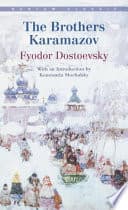
Brothers Karamazov
by Fyodor Dostoevsky
Description
In 1880 Dostoevsky completed The Brothers Karamazov, the literary effort for which he had been preparing all his life. Compelling, profound, complex, it is the story of a patricide and of the four sons who each had a motive for murder: Dmitry, the sensualist, Ivan, the intellectual; Alyosha, the mystic; and twisted, cunning Smerdyakov, the bastard child. Frequently lurid, nightmarish, always brilliant, the novel plunges the reader into a sordid love triangle, a pathological obsession, and a gripping courtroom drama. But throughout the whole, Dostoevsky searhes for the truth--about man, about life, about the existence of God. A terrifying answer to man's eternal questions, this monumental work remains the crowning achievement of perhaps the finest novelist of all time. From the Paperback edition.
Book Details
You Might Also Like
Fifty Shades of Alice in Wonderland
Christmas The Modern Storyteller
The Henna Artist
Alka Joshi
The Favorites
Layne Fargo
Lotr Gólo
Jakub Arbes, Jiří Janáček
The Talisman
Stephen King, Peter Straub
Where the Crawdads Sing: Reese's Book Club
Delia Owens
Strictly Business; More Stories of the Four Million
O. Henry

A Love Letter to Whiskey
Kandi Steiner
Flock
Austin Mary

The Bell Jar
Sylvia Plath
About the Author
Fyodor Dostoevsky
Fyodor Mikhailovich Dostoevsky was a Russian novelist, short story writer, essayist and journalist. He is regarded as one of the greatest novelists in both Russian and world literature, and many of his works are considered highly influential masterpieces. Dostoevsky's literary works explore the human condition in the troubled political, social and spiritual atmospheres of 19th-century Russia, and engage with a variety of philosophical and religious themes. His most acclaimed novels include Crime and Punishment (1866), The Idiot (1869), Demons (1872), The Adolescent (1875) and The Brothers Karamazov (1880). His Notes from Underground, a novella published in 1864, is considered one of the first works of existentialist literature.
No account connected — sign in to comment.