
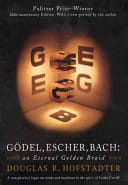
Godel, Escher, Bach
by Douglas R. Hofstadter
Description
Winner of the Pulitzer Prize A metaphorical fugue on minds and machines in the spirit of Lewis Carroll Douglas Hofstadter's book is concerned directly with the nature of "maps" or links between formal systems. However, according to Hofstadter, the formal system that underlies all mental activity transcends the system that supports it. If life can grow out of the formal chemical substrate of the cell, if consciousness can emerge out of a formal system of firing neurons, then so too will computers attain human intelligence. Gödel, Escher, Bach is a wonderful exploration of fascinating ideas at the heart of cognitive science: meaning, reduction, recursion, and much more.
Book Details
You Might Also Like
The Prince
Niccolò Machiavelli
Dexter and Philosophy
Richard Greene, George A. Reisch, Rachel Robison
After Virtue
Alasdair MacIntyre
Heavenly Bodies
Sigurdson
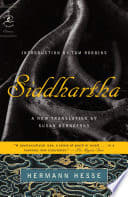
Siddhartha. An Indian Tale.
Hermann Hesse

The Courage To Be Disliked
Ichiro Kishimi, Fumitake Koga
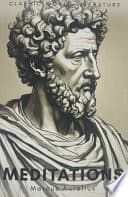
Meditations
Marcus Aurelius
Meditations
Marcus Aurelius
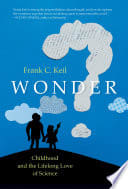
Wonder
Frank C. Keil

Jesus and John Wayne: How White Evangelicals Corrupted a Faith and Fractured a Nation
Kristin Kobes Du Mez
About the Author
Douglas R. Hofstadter
Douglas Richard Hofstadter is an American cognitive and computer scientist whose research includes concepts such as the sense of self in relation to the external world, consciousness, analogy-making, strange loops, ambigrams, artificial intelligence, and discovery in mathematics and physics. His 1979 book Gödel, Escher, Bach: An Eternal Golden Braid won the Pulitzer Prize for general nonfiction, and a National Book Award for Science. His 2007 book I Am a Strange Loop won the Los Angeles Times Book Prize for Science and Technology.
No account connected — sign in to comment.