
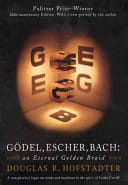
Winner of the Pulitzer Prize A metaphorical fugue on minds and machines in the spirit of Lewis Carroll Douglas Hofstadter's book is concerned directly with the nature of "maps" or links between formal systems. However, according to Hofstadter, the formal system that underlies all mental activity transcends the system that supports it. If life can grow out of the formal chemical substrate of the cell, if consciousness can emerge out of a formal system of firing neurons, then so too will computers attain human intelligence. Gödel, Escher, Bach is a wonderful exploration of fascinating ideas at the heart of cognitive science: meaning, reduction, recursion, and much more.
4.8/5
Average Rating
Informations
Genre
Philosophy
Published01 janvier 1999
Recommendations14
About the author
Douglas R. Hofstadter
Author
Douglas Richard Hofstadter is an American cognitive and computer scientist whose research includes concepts such as the sense of self in relation to the external world, consciousness, analogy-making, strange loops, ambigrams, artificial intelligence, and discovery in mathematics and physics. His 1979 book Gödel, Escher, Bach: An Eternal Golden Braid won the Pulitzer Prize for general nonfiction, and a National Book Award for Science. His 2007 book I Am a Strange Loop won the Los Angeles Times Book Prize for Science and Technology.
Godel, Escher, Bach
by Douglas R. Hofstadter
Philosophy
Books Like Godel, Escher, Bach
If you're looking for books similar to Godel, Escher, Bach, here are some recommendations based on themes, tone, and narrative style.
Top 1
92%
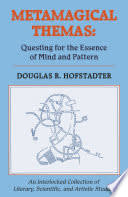
Metamagical Themas
Douglas R. Hofstadter
Another seminal work by Hofstadter exploring complex systems, recursion, and cognitive science. The book expands on themes from Godel, Escher, Bach, examining patterns, creativity, and artificial intelligence. It combines mathematical logic, philosophical inquiry, and playful intellectual exploration. Hofstadter uses analogies and interdisciplinary approaches to unpack complex ideas. The work challenges readers to think beyond traditional disciplinary boundaries.
Top 2
92%
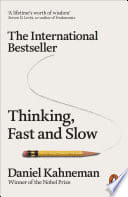
Thinking, Fast and Slow
Daniel Kahneman
A groundbreaking analysis of human decision-making and cognitive processes. Kahneman explores the two systems that drive human thinking: intuitive and rational. The book reveals cognitive biases and psychological mechanisms underlying human judgment. It shares Hofstadter's interest in understanding complex mental processes. Kahneman provides scientific insights into how humans think and make decisions.
Top 3
90%
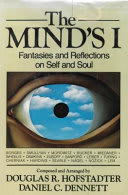
The Mind's I
Douglas R. Hofstadter and Daniel Dennett
A groundbreaking anthology exploring consciousness, self, and the nature of mind. The book delves into philosophical thought experiments and scientific perspectives on identity and intelligence. It challenges readers to reconsider what it means to be conscious and aware. Like Godel, Escher, Bach, it blends cognitive science, philosophy, and creative thinking. The collection offers profound insights into the complexity of human cognition.
90%
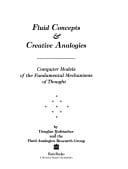
Fluid Concepts and Creative Analogies
Douglas R. Hofstadter
An in-depth examination of human cognitive processes, focusing on pattern recognition and creative thinking. Hofstadter explores how humans generate novel ideas and make unexpected connections. The book continues his investigation into the nature of intelligence and creativity. It uses computational models and philosophical analysis to understand cognitive flexibility. Like Godel, Escher, Bach, it challenges readers to think beyond linear reasoning.
90%
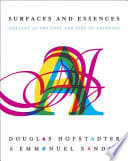
Surfaces and Essences
Douglas R. Hofstadter and Emmanuel Sander
An exploration of analogy as the fundamental cognitive mechanism of human thought. Hofstadter and Sander argue that analogical thinking drives learning and creativity. The book extends themes from Godel, Escher, Bach about cognitive processes. It reveals how humans generate meaning through comparative thinking. The work challenges traditional views of rational thought.
90%
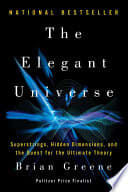
The Elegant Universe
Brian Greene
A comprehensive exploration of string theory and quantum mechanics. Greene explains complex scientific concepts through engaging analogies and clear explanations. The book shares Hofstadter's approach of making abstract ideas accessible. It reveals the fundamental interconnectedness of physical systems. Greene provides a mind-expanding journey through modern physics.
88%
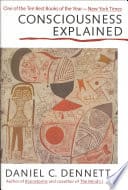
Consciousness Explained
Daniel Dennett
A comprehensive philosophical investigation into the nature of consciousness and human cognition. Dennett presents a computational model of mind that challenges traditional views of subjective experience. The book uses scientific and philosophical arguments to deconstruct traditional notions of self and awareness. Like Hofstadter's work, it explores how complex systems can generate emergent phenomena. Dennett offers a provocative and rigorous examination of mental processes.
88%
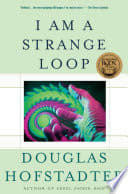
I Am a Strange Loop
Douglas R. Hofstadter
A philosophical exploration of consciousness, self-reference, and the nature of identity. Hofstadter delves into how complex systems generate meaning and self-awareness. The book extends themes from his earlier works, examining recursive thought processes. It uses mathematical and philosophical analogies to explain consciousness. Hofstadter challenges readers to reconsider traditional views of mind and perception.
88%
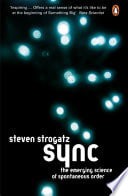
Sync
Steven Strogatz
An exploration of synchronization in complex systems across various disciplines. Strogatz examines how seemingly independent elements can spontaneously align and create emergent behaviors. The book shares Hofstadter's interest in pattern formation and complex systems. It uses mathematical and scientific perspectives to explain synchronization phenomena. Strogatz reveals the underlying principles of coordination in nature and human systems.
88%
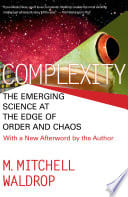
Complexity
M. Mitchell Waldrop
An exploration of complex adaptive systems across various scientific disciplines. Waldrop examines how simple rules generate complex, unpredictable behaviors. The book shares Hofstadter's interest in emergent phenomena and interdisciplinary thinking. It reveals principles of self-organization in natural and artificial systems. Waldrop provides insights into complexity across different domains of knowledge.
86%
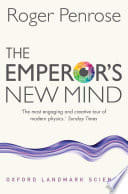
The Emperor's New Mind
Roger Penrose
A profound exploration of artificial intelligence, quantum mechanics, and human consciousness. Penrose argues that human thought transcends computational models, challenging prevailing theories about machine intelligence. The book combines mathematical reasoning, quantum physics, and philosophical inquiry. It shares Hofstadter's interdisciplinary approach to understanding complex cognitive systems. Penrose provides a rigorous and imaginative investigation of mind and computation.
86%
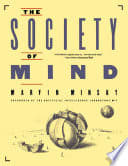
The Society of Mind
Marvin Minsky
A revolutionary exploration of artificial intelligence and cognitive architecture. Minsky proposes that intelligence emerges from interactions between numerous simple processes. The book challenges traditional views of mind and consciousness. Like Godel, Escher, Bach, it uses interdisciplinary approaches to understand cognitive systems. Minsky provides a computational model of human thought and creativity.
86%
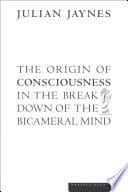
The Origin of Consciousness in the Breakdown of the Bicameral Mind
Julian Jaynes
A radical theory about the evolution of human consciousness and cognitive development. Jaynes proposes that consciousness emerged relatively recently in human history. The book challenges traditional views of mental processes and self-awareness. It shares Hofstadter's interest in understanding the nature of mind. Jaynes provides a provocative perspective on human cognitive evolution.
84%
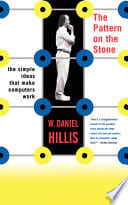
The Pattern on the Stone
W. Daniel Hillis
A clear explanation of computational thinking and computer design. Hillis explores how complex computational systems emerge from simple logical operations. The book shares Hofstadter's fascination with computational models and emergent complexity. It provides insights into how computers work at fundamental levels. Hillis makes complex technological concepts accessible to general readers.
No account connected — sign in to comment.