
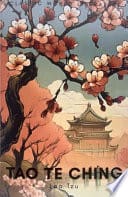
Tao Te Ching
by Laozi
Description
Dating for around 300 BC, this is an early work of the Chinese school of philosophy called Taoism. It offers a complete view of the cosmos and how human beings should respond to it. It has mystical insight into the nature of things and forms a basis for a humane morality and political utopia.
Book Details
You Might Also Like
Wintering
Katherine May
Necronomicon Files
Daniel Harms, John Wisdom Gonce
Women Who Run with the Wolves
Clarissa Pinkola Estés Phd
Becoming Supernatural
Dr. Joe Dispenza
The Power of Now
Eckhart Tolle
American Monsters
Linda S. Godfrey
Credence
Marcia Batiste, Marcia Batiste Smith Wilson, Dr, PhD
Be Here Now
Ram Dass
As a Man Thinketh
James Allen
Find It
Prophet Ezekiel K. Mensah
About the Author
Laozi
Laozi, also romanized as Lao Tzu among other ways, was a legendary Chinese philosopher and author of the Tao Te Ching (Laozi), one of the foundational texts of Taoism alongside the Zhuangzi. The name, literally meaning 'Old Master', was likely intended to portray an archaic anonymity that could converse with Confucianism. Modern scholarship generally regards his biographical details as later inventions, and his opus a collaboration. Traditional accounts addend him as Li Er, born in the 6th-century BC state of Chu during China's Spring and Autumn period. Serving as the royal archivist for the Zhou court at Wangcheng, he met and impressed Confucius on one occasion, composing the Tao Te Ching in a single session before retiring into the western wilderness.
No account connected — sign in to comment.